What to Know About the Total Solar Eclipse on August 12th

Get ready for one of the most spectacular displays of the cosmos visible on earth - a total solar eclipse! Totality will only cover a small portion of the globe, however, while many others will see a partial solar eclipse.
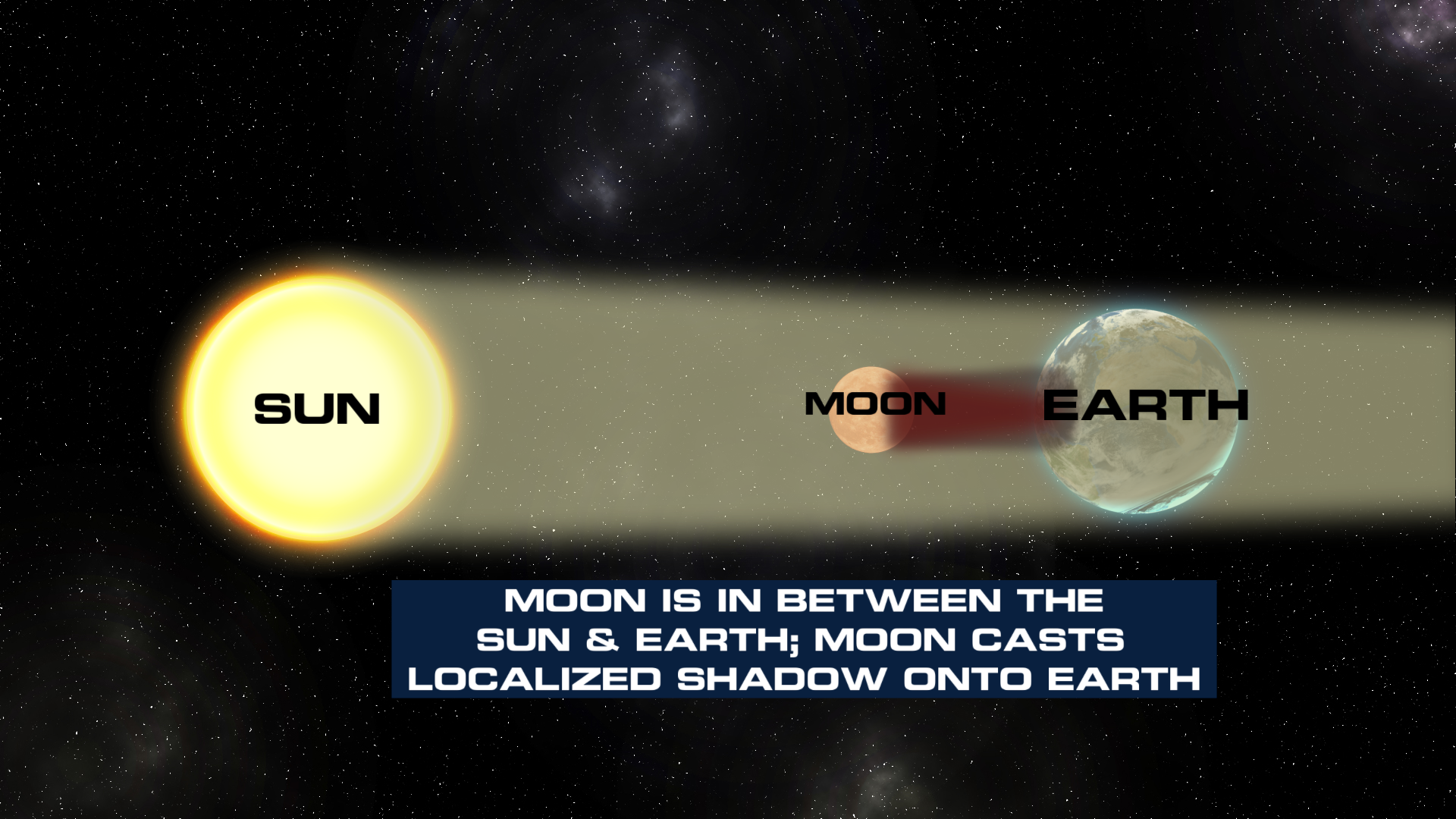
A solar eclipse happens when the moon moves between the sun and earth, casting a shadow on the Earth's surface. There's a small "hard shadow" where the total solar eclipse occurs, where the sun is completely obscured by the moon, leaving only the outer ring, or corona, of the sun visible. The larger "soft shadow" covers a larger portion of the globe, but only a section of the sun will be obscured. Even though both are eclipses, the experience in the path of totality is completely different than in the partial zone. Totality ushers in darkness and massive changes, including temperature drops, changes in animal behavior, and more. If you have the chance to see a total solar eclipse, it is highly recommended you take advantage of the opportunity.
Path of Totality
People in parts of Greenland, Iceland, Spain, and an incredibly small piece of Portugal, will be able to experience totality if skies are clear enough. The eclipse will begin in the arctic circle before dropping south to cruise over the North Atlantic and eventually western Europe.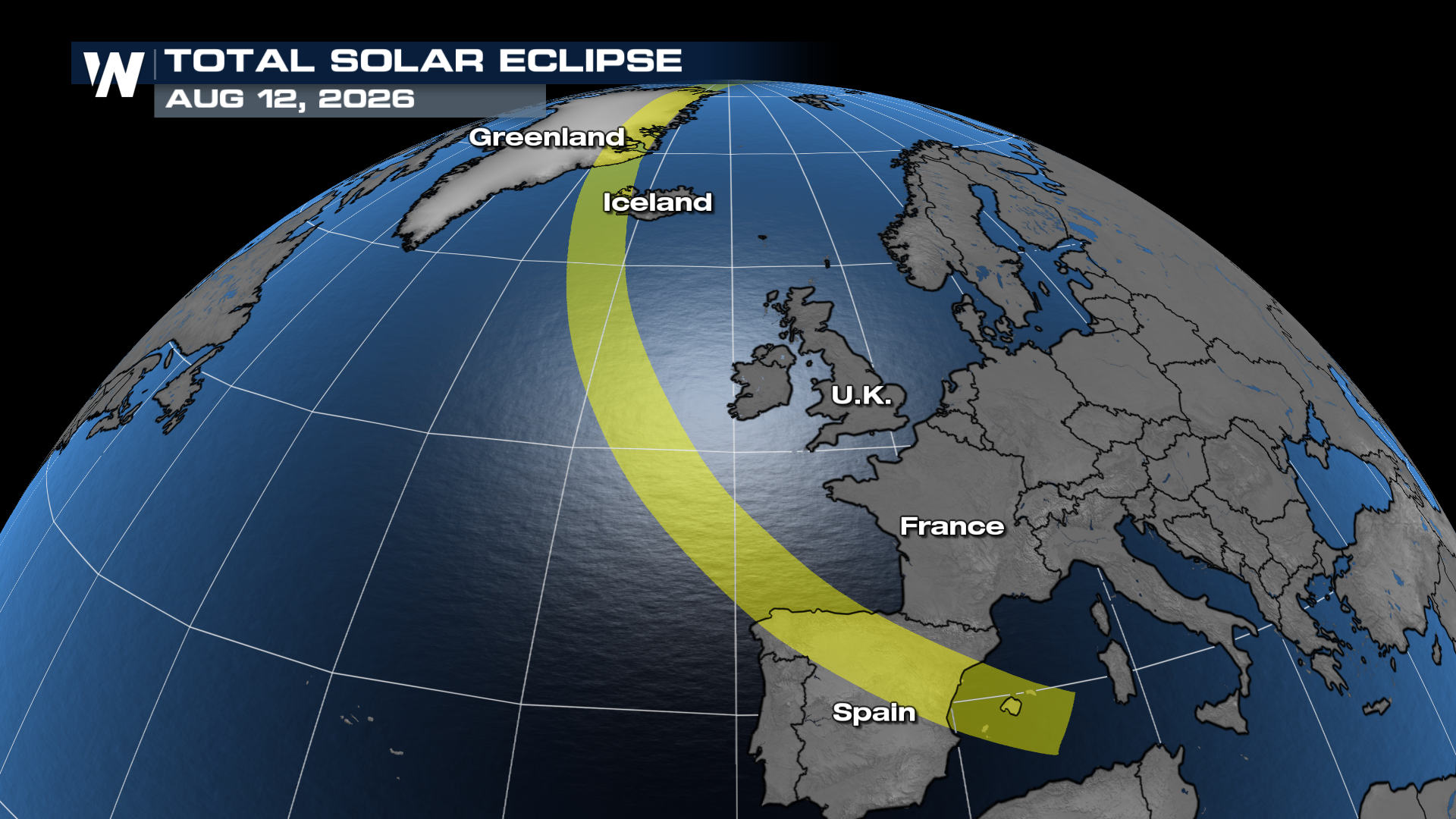
Western Iceland, including Reykjavik, will get to experience totality for a about 60 seconds in the late afternoon on Wednesday, August 12th. This will occur around 5:45 - 5:50 GMT from north to south.
Some lucky folks in Spain will have nearly two minutes of totality (toward the middle of the path), while folks closer to the outside of the path will only get about 20-30 seconds of magic. The sun will be approaching the western horizon, or sunset, as totality occurs, making for a truly incredible sight. Totality begins on the northern coast around 8:26 pm local time (CEST) and will end as it moves south of Mallorca in the Mediterranean around 8:33 pm.
Partial Solar Eclipse
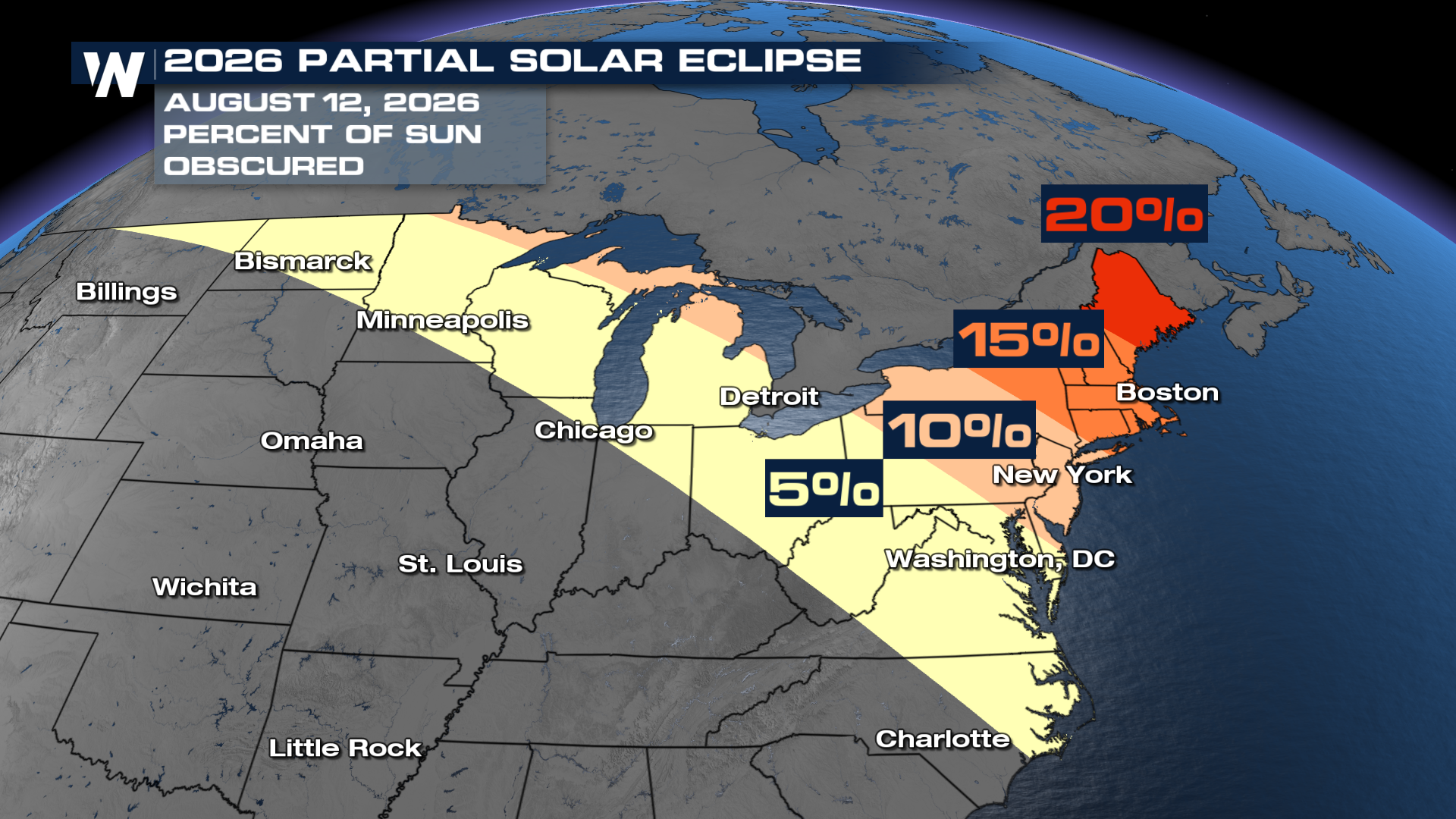
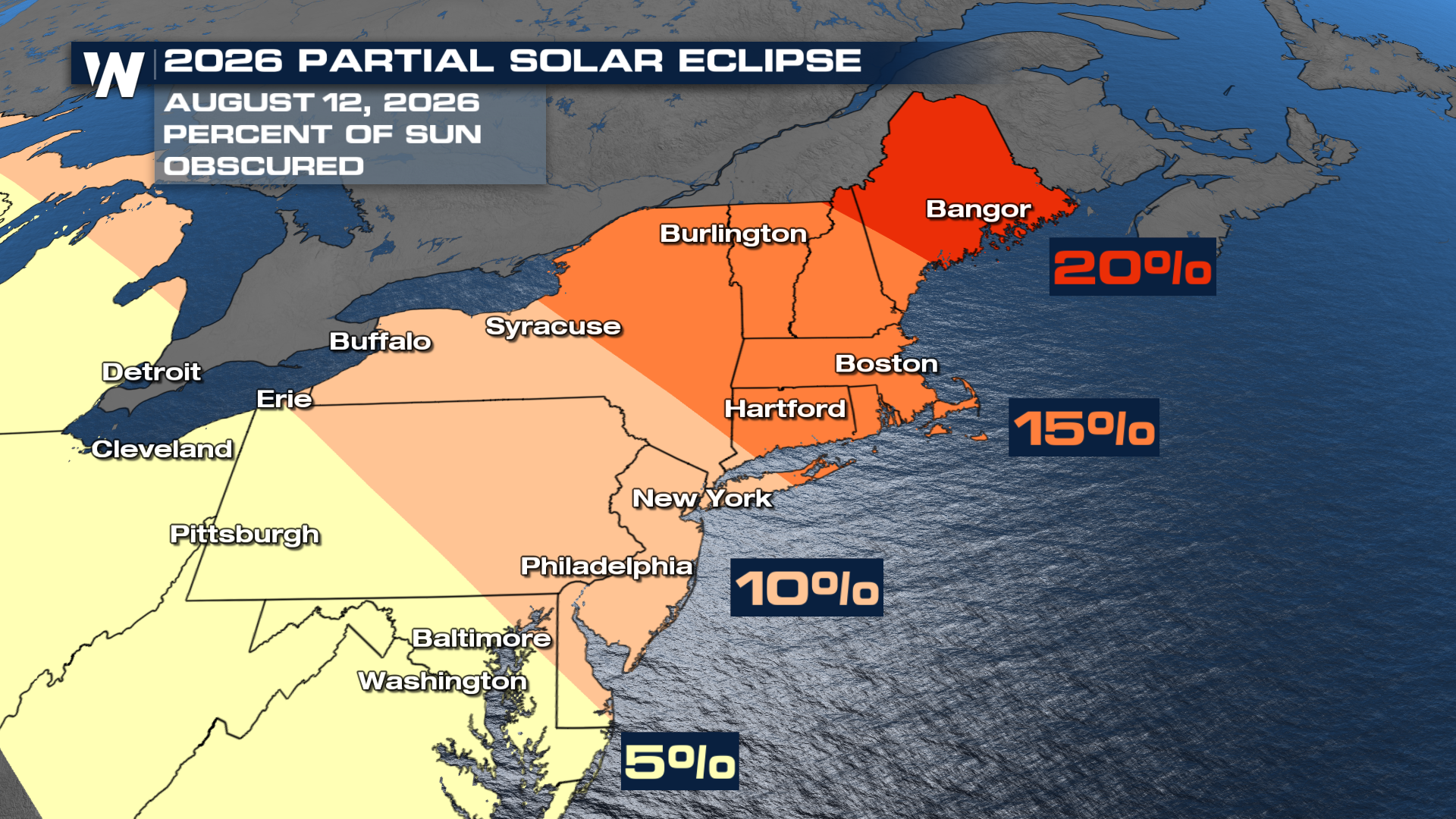
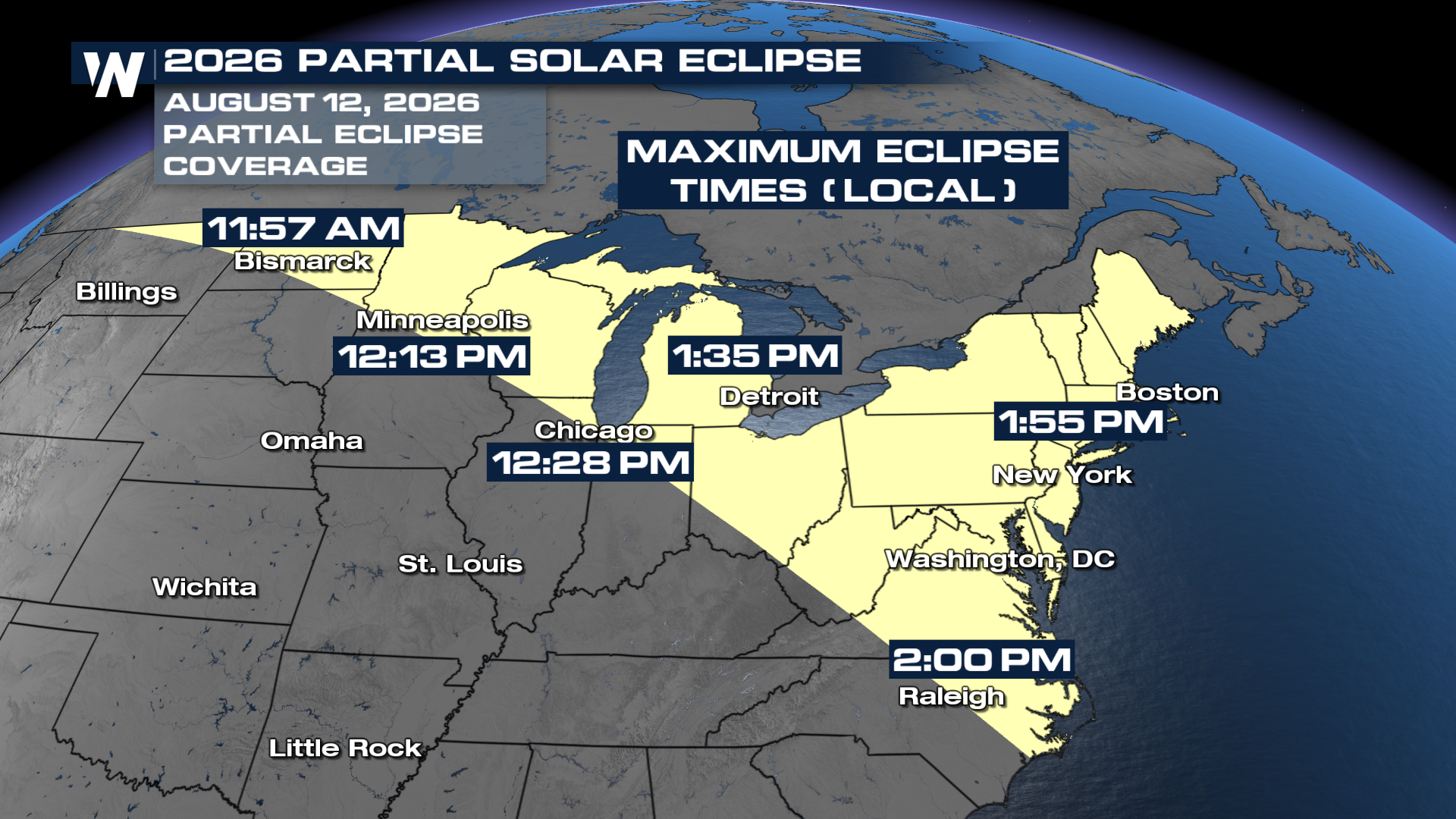
In the United States, only a partial eclipse will be visible and only for a portion of the country. A partial eclipse will be visible in the early afternoon, peaking around 2:00 pm ET, from portions of Montana to eastern North Carolina. Only a small sliver of the sun will be obscured for many, with about a fifth of the sun obscured in northern New England, mostly in Maine. All of Alaska (expect the far western Aleutians) will experience a partial solar eclipse as well. Southern Alaska will see a quarter of the sun obscured, peaking around 8:15 - 8:30 am Alaskan Daylight Time, while northern Alaska will see about half of the sun covered by the moon.
Next Total Solar Eclipse in the U.S.
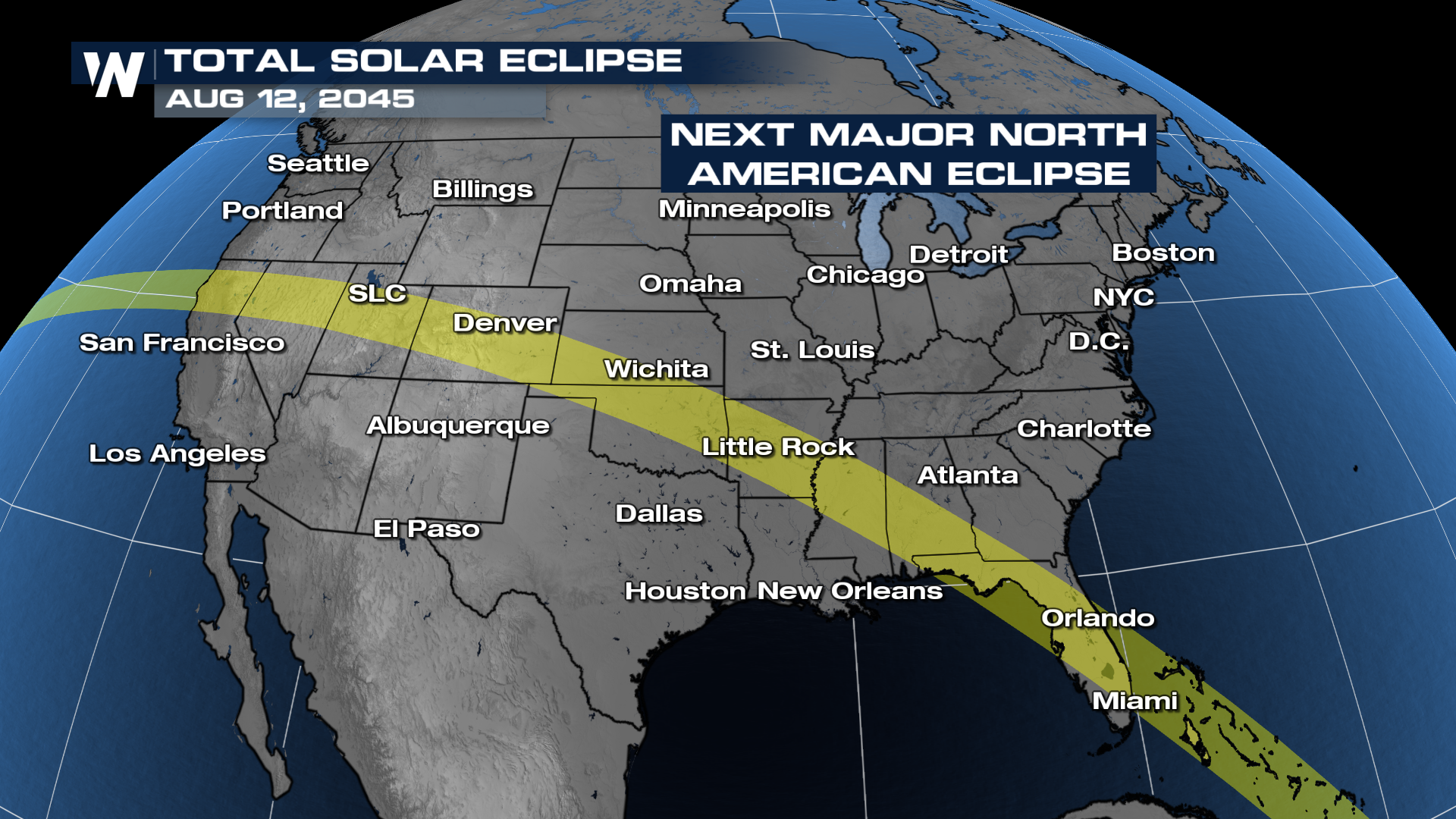
A total solar eclipse will cover portions of the United States in 2044, mostly moving through Canada, but parts of western North Dakota and Montana will get a view. In 2045, a large section of the United States will be able to experience a total solar eclipse. The path of totality runs from Northern California through Salt Lake City and Denver, before moving across the South from Little Rock to Miami, FL. It's never too early to make plans...
NASA's Research:
Through this eclipse, NASA will have multiple scientific experiments on-going related to the eclipse to help us better understand these celestial events. We spoke with NASA to learn more.


