Predictability Limit: Scientists Find Bounds of Weather Forecasting
Special Stories
3 Jun 2019 1:31 AM
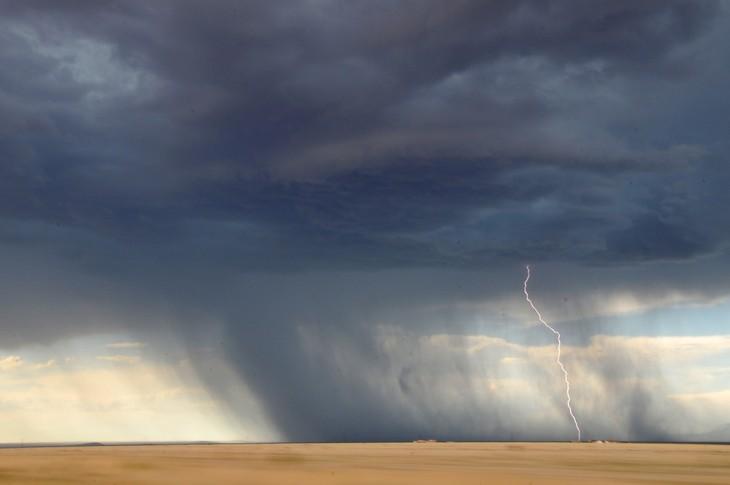
[Reliable forecasts are now possible nine to 10 days out for daily weather in the mid-latitudes, where most of Earth's population lives. New technology could add another four to five days over the coming decades. Image credit: Unsplash / Lucy Chian]
[Penn State] In the future, weather forecasts that provide storm warnings and help us plan our daily lives could come up to five days sooner before reaching the limits of numerical weather prediction, scientists said.
"The obvious question that has been raised from the very beginning of our whole field is, what's the ultimate limit at which we can predict day-to-day weather in the future," said Fuqing Zhang, distinguished professor of meteorology and atmospheric science and director of the Center for Advanced Data Assimilation and Predictability Techniques at Penn State. "We believe we have found that limit and on average, that it's about two weeks."
Reliable forecasts are now possible nine to 10 days out for daily weather in the mid-latitudes, where most of Earth's population lives. New technology could add another four to five days over the coming decades, according to research published online in the Journal of the Atmospheric Sciences.
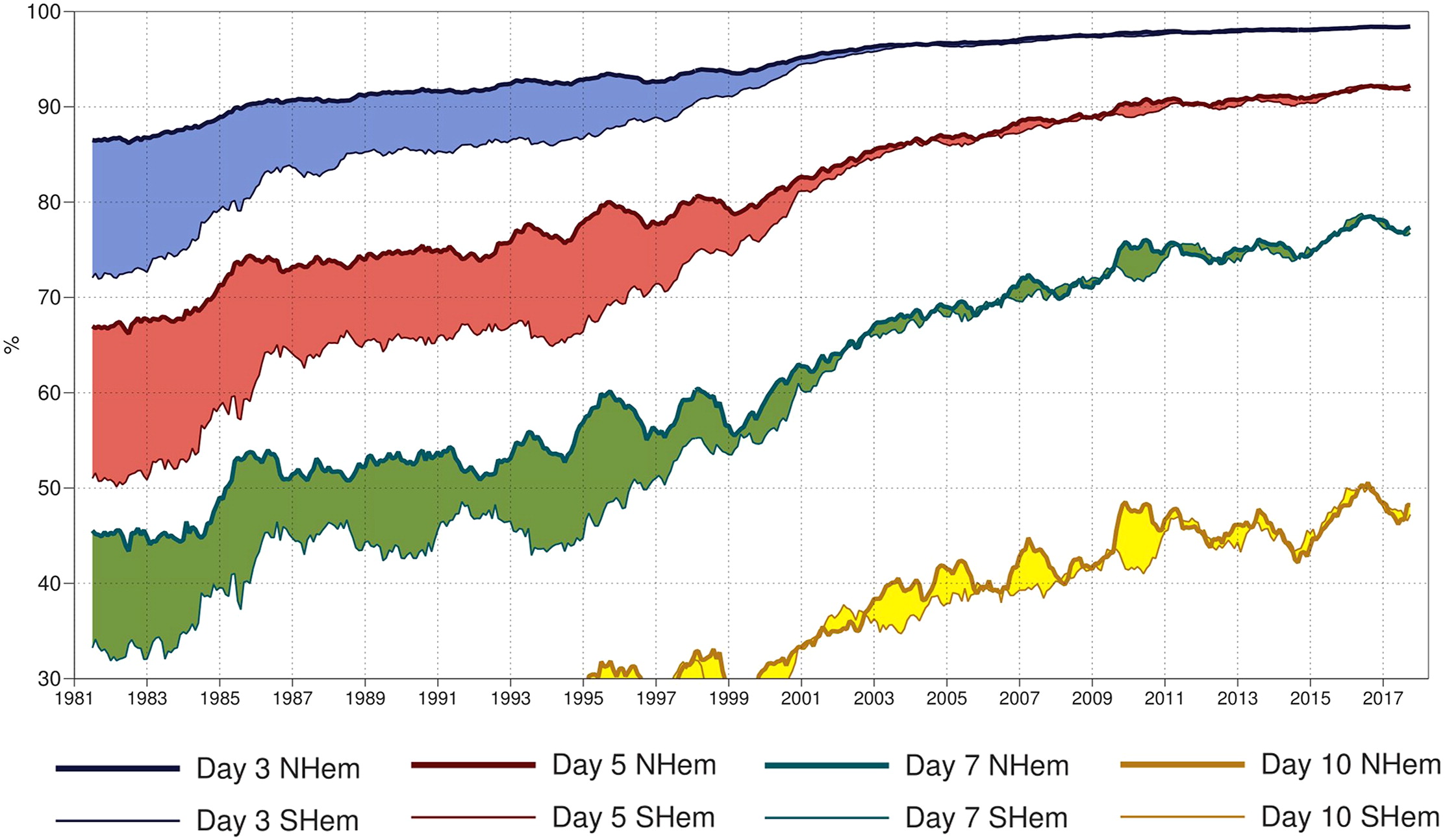 [Annual evolution the ECMWF NWP deterministic control forecast performance in terms of anomaly correlation of 500 mb height predictions. Shading indicates the different forecast skill between Northern and Southern Hemispheres, which has almost disappeared in recent years. This plot is directly adapted from ECMWF official website, via Penn State.]
The research confirms a long-hypothesized predictability limit for weather prediction, first proposed in the 1960s by Edward Lorenz, a Massachusetts Institute of Technology mathematician, meteorologist and pioneer of the chaos theory, scientists said.
"Edward Lorenz proved that one cannot predict the weather beyond some time horizon, even in principle," said Kerry Emanuel, professor of atmospheric science at MIT and coauthor of the study. "Our research shows that this weather predictability horizon is around two weeks, remarkable close to Lorenz's estimate."
Unpredictability in how weather develops means that even with perfect models and understanding of initial conditions, there is a limit to how far in advance accurate forecasts are possible, scientists said.
"We used state-of-the-art models to answer this most fundamental question," said Zhang, lead author on the study. "I think in the future we'll refine this answer, but our study demonstrates conclusively there is a limit, though we still have considerable room to improve forecast before reaching the limit."
[Annual evolution the ECMWF NWP deterministic control forecast performance in terms of anomaly correlation of 500 mb height predictions. Shading indicates the different forecast skill between Northern and Southern Hemispheres, which has almost disappeared in recent years. This plot is directly adapted from ECMWF official website, via Penn State.]
The research confirms a long-hypothesized predictability limit for weather prediction, first proposed in the 1960s by Edward Lorenz, a Massachusetts Institute of Technology mathematician, meteorologist and pioneer of the chaos theory, scientists said.
"Edward Lorenz proved that one cannot predict the weather beyond some time horizon, even in principle," said Kerry Emanuel, professor of atmospheric science at MIT and coauthor of the study. "Our research shows that this weather predictability horizon is around two weeks, remarkable close to Lorenz's estimate."
Unpredictability in how weather develops means that even with perfect models and understanding of initial conditions, there is a limit to how far in advance accurate forecasts are possible, scientists said.
"We used state-of-the-art models to answer this most fundamental question," said Zhang, lead author on the study. "I think in the future we'll refine this answer, but our study demonstrates conclusively there is a limit, though we still have considerable room to improve forecast before reaching the limit."
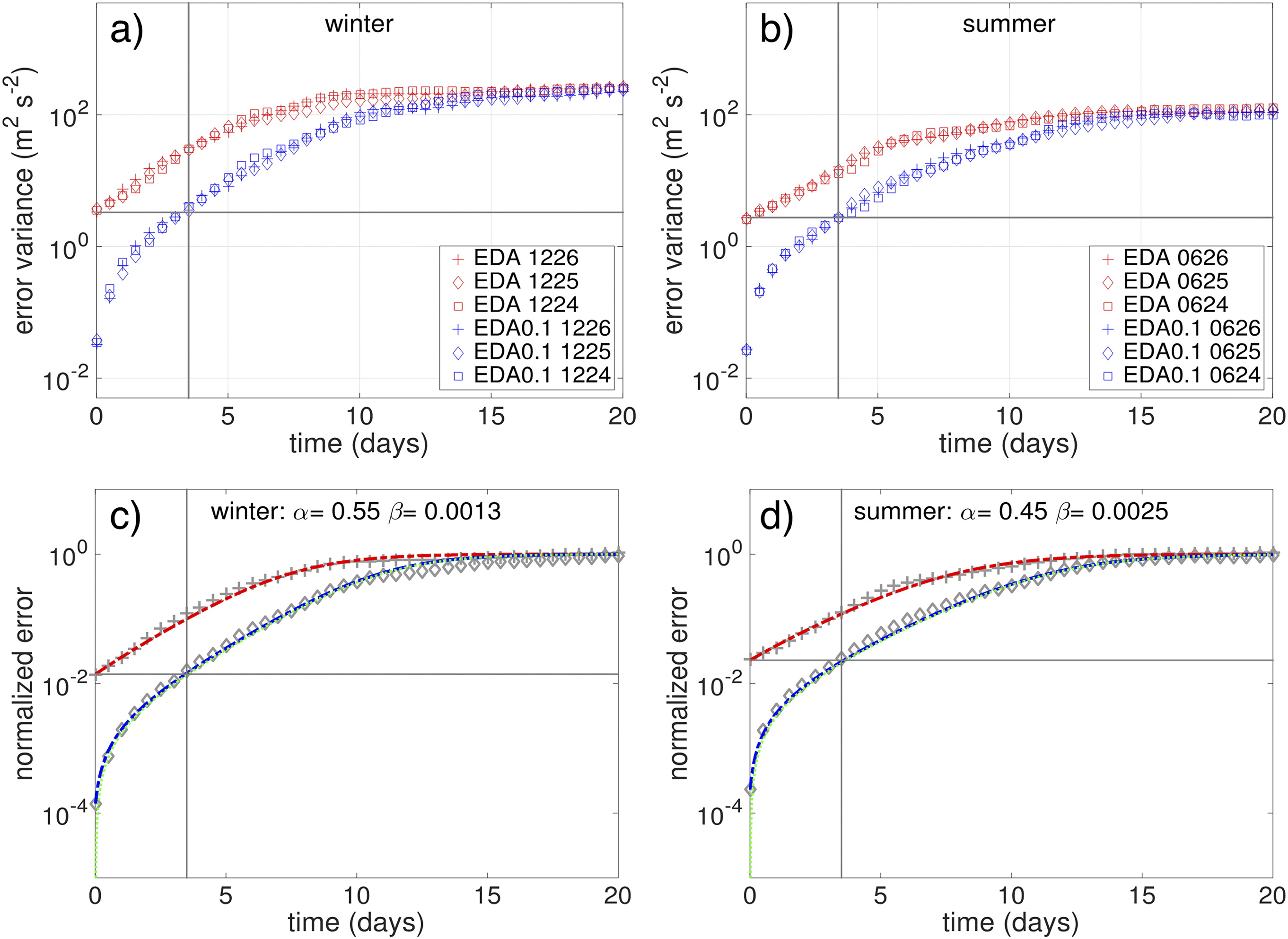 [Evolution of forecast uncertainty growth in terms of 500 mb wind energy averaged over the Northern Hemisphere middle latitudes (40°–60°N) for (a) 3 consecutive days for the winter (24–26 Dec 2015) and (b) 3 consecutive days in the summer (24–26 Jun 2016). (bottom) Evolution of normalized error variances (gray symbols) averaged for the (c) winter and (d) summer cases.]
To test the limit, Zhang and his team used the world's two most advanced numerical weather prediction modeling systems — The European Center for Medium Range Weather Forecasting and the U.S. next generation global prediction system.
They provided a near-perfect picture of initial conditions and tested how the models could recreate two real-world weather events, a cold surge in northern Europe and flood-inducing rains in China. The simulations were able to predict the weather patterns with reasonable accuracy up to about two weeks, the scientists said.
Improvements in day-to-day weather forecasting have implications for things like storm evacuations, energy supply, agriculture and wild fires.
[Evolution of forecast uncertainty growth in terms of 500 mb wind energy averaged over the Northern Hemisphere middle latitudes (40°–60°N) for (a) 3 consecutive days for the winter (24–26 Dec 2015) and (b) 3 consecutive days in the summer (24–26 Jun 2016). (bottom) Evolution of normalized error variances (gray symbols) averaged for the (c) winter and (d) summer cases.]
To test the limit, Zhang and his team used the world's two most advanced numerical weather prediction modeling systems — The European Center for Medium Range Weather Forecasting and the U.S. next generation global prediction system.
They provided a near-perfect picture of initial conditions and tested how the models could recreate two real-world weather events, a cold surge in northern Europe and flood-inducing rains in China. The simulations were able to predict the weather patterns with reasonable accuracy up to about two weeks, the scientists said.
Improvements in day-to-day weather forecasting have implications for things like storm evacuations, energy supply, agriculture and wild fires.
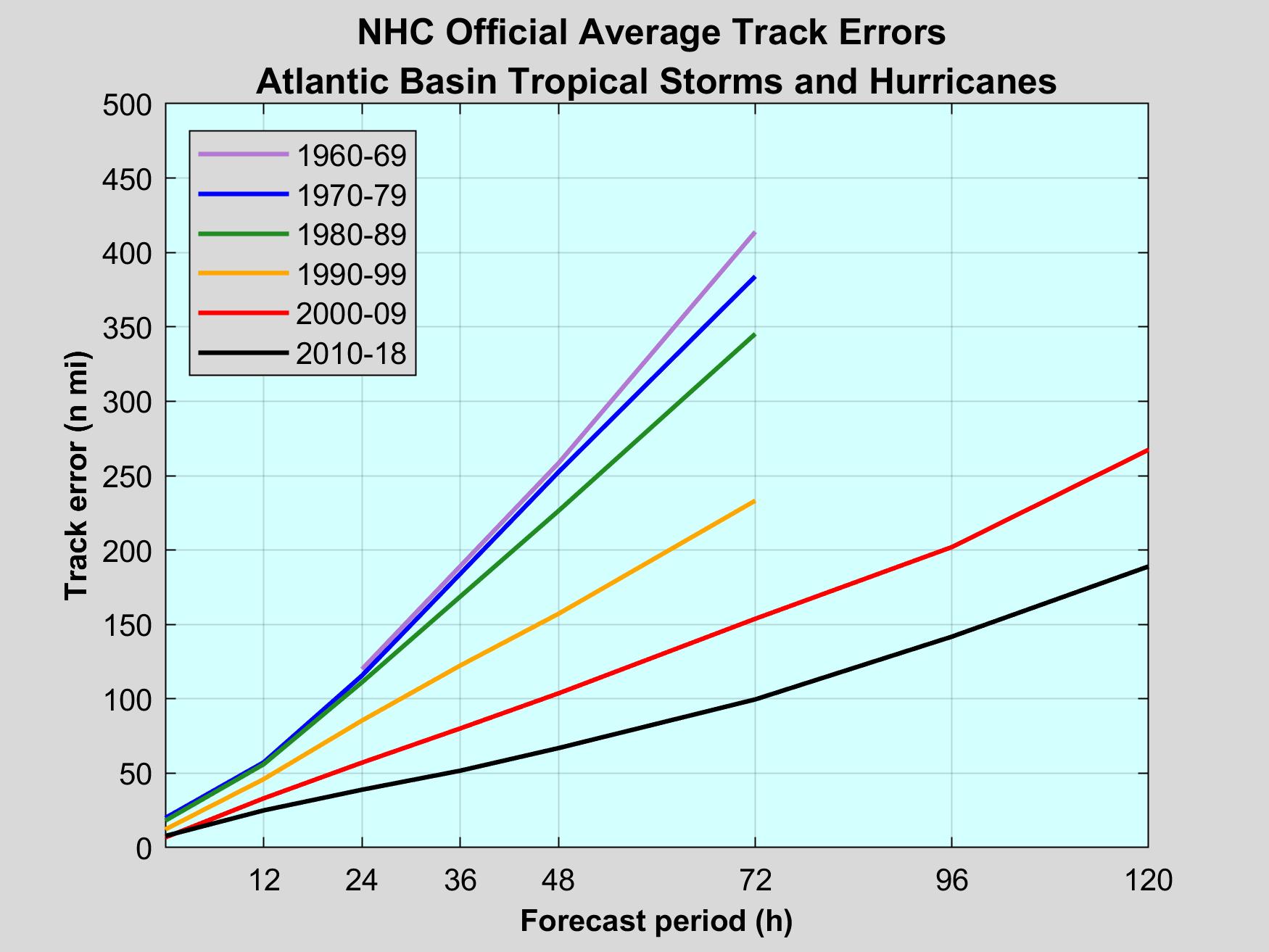 [Official NOAA forecast track errors for Atlantic basin tropical storms and hurricanes by decade. From NOAA]
"We have made significant advances in weather forecasting for the past few decades, and we're able to predict weather five days in advance with high confidence now," Zhang said. "If in the future we can predict additional days with high confidence, that would have a huge economic and social benefit."
Researchers said better data collection, algorithms to integrate data into models and improved computing power to run experiments are all needed to further improve our understanding of initial conditions.
"Achieving this additional predictability limit will require coordinated efforts by the entire community to design better numerical weather models, to improve observations, and to make better use of observations with advanced data assimilation and computing techniques," Zhang said.
Edited for WeatherNation by Meteorologist Mace Michaels
[Official NOAA forecast track errors for Atlantic basin tropical storms and hurricanes by decade. From NOAA]
"We have made significant advances in weather forecasting for the past few decades, and we're able to predict weather five days in advance with high confidence now," Zhang said. "If in the future we can predict additional days with high confidence, that would have a huge economic and social benefit."
Researchers said better data collection, algorithms to integrate data into models and improved computing power to run experiments are all needed to further improve our understanding of initial conditions.
"Achieving this additional predictability limit will require coordinated efforts by the entire community to design better numerical weather models, to improve observations, and to make better use of observations with advanced data assimilation and computing techniques," Zhang said.
Edited for WeatherNation by Meteorologist Mace Michaels
[Annual evolution the ECMWF NWP deterministic control forecast performance in terms of anomaly correlation of 500 mb height predictions. Shading indicates the different forecast skill between Northern and Southern Hemispheres, which has almost disappeared in recent years. This plot is directly adapted from ECMWF official website, via Penn State.]
The research confirms a long-hypothesized predictability limit for weather prediction, first proposed in the 1960s by Edward Lorenz, a Massachusetts Institute of Technology mathematician, meteorologist and pioneer of the chaos theory, scientists said.
"Edward Lorenz proved that one cannot predict the weather beyond some time horizon, even in principle," said Kerry Emanuel, professor of atmospheric science at MIT and coauthor of the study. "Our research shows that this weather predictability horizon is around two weeks, remarkable close to Lorenz's estimate."
Unpredictability in how weather develops means that even with perfect models and understanding of initial conditions, there is a limit to how far in advance accurate forecasts are possible, scientists said.
"We used state-of-the-art models to answer this most fundamental question," said Zhang, lead author on the study. "I think in the future we'll refine this answer, but our study demonstrates conclusively there is a limit, though we still have considerable room to improve forecast before reaching the limit."
[Evolution of forecast uncertainty growth in terms of 500 mb wind energy averaged over the Northern Hemisphere middle latitudes (40°–60°N) for (a) 3 consecutive days for the winter (24–26 Dec 2015) and (b) 3 consecutive days in the summer (24–26 Jun 2016). (bottom) Evolution of normalized error variances (gray symbols) averaged for the (c) winter and (d) summer cases.]
To test the limit, Zhang and his team used the world's two most advanced numerical weather prediction modeling systems — The European Center for Medium Range Weather Forecasting and the U.S. next generation global prediction system.
They provided a near-perfect picture of initial conditions and tested how the models could recreate two real-world weather events, a cold surge in northern Europe and flood-inducing rains in China. The simulations were able to predict the weather patterns with reasonable accuracy up to about two weeks, the scientists said.
Improvements in day-to-day weather forecasting have implications for things like storm evacuations, energy supply, agriculture and wild fires.
[Official NOAA forecast track errors for Atlantic basin tropical storms and hurricanes by decade. From NOAA]
"We have made significant advances in weather forecasting for the past few decades, and we're able to predict weather five days in advance with high confidence now," Zhang said. "If in the future we can predict additional days with high confidence, that would have a huge economic and social benefit."
Researchers said better data collection, algorithms to integrate data into models and improved computing power to run experiments are all needed to further improve our understanding of initial conditions.
"Achieving this additional predictability limit will require coordinated efforts by the entire community to design better numerical weather models, to improve observations, and to make better use of observations with advanced data assimilation and computing techniques," Zhang said.
Edited for WeatherNation by Meteorologist Mace MichaelsAll Weather News
More
Another Day of Storms in New Mexico
A powerful low pressure system has been movin
24 Oct 2026 12:30 PM

Sunny Day Flooding; King Tides Surge This Week
This week, the ocean is coming to low lying a
24 Oct 2026 11:32 AM

Hurricane Vance Swirling in the Pacific
After becoming a hurricane Friday, Vance quic
24 Oct 2026 10:25 AM

Warmer Than Average: Above-Normal Temperatures Across the Central U.S. This Week
WHAT TO EXPECTA ridge of high pressure linger
24 Oct 2026 10:00 AM


Several Fires Break Out in SoCal Last Week Amid Santa Ana Wind Event
Santa Ana winds helped several fires grow qui
19 Oct 2026 1:25 PM

Another Cold Morning Before Things Warm Back Up
Across portions of the Ohio Valley through th
19 Oct 2026 10:15 AM