Lead Particles Possible in Iowa from Army Detonation

MIDDLETOWN, IA: The U.S. Army will conduct two controlled detonations of lead azide at the Iowa Army Ammunition Plant on Friday, November 20th around noon local time. UPDATE: The controlled detonation has been postponed until Monday!
The U.S. Army and the Environmental Protection Agency are warning locals of the potential dangers of lead particles in the air and lead dust that may settle after the explosions. The agencies have provided areas where wind blown particles may be present, as well as areas where lead dust may settle after the detonation.
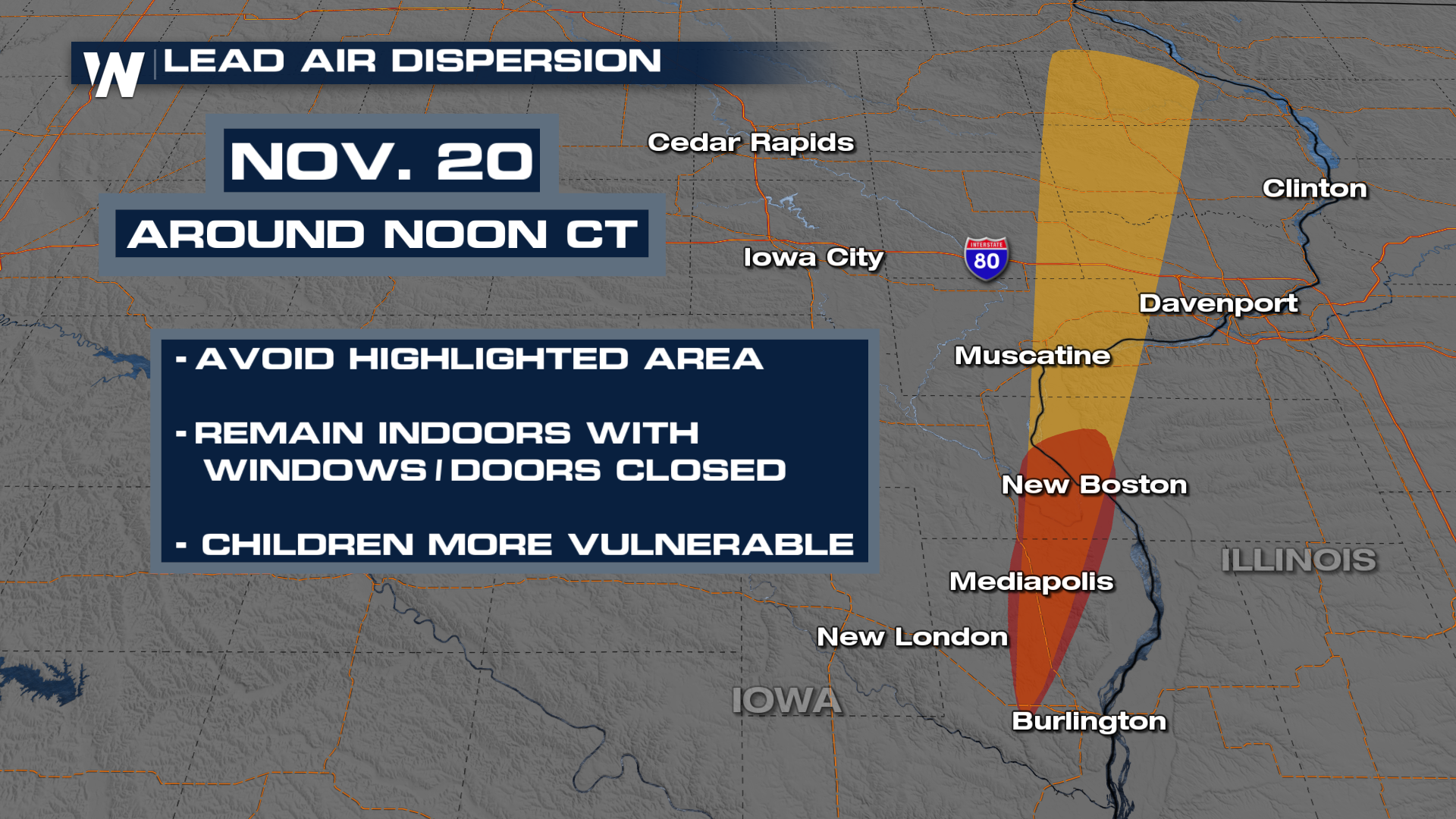
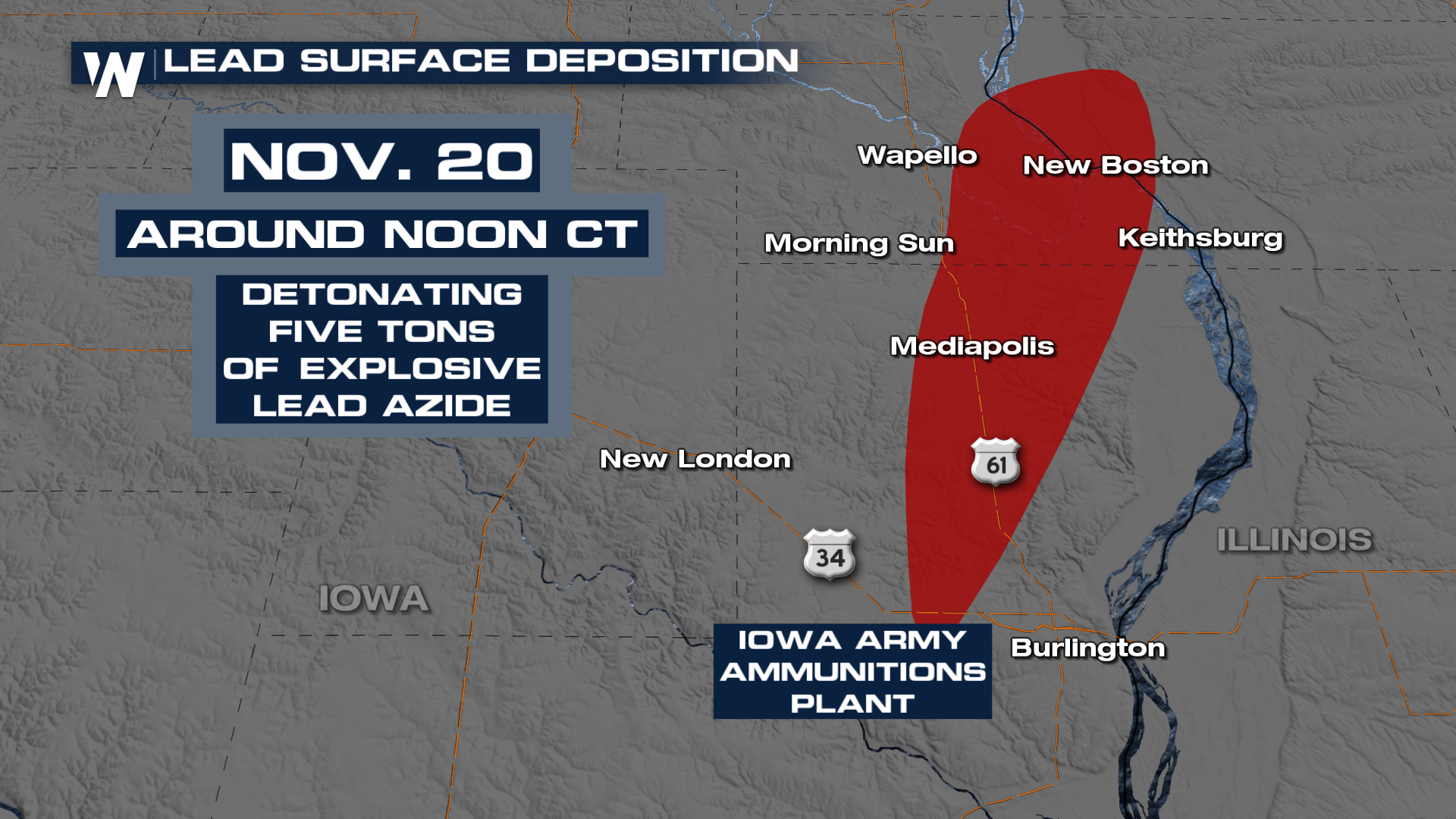 Winds from the South and Southwest could potentially bring lead particles as far north as Maquoketa. The U.S. Army says the plume of dust should last no longer than hour depending on the wind speed.
The U.S. Army says, "While safety measures will be fully enforced, the controlled detonation will cause temporary noise, ground vibrations, and a dust plume that will contain some lead. Residents in Middletown will hear a loud noise; feel vibrations from two consecutive, rapid detonations."
WHAT IS LEAD AZIDE:
The U.S. Army petitioned the EPA to allow them to detonate 68 drums of degraded lead azide after it was deemed too dangerous to move.
Lead azide is used as the primary explosive in detonators, blasting caps, and military munitions. As the chemical ages, it also poses lead toxicity hazards.
STAYING SAFE:
Some residents in Middletown, Iowa are being asked to vacate their homes during the day as a safety precaution due to localized window damage. Those remaining in their homes are asked to keep their doors and windows closed, avoid any and all outdoor activities on the day of the detonation, and keep heating and cooling systems on recirculate to avoid outside air exposure.
The agencies are providing other ways residents can prevent lead exposure:
Consider avoiding the affected area.
If you are inside of the affected areas, avoid outdoor air by staying indoors.
Keep windows and doors closed.
If it is safe to do so, set heating and cooling systems to “recirculate” to minimize outdoor air exposure and maximize indoor air filtration until the plume passes by your community.
Avoid unnecessary travel through impacted areas.
After the US Army determines the air exposure period has ended, consider cleaning indoor and outdoor surfaces such as play surfaces for children and windowsills.
If your car was parked outside, consider washing your car at a car wash to minimize your contact with potentially exposed surfaces.
Wet-clean surfaces that may be contacted by children, including outdoor play equipment, toys, tables and chairs, handrails, patios, decks, exterior windowsills, and other high-contact surfaces. Such instructions should include specific cleaning and dust mitigation procedures to address deposited and airborne lead particles which minimizes overall human exposure to lead
You can also find additional ways to reduce your lead exposure risk by visiting the EPA's website.
The U.S. Army will release additional plume models on the morning of November 20th


