Can Volcanic Eruptions Affect Hurricane Activity?
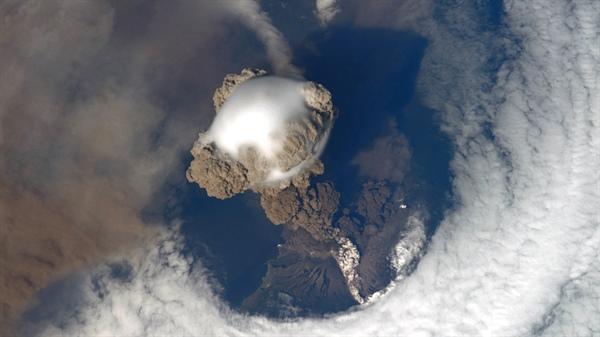
A new Climate and Atmospheric Science paper supported by the Modeling, Analysis, Predictions, and Projections (MAPP) Program examined the impact of volcanic aerosols on recent global tropical cyclone activity using observations, reanalysis, and models.
The paper documents observations of reduced tropical cyclone activity—only in the North Atlantic—following the last three strong volcanic eruptions. However, this signal could not be clearly attributed to volcanoes as all three eruptions were simultaneous with El Niño events. Reanalysis studies did not support a robust impact of volcanic eruptions on potential intensity of tropical cyclones or proxies of storm initiation (genesis indices). In models, historical simulations showed a reduced potential intensity for tropical cyclones following volcanic eruptions. However, this effect did not hold up after accounting for differences between the model environment and observations. Taken together, the study’s results show that in recent eruptions volcanic aerosols did not reduce global tropical cyclone activity.
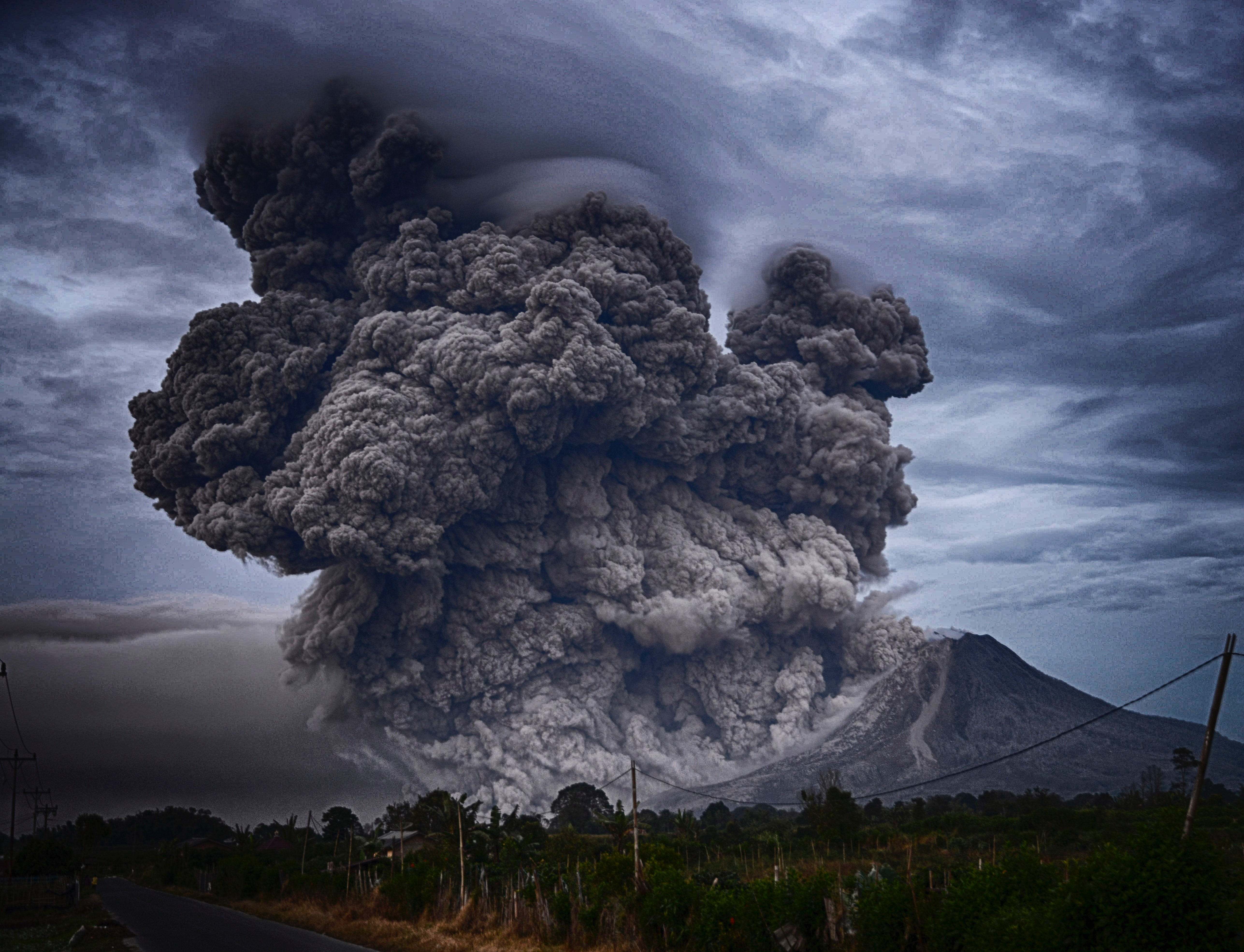
[Volcano ash cloud from Mount Sinabung in Indonesia. Photo by Yosh Ginsu on Unsplash]
A differing opinion is shown in a recent study led by Lamont-Doherty Earth Observatory researcher Suzana Camargo and Université du Québec à Montréal’s Francesco Pausata. The study provides deeper insight into how large volcanic eruptions affect hurricane activity. Previous studies could not clearly determine the effects of volcanic eruptions on hurricanes, because the few large volcanic eruptions in the last century coincided with El Niño-Southern Oscillation events, which also influence hurricane activity. In the study published in the Proceedings of the National Academy of Sciences of the United States of America, Camargo and Pausata approached this relationship by simulating very large volcanic eruptions in the tropics multiple times. Their modeling told a more complex story than previous papers had indicated.
“This is the first study to explain the mechanism of how large volcanic eruptions influences hurricanes globally,” said Camargo.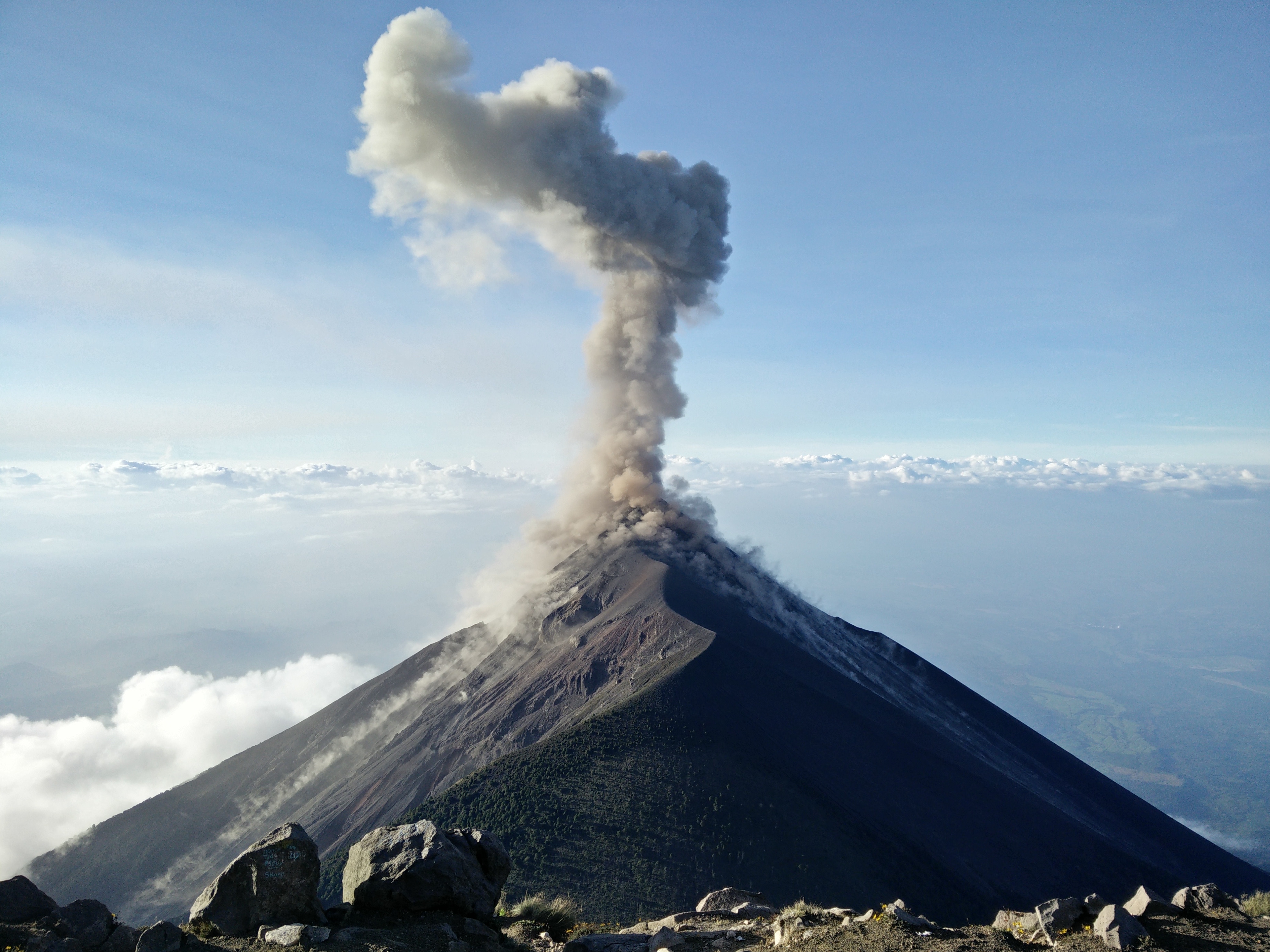 [Ash from Acatenango Volcano in Chimaltenango, Guatemala. Photo by Gary Saldana on Unsplash]
According to their findings, large tropical volcanic eruptions can affect hurricanes by shifting the Intertropical Convergence Zone, a region that circles the Earth near the Equator and greatly influences rainfall and hurricane activity. As the Intertropical Convergence Zone moves after a large volcanic eruption, it affects both the intensity and frequency of hurricanes, causing some regions to experience an increase in activity and other regions to experience a decrease. For example, a large eruption in the tropical regions of the Northern Hemisphere leads to a southward shift of the Intertropical Convergence Zone. This results in an increase in hurricane activity between the Equator and the 10°N line, and a decrease further north. The zone’s southward shift has further effects in the Southern Hemisphere, causing a decrease in activity on the coasts of Australia, Indonesia, and Tanzania, while Madagascar and Mozambique experience an increase. These changes can last for up to four years following the eruption.
Camargo and Pausata were able to separate the effects of volcanic eruptions and El Niño-Southern Oscillation on hurricane activity and show the different impacts that the two factors have on hurricanes globally. Their findings are important in helping scientists better understand the relationship between volcanoes and hurricanes.
Info from Columbia University and NOAA
For WeatherNation: Meteorologist Mace Michaels
[Ash from Acatenango Volcano in Chimaltenango, Guatemala. Photo by Gary Saldana on Unsplash]
According to their findings, large tropical volcanic eruptions can affect hurricanes by shifting the Intertropical Convergence Zone, a region that circles the Earth near the Equator and greatly influences rainfall and hurricane activity. As the Intertropical Convergence Zone moves after a large volcanic eruption, it affects both the intensity and frequency of hurricanes, causing some regions to experience an increase in activity and other regions to experience a decrease. For example, a large eruption in the tropical regions of the Northern Hemisphere leads to a southward shift of the Intertropical Convergence Zone. This results in an increase in hurricane activity between the Equator and the 10°N line, and a decrease further north. The zone’s southward shift has further effects in the Southern Hemisphere, causing a decrease in activity on the coasts of Australia, Indonesia, and Tanzania, while Madagascar and Mozambique experience an increase. These changes can last for up to four years following the eruption.
Camargo and Pausata were able to separate the effects of volcanic eruptions and El Niño-Southern Oscillation on hurricane activity and show the different impacts that the two factors have on hurricanes globally. Their findings are important in helping scientists better understand the relationship between volcanoes and hurricanes.
Info from Columbia University and NOAA
For WeatherNation: Meteorologist Mace Michaels


