Inaccurate Data Analysis May Affect Puerto Rico's Continued Recovery from Hurricane Maria
Special Stories
11 Apr 2018 8:55 AM
From Penn State
The ability to use statistics to guide decision-making may be collateral damage of Hurricane Maria's devastating blow to Puerto Rico, according to a Penn State demographer.
In an article published today in Health Affairs, Alexis Raúl Santos, the director of the graduate program in applied demography, said that a failure to properly account for all the deaths related to the 2017 storm and the possible dismantling of the territory's data collection services might affect the island's current chance of recovery, as well as its ability to respond to future emergencies.
"There are a lot of things that can go wrong if you aren't carefully gathering and analyzing data, particularly in your ability to convey the devastation of, in this case, an environmental disaster," said Santos. "One of the main concerns I have is that if you minimize the impact that this disaster has had in Puerto Rico, you are going to lose the attention of people who are in decision-making roles about the allocation of resources."
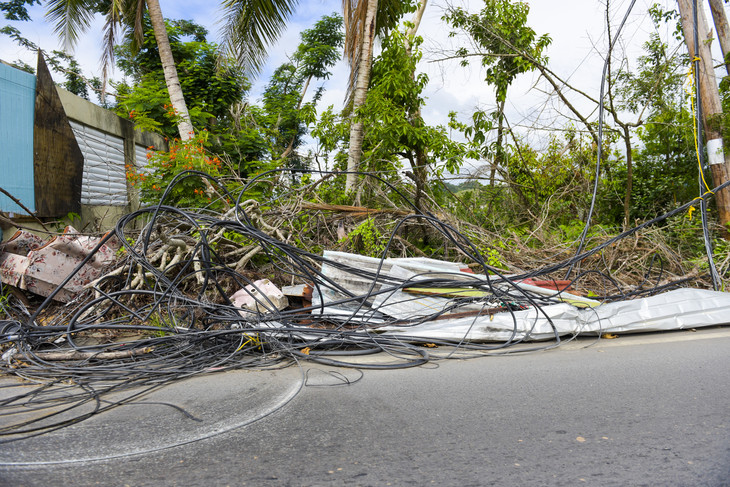 [Hurricane Maria aftermath in Puerto Rico. Storm debris and power lines on the side of the road in Vega Alta, Puerto Rico. Image: iStock Photo alejandrophotography]
Those resources include money, but also other forms of help, such as the allocation of first responders, electrical technicians and food aid, he said. This inability to properly allocate resources may also be behind Puerto Rico's sluggish recovery from the disaster.
"It's been more than six months after the hurricane and there are still people without energy on the island," said Santos. "And that's unheard of for any jurisdiction. Usually after a disaster, things are fixed in two or three months, at the latest."
He added that Puerto Rico's status as a territory, not a state, makes the ability of statistics to draw attention to concerns even more important.
[Hurricane Maria aftermath in Puerto Rico. Storm debris and power lines on the side of the road in Vega Alta, Puerto Rico. Image: iStock Photo alejandrophotography]
Those resources include money, but also other forms of help, such as the allocation of first responders, electrical technicians and food aid, he said. This inability to properly allocate resources may also be behind Puerto Rico's sluggish recovery from the disaster.
"It's been more than six months after the hurricane and there are still people without energy on the island," said Santos. "And that's unheard of for any jurisdiction. Usually after a disaster, things are fixed in two or three months, at the latest."
He added that Puerto Rico's status as a territory, not a state, makes the ability of statistics to draw attention to concerns even more important.
 "Statistics are the only real voice Puerto Ricans have," said Santos, who is also an assistant teaching professor in sociology and criminology. "They don't have votes. They can't vote for a member of Congress, or the president of the United States. Their political power is diminished, so the only way you can create an effective strategy is to use data as your main tool for discussion."
He added that he is particularly concerned with the increased scrutiny of the Puerto Rico Institute of Statistics and what that might mean for future data gathering and analysis on the island.
"If we do not accept what our data are telling us, we will not be able to address the problems," he said. "Any local government that wants to address the needs of its people should listen to people who are doing data analysis and to allow the data to speak for itself."
https://www.youtube.com/watch?v=EsKY6tRsoE4
Santos said that in a recent study, he and his colleagues estimated the death toll to be around 1,085, far higher than the 64 lives lost initially listed in government statistics. The government has not adjusted its tally and are not expected to do so anytime soon, according to Santos.
The researchers arrived at their numbers by analyzing excess deaths on the island to more accurately quantify fatalities caused — directly and indirectly — by Hurricane Maria. They found, for example, that the death rate from September to October was 27 percent higher in 2017 compared to previous years.
Most of the excess deaths were concentrated among older age groups, according to the researchers. Excess deaths in nursing homes were 45 percent higher in 2017 compared to 2016. The researchers also found a 41 percent increase in excess deaths at emergency departments.
"Statistics are the only real voice Puerto Ricans have," said Santos, who is also an assistant teaching professor in sociology and criminology. "They don't have votes. They can't vote for a member of Congress, or the president of the United States. Their political power is diminished, so the only way you can create an effective strategy is to use data as your main tool for discussion."
He added that he is particularly concerned with the increased scrutiny of the Puerto Rico Institute of Statistics and what that might mean for future data gathering and analysis on the island.
"If we do not accept what our data are telling us, we will not be able to address the problems," he said. "Any local government that wants to address the needs of its people should listen to people who are doing data analysis and to allow the data to speak for itself."
https://www.youtube.com/watch?v=EsKY6tRsoE4
Santos said that in a recent study, he and his colleagues estimated the death toll to be around 1,085, far higher than the 64 lives lost initially listed in government statistics. The government has not adjusted its tally and are not expected to do so anytime soon, according to Santos.
The researchers arrived at their numbers by analyzing excess deaths on the island to more accurately quantify fatalities caused — directly and indirectly — by Hurricane Maria. They found, for example, that the death rate from September to October was 27 percent higher in 2017 compared to previous years.
Most of the excess deaths were concentrated among older age groups, according to the researchers. Excess deaths in nursing homes were 45 percent higher in 2017 compared to 2016. The researchers also found a 41 percent increase in excess deaths at emergency departments.
[Hurricane Maria aftermath in Puerto Rico. Storm debris and power lines on the side of the road in Vega Alta, Puerto Rico. Image: iStock Photo alejandrophotography]
Those resources include money, but also other forms of help, such as the allocation of first responders, electrical technicians and food aid, he said. This inability to properly allocate resources may also be behind Puerto Rico's sluggish recovery from the disaster.
"It's been more than six months after the hurricane and there are still people without energy on the island," said Santos. "And that's unheard of for any jurisdiction. Usually after a disaster, things are fixed in two or three months, at the latest."
He added that Puerto Rico's status as a territory, not a state, makes the ability of statistics to draw attention to concerns even more important.
"Statistics are the only real voice Puerto Ricans have," said Santos, who is also an assistant teaching professor in sociology and criminology. "They don't have votes. They can't vote for a member of Congress, or the president of the United States. Their political power is diminished, so the only way you can create an effective strategy is to use data as your main tool for discussion."
He added that he is particularly concerned with the increased scrutiny of the Puerto Rico Institute of Statistics and what that might mean for future data gathering and analysis on the island.
"If we do not accept what our data are telling us, we will not be able to address the problems," he said. "Any local government that wants to address the needs of its people should listen to people who are doing data analysis and to allow the data to speak for itself."
https://www.youtube.com/watch?v=EsKY6tRsoE4
Santos said that in a recent study, he and his colleagues estimated the death toll to be around 1,085, far higher than the 64 lives lost initially listed in government statistics. The government has not adjusted its tally and are not expected to do so anytime soon, according to Santos.
The researchers arrived at their numbers by analyzing excess deaths on the island to more accurately quantify fatalities caused — directly and indirectly — by Hurricane Maria. They found, for example, that the death rate from September to October was 27 percent higher in 2017 compared to previous years.
Most of the excess deaths were concentrated among older age groups, according to the researchers. Excess deaths in nursing homes were 45 percent higher in 2017 compared to 2016. The researchers also found a 41 percent increase in excess deaths at emergency departments.All Weather News
More
Major River Flooding Causes Damage; Another Day of Storms in New Mexico
A powerful low pressure system has been movin
25 Oct 2026 2:05 AM

Warmer Than Average: Above-Normal Temperatures Across the Central U.S. This Week
WHAT TO EXPECTA ridge of high pressure linger
25 Oct 2026 1:20 AM

Hurricane Vance Swirling in the Pacific
After becoming a hurricane Friday, Vance quic
25 Oct 2026 1:05 AM

Sunny Day Flooding; King Tides Surge This Week
This week, the ocean is coming to low lying a
25 Oct 2026 1:00 AM


Several Fires Break Out in SoCal Last Week Amid Santa Ana Wind Event
Santa Ana winds helped several fires grow qui
19 Oct 2026 1:25 PM

Another Cold Morning Before Things Warm Back Up
Across portions of the Ohio Valley through th
19 Oct 2026 10:15 AM