Incoming Kelvin Wave for Southern California: One Piece of the El Nino Puzzle

The effects of El Niño are being felt along the West Coast. Everything from unusual marine life, warmer ocean temperatures and storms that can accelerate coastal erosion. The Governor of California, Gavin Newsom, has declared a state of emergency for the potential of this historic El Nino season.
There's another piece of the El Niño puzzle scientists are watching closely, a Kelvin wave moving through the Pacific. These waves can change sea levels and ocean conditions along the coast. Meteorologist Taban Sharifi spoke with Dr. Michael Jacox, a research oceanographer with NOAA, to better understand what these waves are and what they could mean for the West Coast during this El Nino.
What is a Kelvin wave?
These waves are very different from the waves we think about crashing on the beach. These waves originate off the equator.
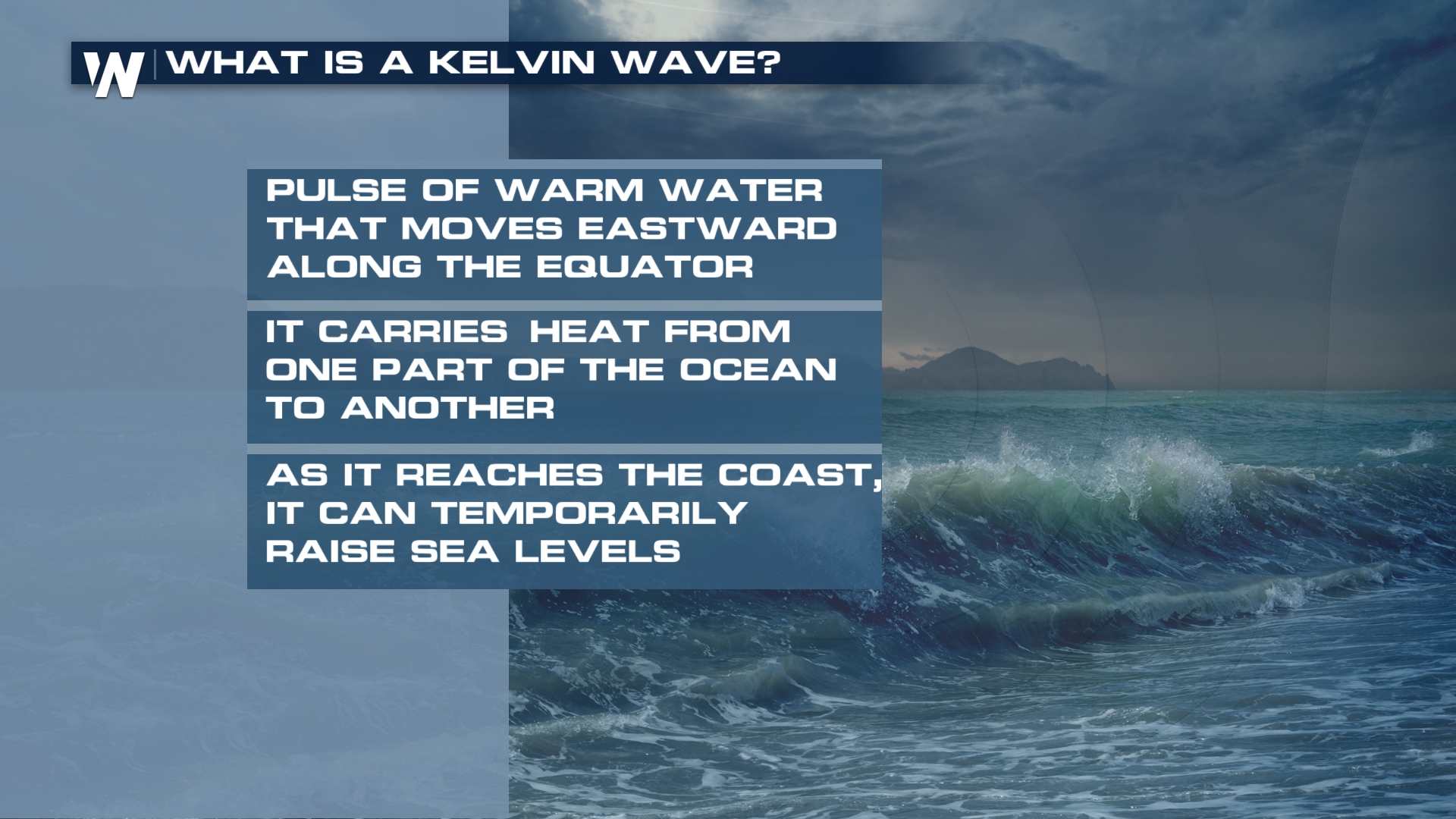 “They are very long and they travel huge distances,” said Jacox. These waves are important in the formation of El Niño. Jacox said, “The movement of these waves helps to transmit heat from west to east.”
Jacox said, “These waves themselves, it’s not like a tsunami or something that you’re going to see this big wave come in and wash over your balcony. When they come through, they can raise sea level by 6 to 12 inches. So then when you have really high tides, you have storm surge, you have these other effects, they’re happening on top of this extra 6 to 12 inches of sea level. This is sort of one ingredient in the recipe that amplifies the risk from those other factors.”
The biggest impacts will come around high tides and ongoing storms, increasing the risk of sea level rise and flooding. This current Kelvin wave is expected to be near San Diego in early to mid-October. You won’t be able to see it with the naked eye, but it will be detectable through ocean measurements.
Jacox wants people to know that Kelvin waves are not new. Scientists have known about Kelvin waves for 150 years. “The Kelvin waves are one piece of El Niño. El Niño will also change storm tracks, change wind patterns, and things like that. This is one we are able to track better than we have before, and we will be on top of watching it come through,” said Jacox.
Stay with WeatherNation through the hurricane season and the rest of the potential effects of El Niño on the West Coast.


