Lake Powell Drops to Record Low

The second largest reservoir in the United States now sits at its lowest level on record, following a dismal year for snowfall in the Central Rockies. Images released by NASA (top of page) show the contrast with 2017, which saw heavy snow during the preceding winter and thus, plentiful runoff during the spring and summer.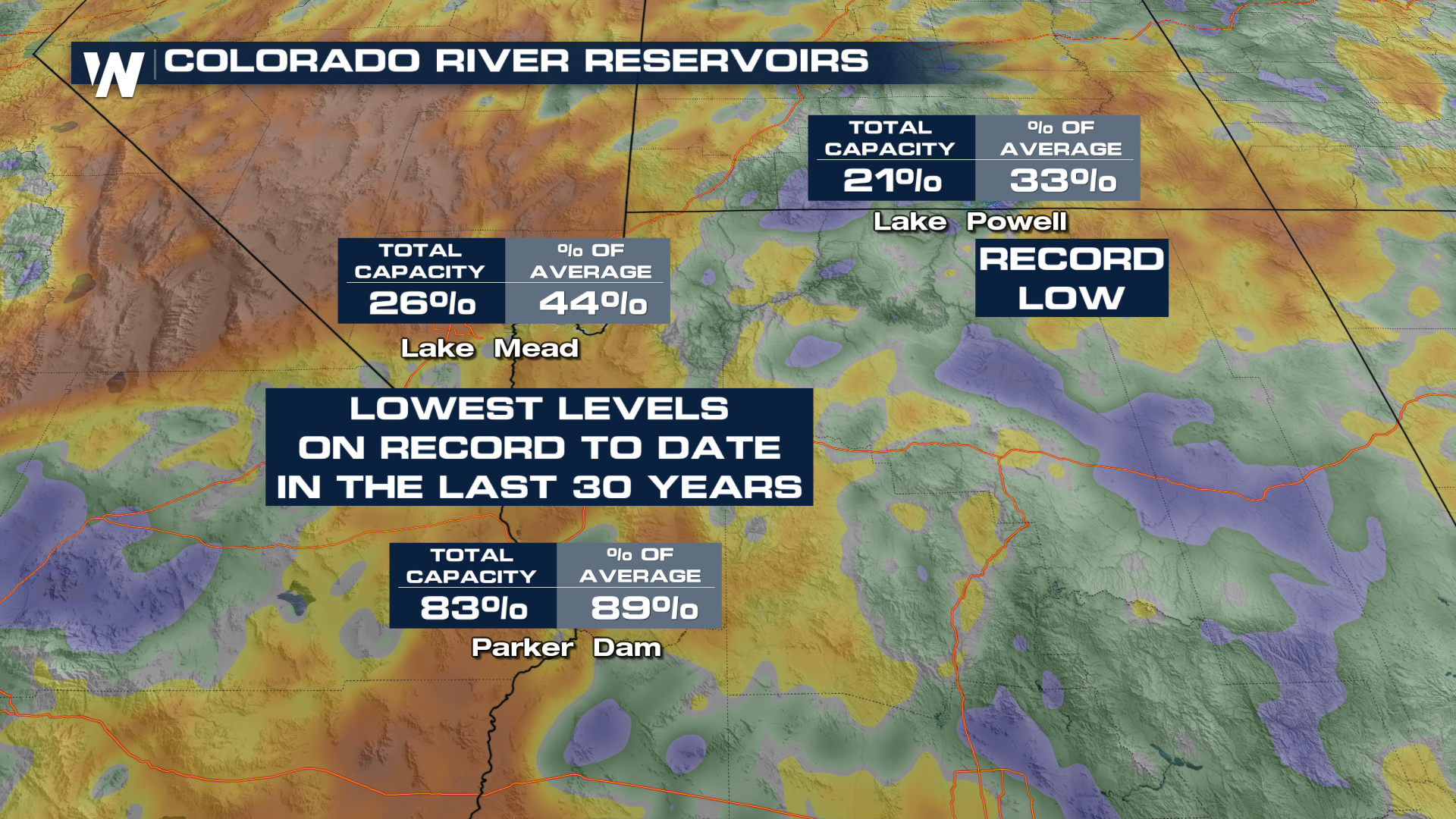
Downstream, Lake Mead and the Parker Dam are both at their lowest levels at to-date over the past 30 years. Both are also fed by the struggling Colorado River. River managers have had to take action to keep water levels above the threshold necessary to generate power, including releasing extra water from upstream basins and cancelling timed releases set to help native species survive on the river.
Snowpack Determines River Levels
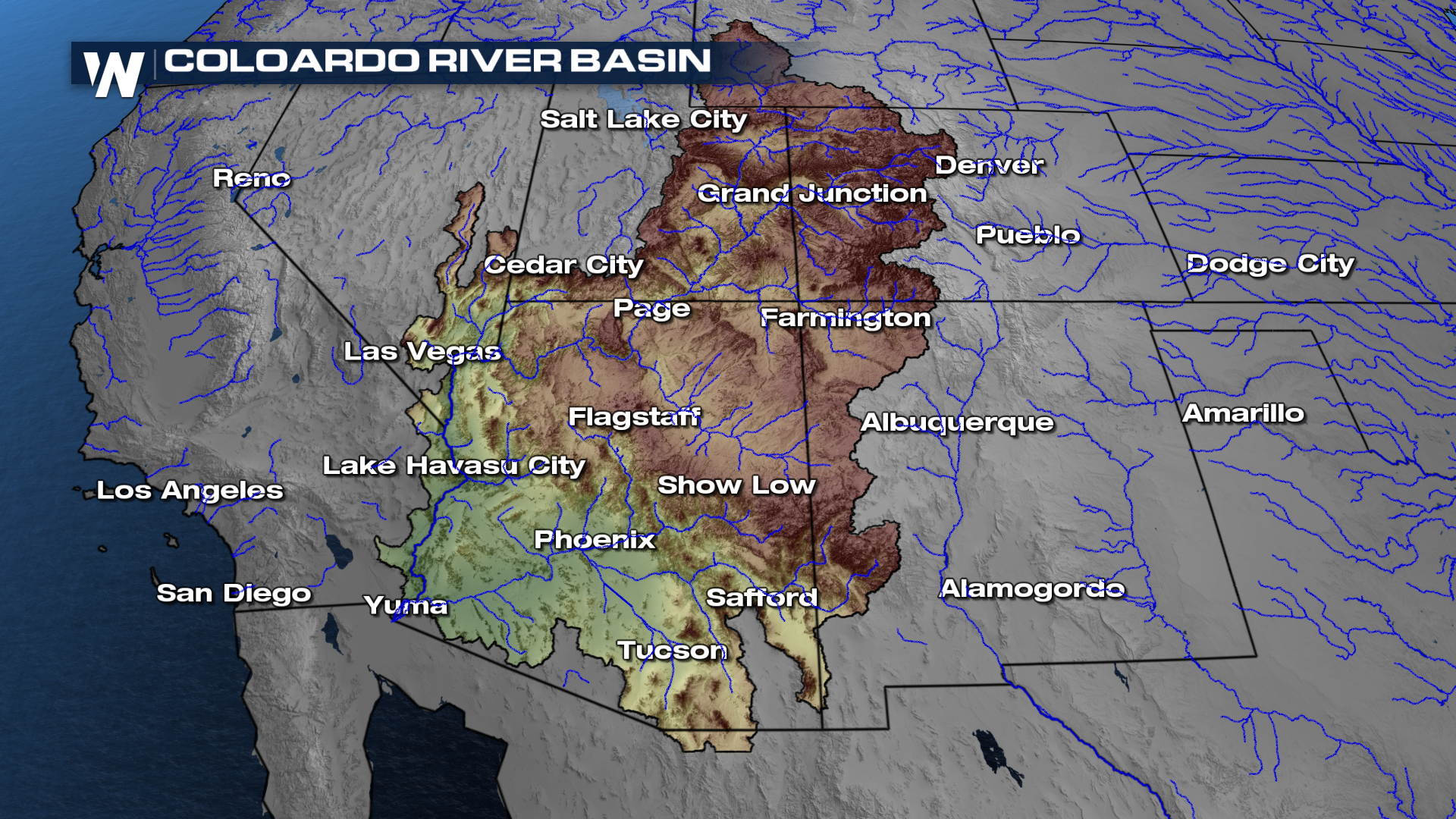
While the Southwest Monsoon has had a solid season in 2026, those hit or miss thunderstorms are only a drop in the bucket compared to the water supplied to the Colorado River from melting snow. The river is fed by numerous mountain ranges in the Central and Southern Rockies, though most of the water comes from the mountains west of the continental divide in Colorado.
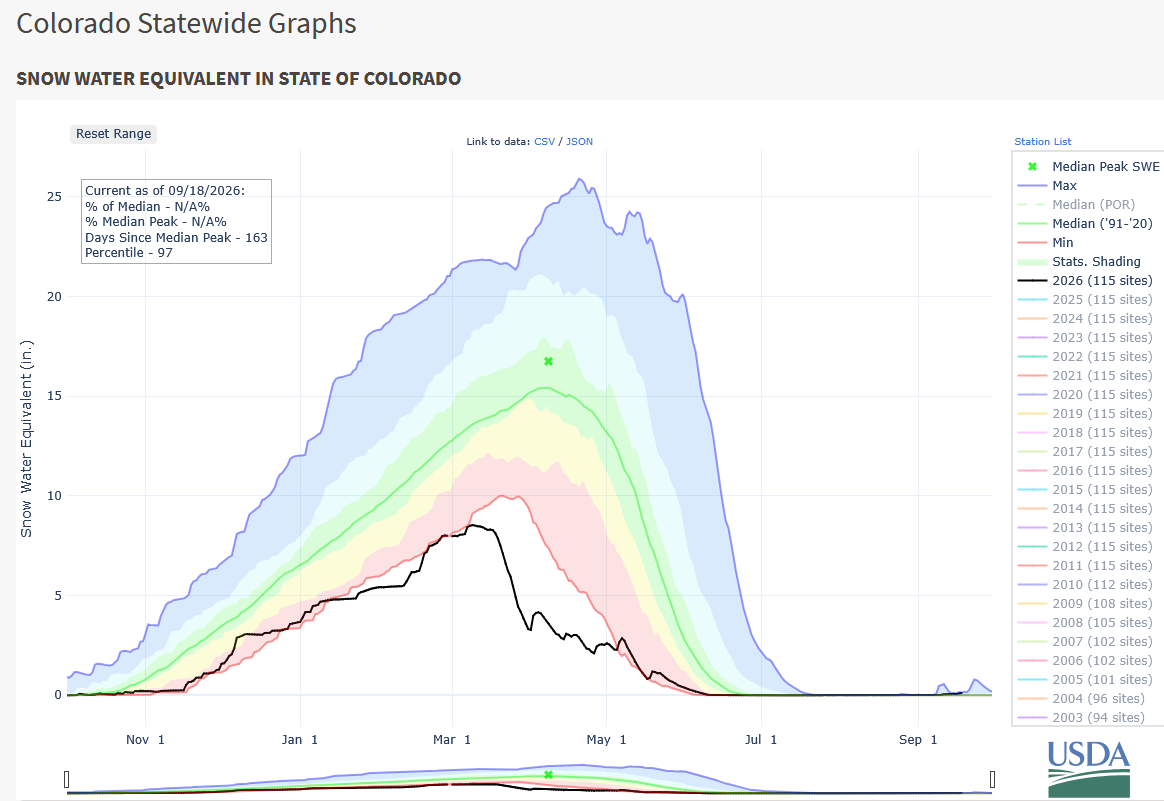
Snowpack in Colorado got a late surge in the Spring but was still near record lows, especially in Southwestern Colorado. Many ski resorts were forced to shut down a week to a month ahead of normal. The melt-off of the snowpack was the second earliest on record.
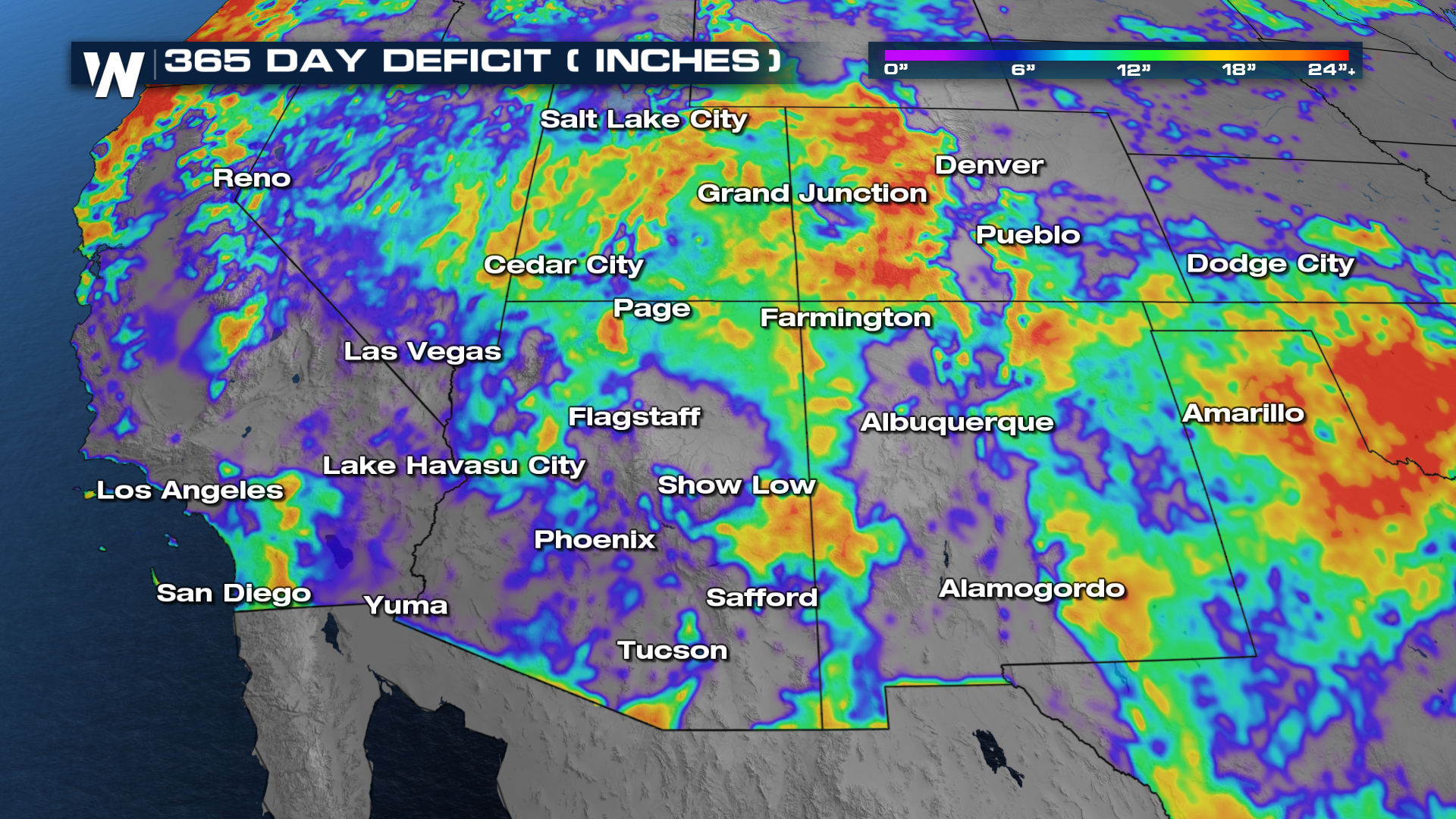
The deficit of precipitation is tremendous in many areas, but western Colorado stands out with the bright red colors, indicating at least 2 feet of water missing over the last year. Other mountain ranges that send runoff into the Colorado are also lagging well behind, with deficits of 1-2 feet widespread across the west.
Winter Outlook
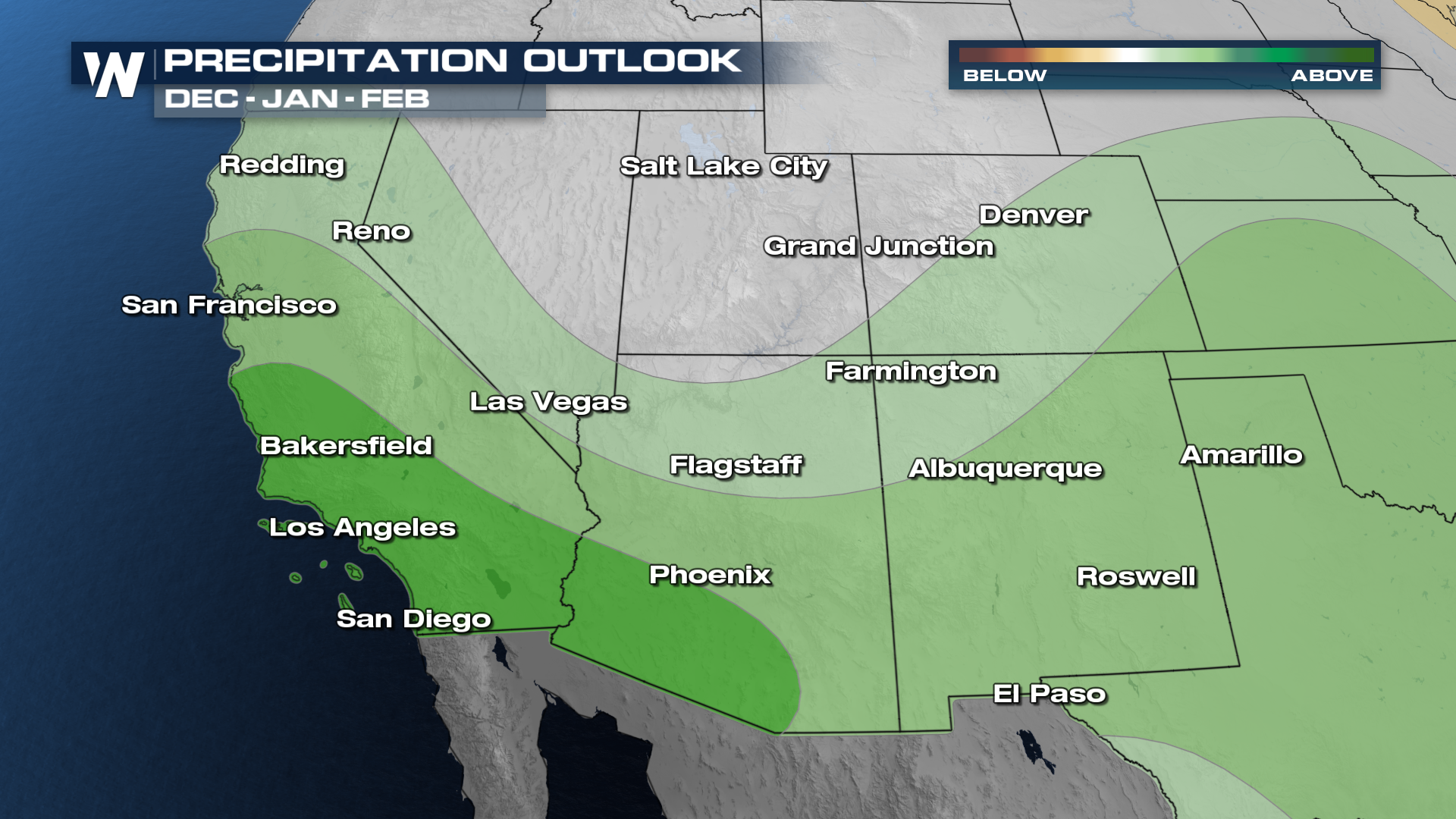
The surging El Niño could offer some help in the form of heavy precipitation. Wetter than average conditions are favored across much of the west, with near normal precipitation favored for much of the Upper Colorado River Basin. Unfortunately after many years of below average precipitation, it would likely take many successive seasons to help the river return to normal.