Spokane Area Fires: Some Containment

SPOKANE, WA - On Saturday, August 1st, the Old Trails Fire ignited northwest of Spokane. This fire was fueled by hot, dry conditions and wind gusts up to 45 mph, which helped the fire spread rapidly through grass and brush before reaching neighborhoods. The fire eventually crossed the Spokane River, creating additional challenges for firefighters.
UPDATE: The cause still remains under investigation, but a convicted felon has been arrested on an arson charge as the primary suspect for starting the Old Trails Fire near Spokane.
Impacts:
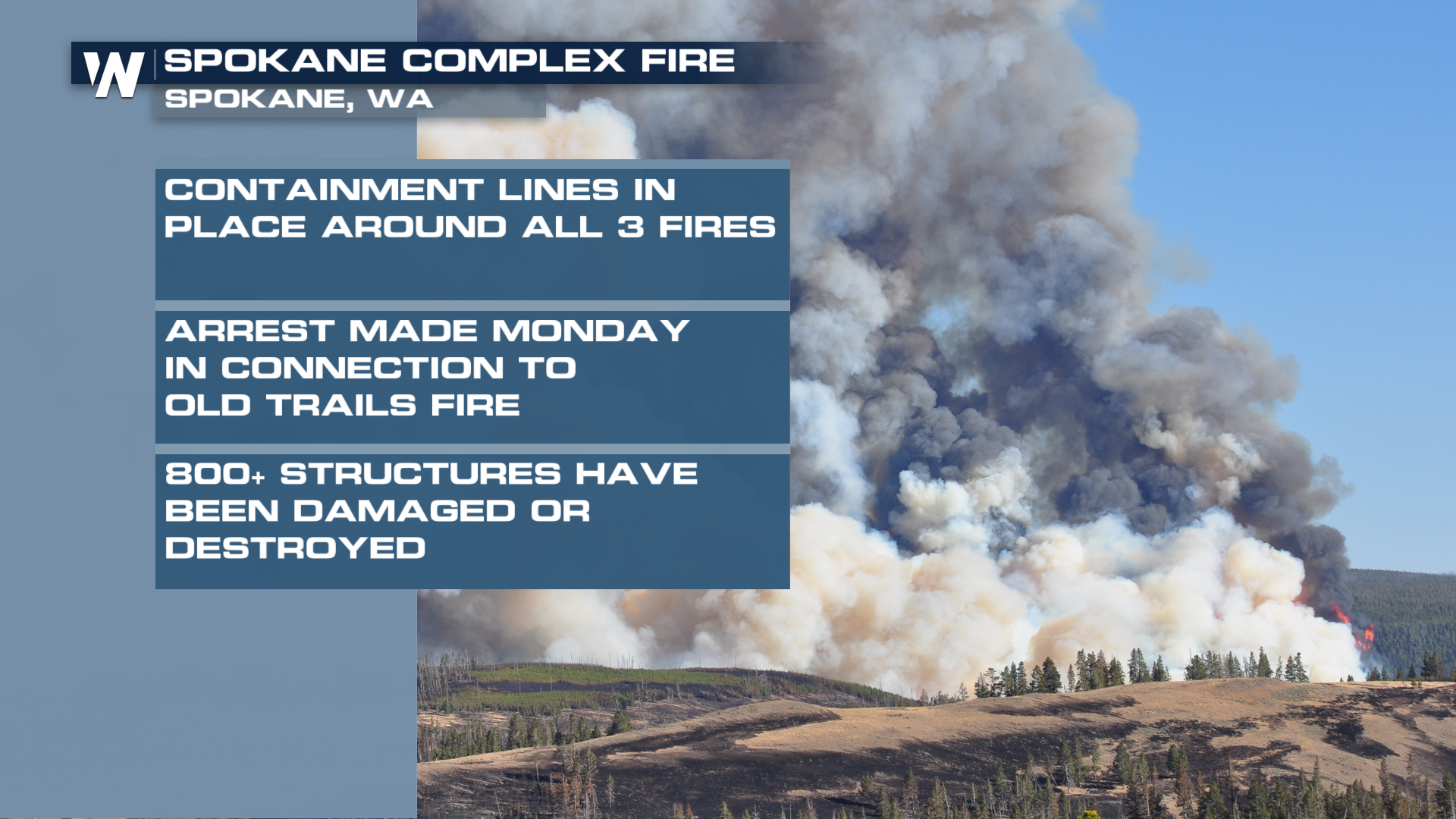
The Spokane Area fires, consisting of the Autumn Lane, Old Trails, and Fairview fires, have burned 10,436 acres
Containment: Autumn Lane 37%, Old Trails 23%, and Fairview 31%
Thousands of residents remain under evacuation orders
Approximately 800+ structures have been destroyed, and thousands more are threatened
The Governor of Washington, Bob Ferguson, has declared a statewide wildfire emergency, including a statewide burn ban due to the current drought conditions, high temperatures, and high winds. The President has also approved an emergency declaration for Washington, providing federal disaster assistance to supplement response efforts due to emergency conditions resulting in these wildfires.
Forecast Ahead
Winds will increase in the forecast on Friday and Saturday, prompting new fire weather alerts across the northwest. Red Flag Warnings are in place for portions of the Northwest and Northern Four Corners.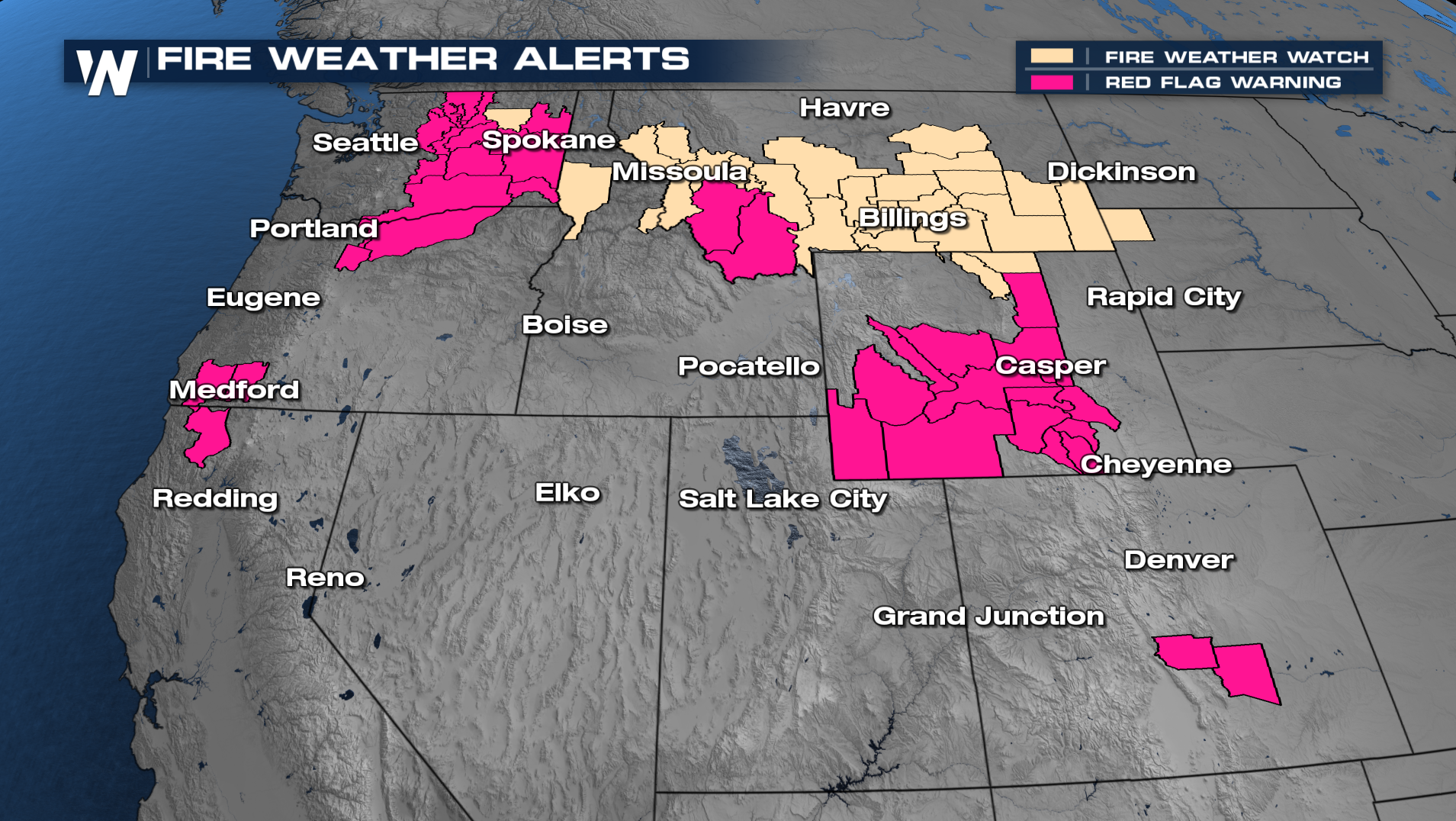
Residents should have a go bag packed and an evacuation plan in place in case evacuation orders expand into their area. If your community is placed under an evacuation order, leave immediately and follow instructions from local emergency officials.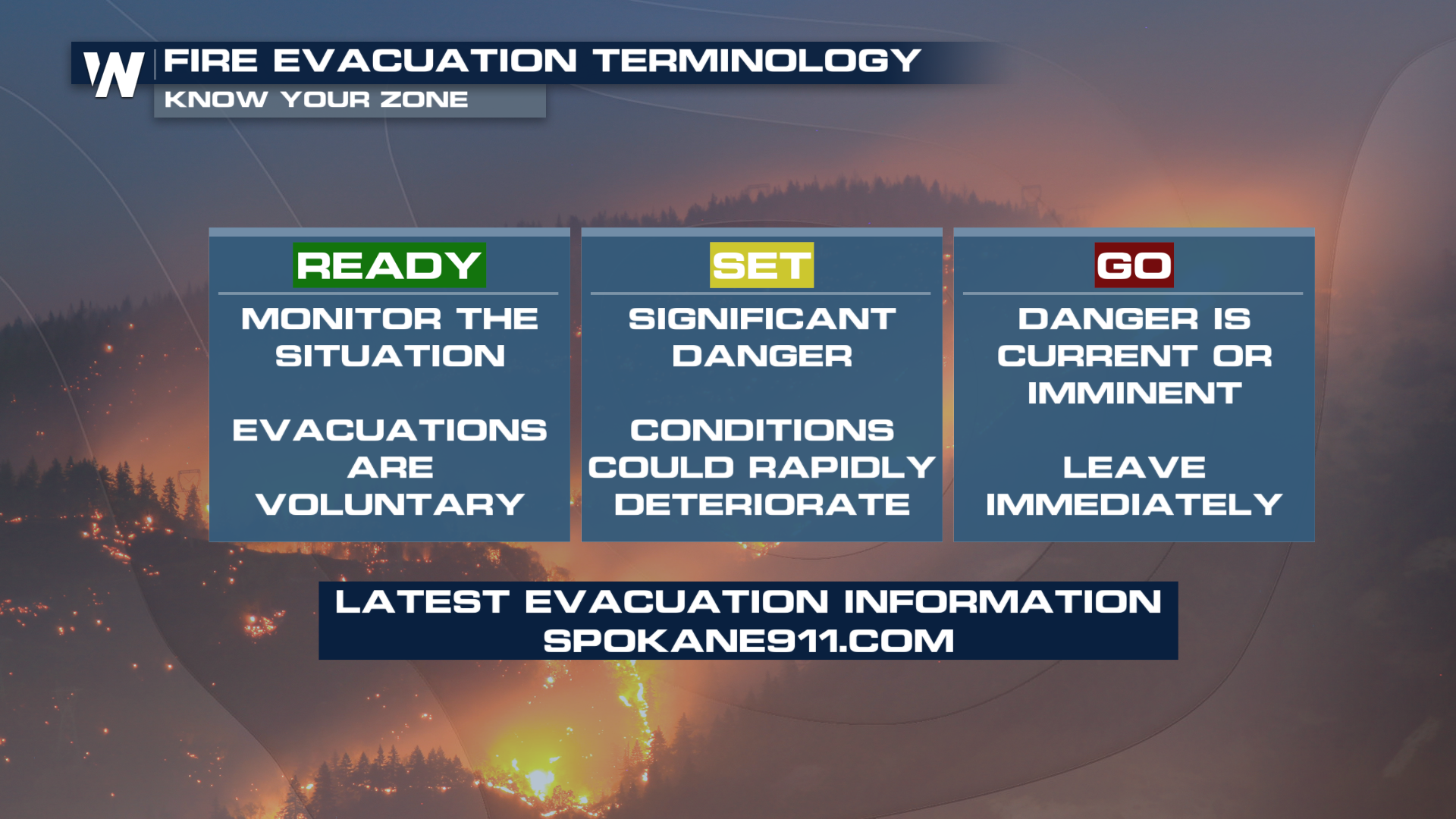
Air Quality
Smoke from the ongoing wildfires has prompted air quality alerts across much of the northwestern United States. People in affected areas should limit or avoid outdoor activities while poor air quality persists, especially those with respiratory conditions, older adults, and young children.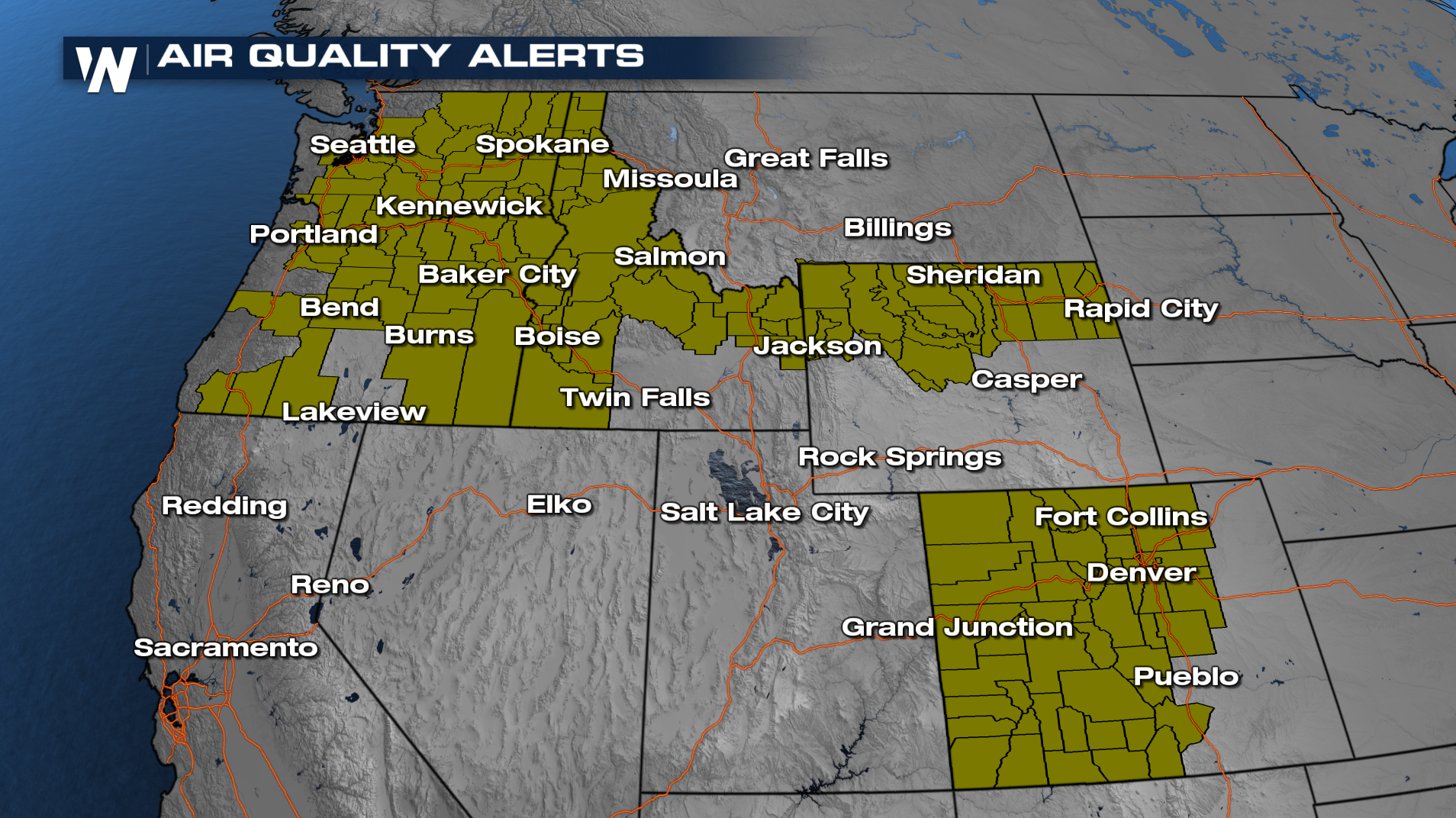
Forecast models indicate areas of dense smoke will spill southward. As temperatures cool after sunset, a temperature inversion often forms, trapping smoke close to the ground and leading to deteriorating air quality near the surface. AS the next front in the north-central U.S. moves through it will likely pull in more moderate to dense smoke behind it.
Residents should expect reduced visibility and degraded air quality through Monday morning before seeing improvements.


