Saharan Dust Arrives in the Tropics... And Texas!
Special Stories
30 Jun 2018 4:49 PM
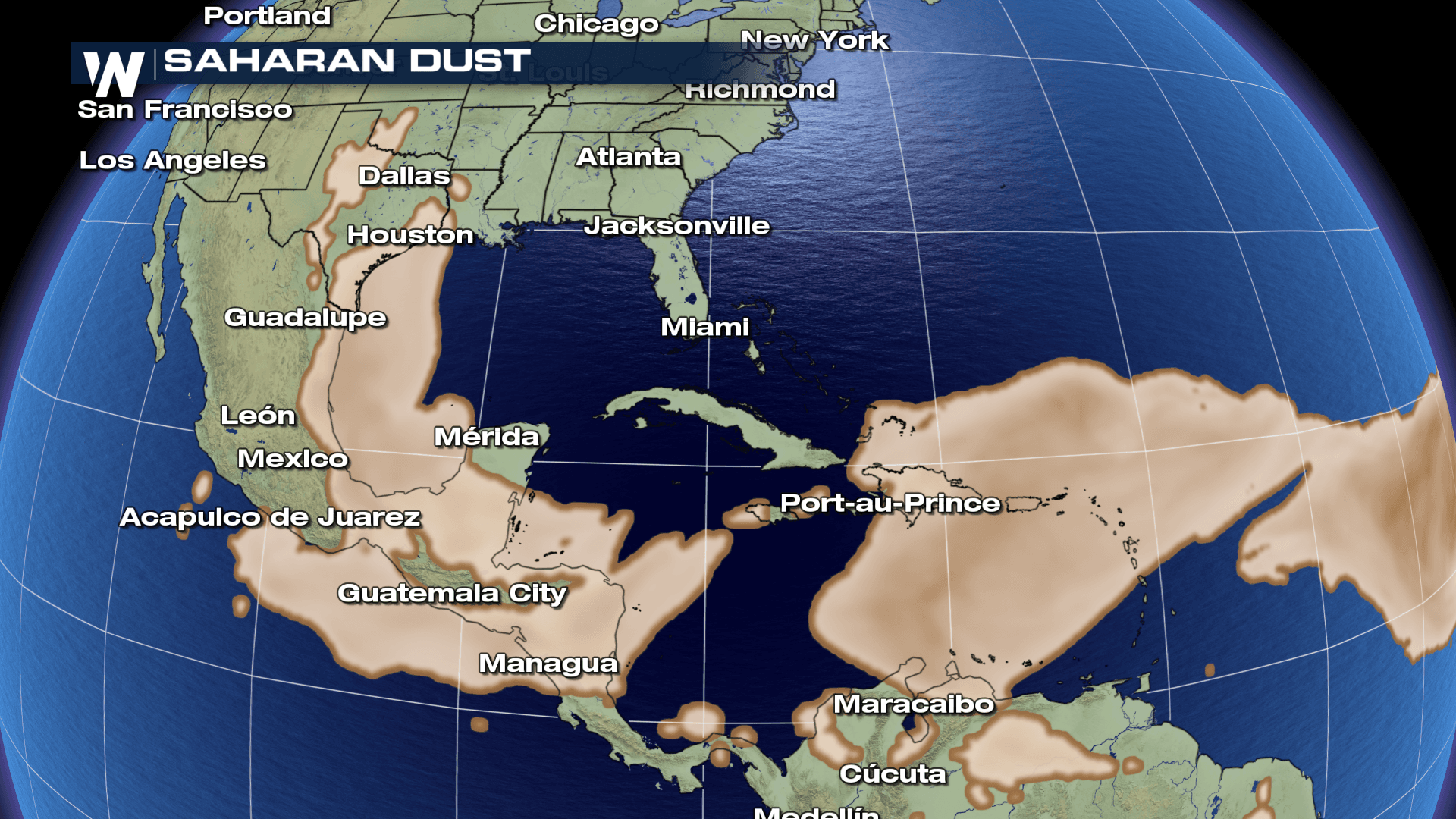
If you live in Texas, or even Louisiana, you may have noticed that it has been very hazy the last few days. Why? Believe it or not, it's because of dust from the Sahara Desert. That's right, dust from Africa! It's actually an annual occurrence. Each year, around this time, trade winds pick up millions of tons of dust from the Sahara Desert, and carry it westward across the Atlantic Ocean. Amounts of dust vary each season, depending on levels of aridity in western Africa, and the strength of the winds. This year is particularly dusty, and according to NASA, the tropical Atlantic has just experienced one of its dustiest weeks in 15 years! Much of the dust that crossed the Atlantic Ocean appears to be coming from the Bodele Depression, which is a dried lake bed in northeastern Chad.
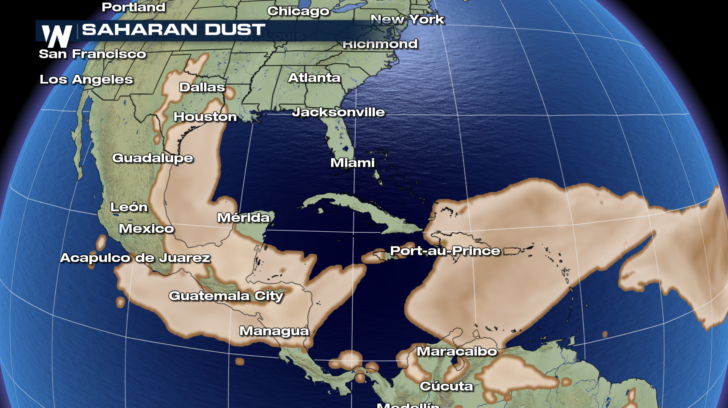
The Saharan Air Layer is the technical term for the dust. And it's actually a combination of tiny aerosols, like sand, dirt, and dust. The Saharan Air Layer usually resides between 5,000 and 15,000 feet above sea level. And when the winds are just right, dust from the tropics can reach Central America and the western Gulf of Mexico. A current image of the dust shows it tracking into Texas.
 People in Texas have been taking notice, and so has the National Weather Service in Houston. They are tracking the Saharan Dust, and informing people on their Twitter page. Houston is sitting in a plume of haze. However, with all the particulate matter in the air, brilliant sunrises and vibrant sunsets are possible... one of the benefits of the dust.
https://twitter.com/NWSHouston/status/1012856925002911744
The dust has other benefits too. It helps build beaches in the Caribbean and fertilizes soils in the Amazon. And it likely plays a role in the suppression of tropical storms and hurricanes. Tropical storms and hurricanes need a deep fetch of moisture to develop. When a dry layer of Saharan dust is present, it's very difficult for tropical systems to develop efficiently. The relatively strong winds associated with the dust transport can also create wind shear, which also makes it more difficult for storms to develop.
Of course, the dust can have negative impacts as well. People with respiratory issues may find it more difficult to breathe. These people may want to limit their time outdoors when the dust is present. And some research suggests that the dust can be harmful to coral reefs.
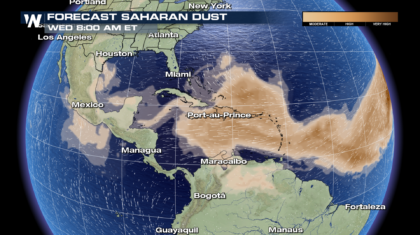
Going forward, it appears the dust will be around for the next several days. The following graphics show the dust plume in place in the Caribbean through at least Wednesday.
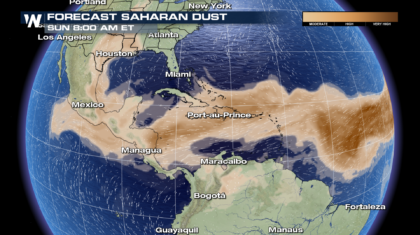
On Sunday, high levels of dust will also be found in Texas and Louisiana.
People in Texas have been taking notice, and so has the National Weather Service in Houston. They are tracking the Saharan Dust, and informing people on their Twitter page. Houston is sitting in a plume of haze. However, with all the particulate matter in the air, brilliant sunrises and vibrant sunsets are possible... one of the benefits of the dust.
https://twitter.com/NWSHouston/status/1012856925002911744
The dust has other benefits too. It helps build beaches in the Caribbean and fertilizes soils in the Amazon. And it likely plays a role in the suppression of tropical storms and hurricanes. Tropical storms and hurricanes need a deep fetch of moisture to develop. When a dry layer of Saharan dust is present, it's very difficult for tropical systems to develop efficiently. The relatively strong winds associated with the dust transport can also create wind shear, which also makes it more difficult for storms to develop.
Of course, the dust can have negative impacts as well. People with respiratory issues may find it more difficult to breathe. These people may want to limit their time outdoors when the dust is present. And some research suggests that the dust can be harmful to coral reefs.
Going forward, it appears the dust will be around for the next several days. The following graphics show the dust plume in place in the Caribbean through at least Wednesday.
On Sunday, high levels of dust will also be found in Texas and Louisiana.
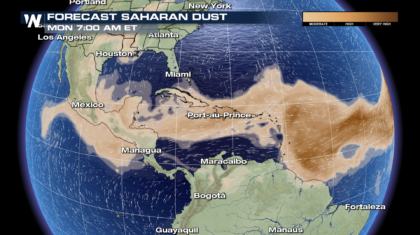
 On Monday, dust will fan out into north Texas, and remain rather thick in Louisiana.
 On Tuesday, lower levels of dust will return to east Texas. Louisiana will be mainly dust-free.
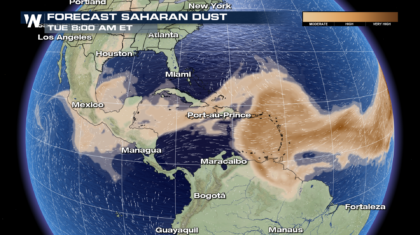 And by Wednesday, most of the dust in Texas will be gone. However, levels will remain high in the eastern Caribbean.
 Enjoy the beautiful sunrises and sunsets!
For WeatherNation: Meteorologist Matt Monroe
Enjoy the beautiful sunrises and sunsets!
For WeatherNation: Meteorologist Matt Monroe
People in Texas have been taking notice, and so has the National Weather Service in Houston. They are tracking the Saharan Dust, and informing people on their Twitter page. Houston is sitting in a plume of haze. However, with all the particulate matter in the air, brilliant sunrises and vibrant sunsets are possible... one of the benefits of the dust.
https://twitter.com/NWSHouston/status/1012856925002911744
The dust has other benefits too. It helps build beaches in the Caribbean and fertilizes soils in the Amazon. And it likely plays a role in the suppression of tropical storms and hurricanes. Tropical storms and hurricanes need a deep fetch of moisture to develop. When a dry layer of Saharan dust is present, it's very difficult for tropical systems to develop efficiently. The relatively strong winds associated with the dust transport can also create wind shear, which also makes it more difficult for storms to develop.
Of course, the dust can have negative impacts as well. People with respiratory issues may find it more difficult to breathe. These people may want to limit their time outdoors when the dust is present. And some research suggests that the dust can be harmful to coral reefs.
Going forward, it appears the dust will be around for the next several days. The following graphics show the dust plume in place in the Caribbean through at least Wednesday.
On Sunday, high levels of dust will also be found in Texas and Louisiana.
On Monday, dust will fan out into north Texas, and remain rather thick in Louisiana.
On Tuesday, lower levels of dust will return to east Texas. Louisiana will be mainly dust-free.
And by Wednesday, most of the dust in Texas will be gone. However, levels will remain high in the eastern Caribbean.
Enjoy the beautiful sunrises and sunsets!
For WeatherNation: Meteorologist Matt MonroeAll Weather News
More
Severe Weather & Heavy Rainfall Aims for the West This Week
Looking ahead to this week, a low-pressure sy
21 Oct 2026 7:25 PM

Nor'Easter Riles up the Waves This Week
SETUPAn upper-level low broke off from the fl
21 Oct 2026 7:15 PM

Tropical Depression Twenty-Two-E Forms in the Pacific
Isaias ended the late-season streak of no hur
21 Oct 2026 7:10 PM

Warmer Than Average: Above-Normal Temperatures Across the Central U.S. This Week
WHAT TO EXPECTA ridge of high pressure will b
21 Oct 2026 11:20 AM

Several Fires Break Out in SoCal Last Week Amid Santa Ana Wind Event
Santa Ana winds helped several fires grow qui
19 Oct 2026 1:25 PM

Another Cold Morning Before Things Warm Back Up
Across portions of the Ohio Valley through th
19 Oct 2026 10:15 AM

Severe Risk Diminishing Saturday Morning for the Northeast
Severe Storm PotentialSevere risk is decreasi
16 Oct 2026 10:20 AM