"Snow Drought" Threatening Western U.S.
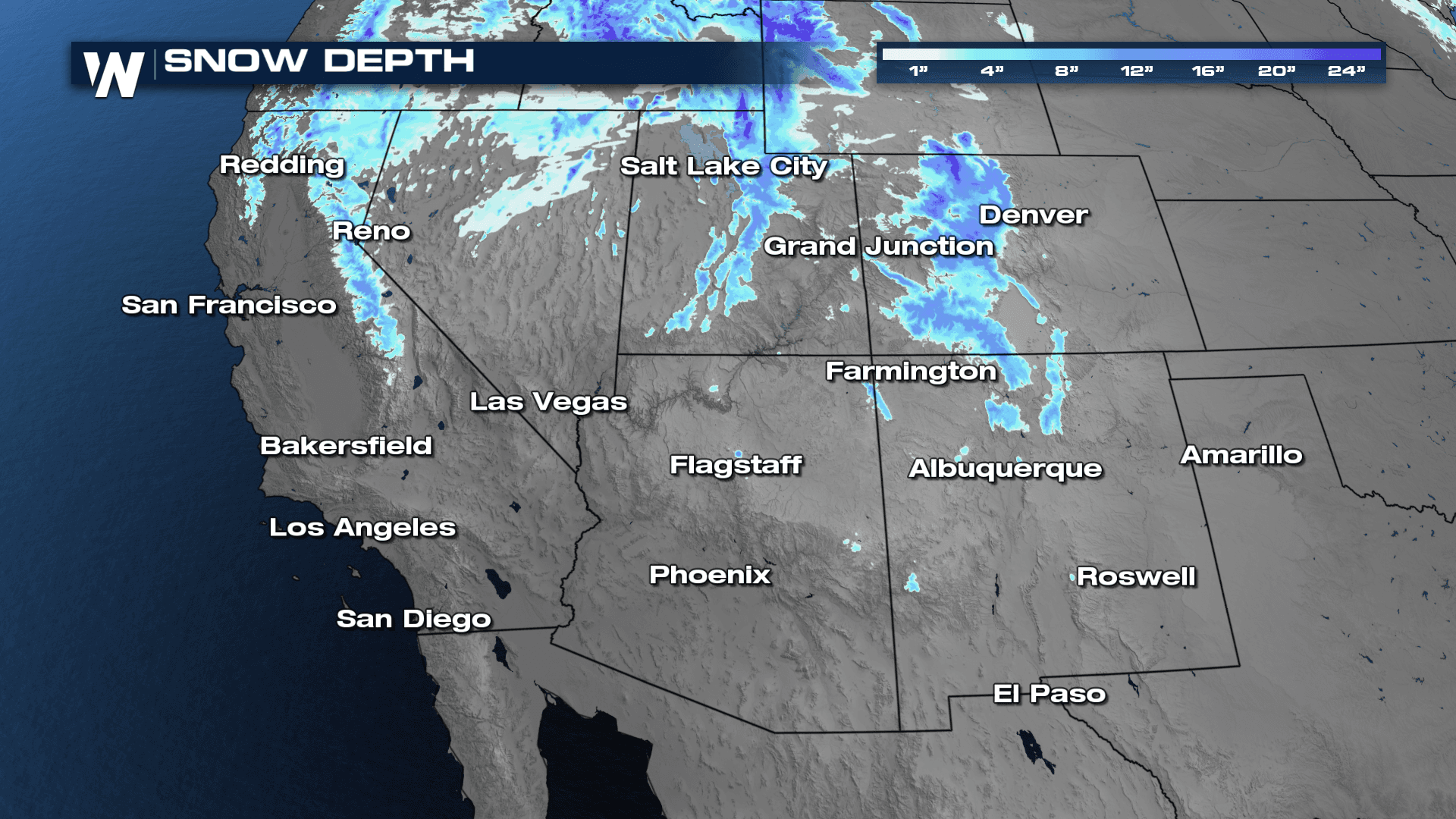
After a record setting 2022-23 winter season for the Southwest U.S. including 12 atmospheric rivers that brought heavy rain and snow to California, Nevada and the 4 Corners region, the 2023-34 Winter season is getting off to a slower start. In fact, 73% of western U.S. snow reporting stations are seeing Snow Water Equivalent [SWE] below normal and 42% of stations are below the 30th percentile for SWE. Some of the most drastic conditions are in the Sierra Nevada and northern Montana.
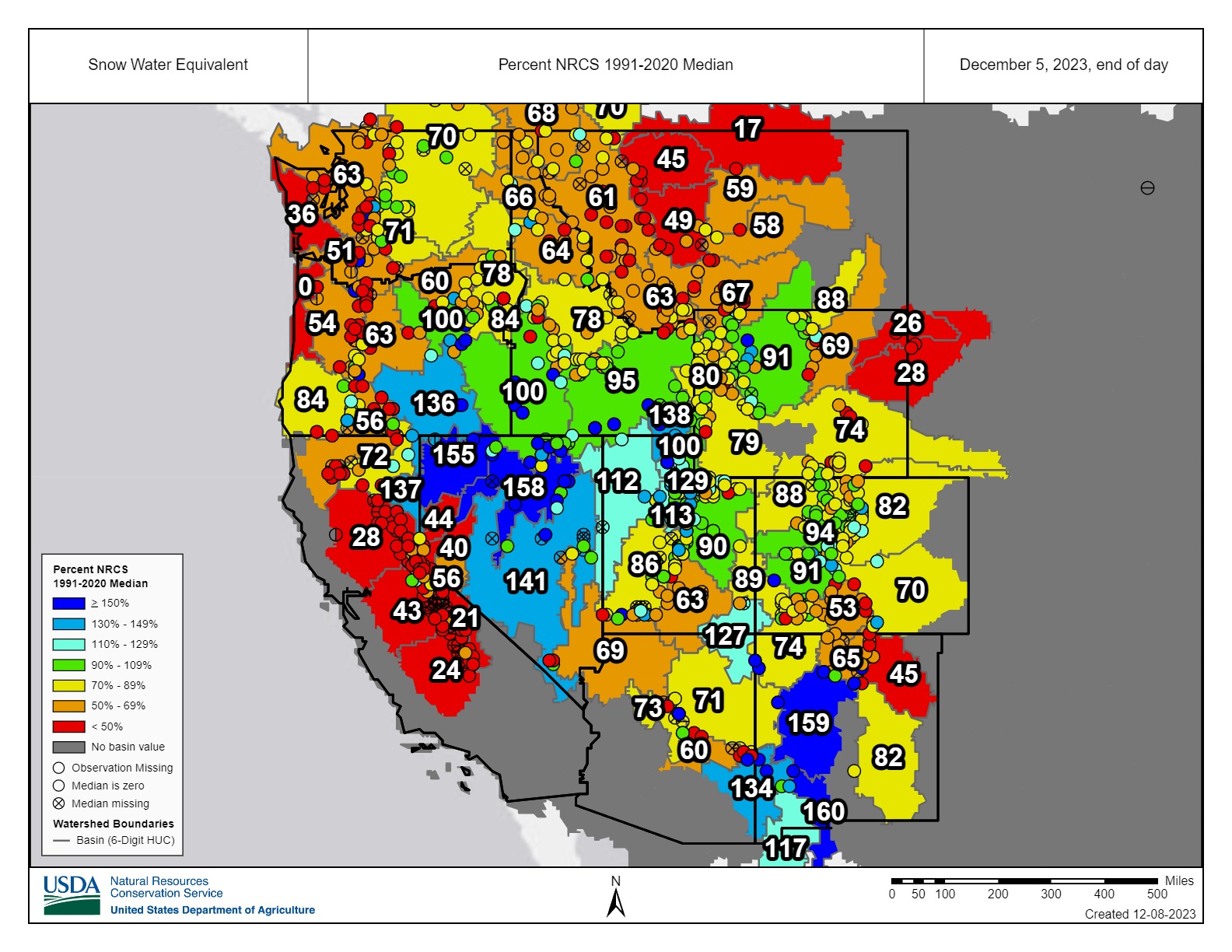 NIDIS attributes the drought conditions due to the minimal precipitation or "snow drought" seen across the region. In Colorado and Utah, most reporting stations are seeing SWE right around average with the worst of the conditions in the Rio Grande Basin and the Sangre de Cristo mountains of southern Colorado and New Mexico.
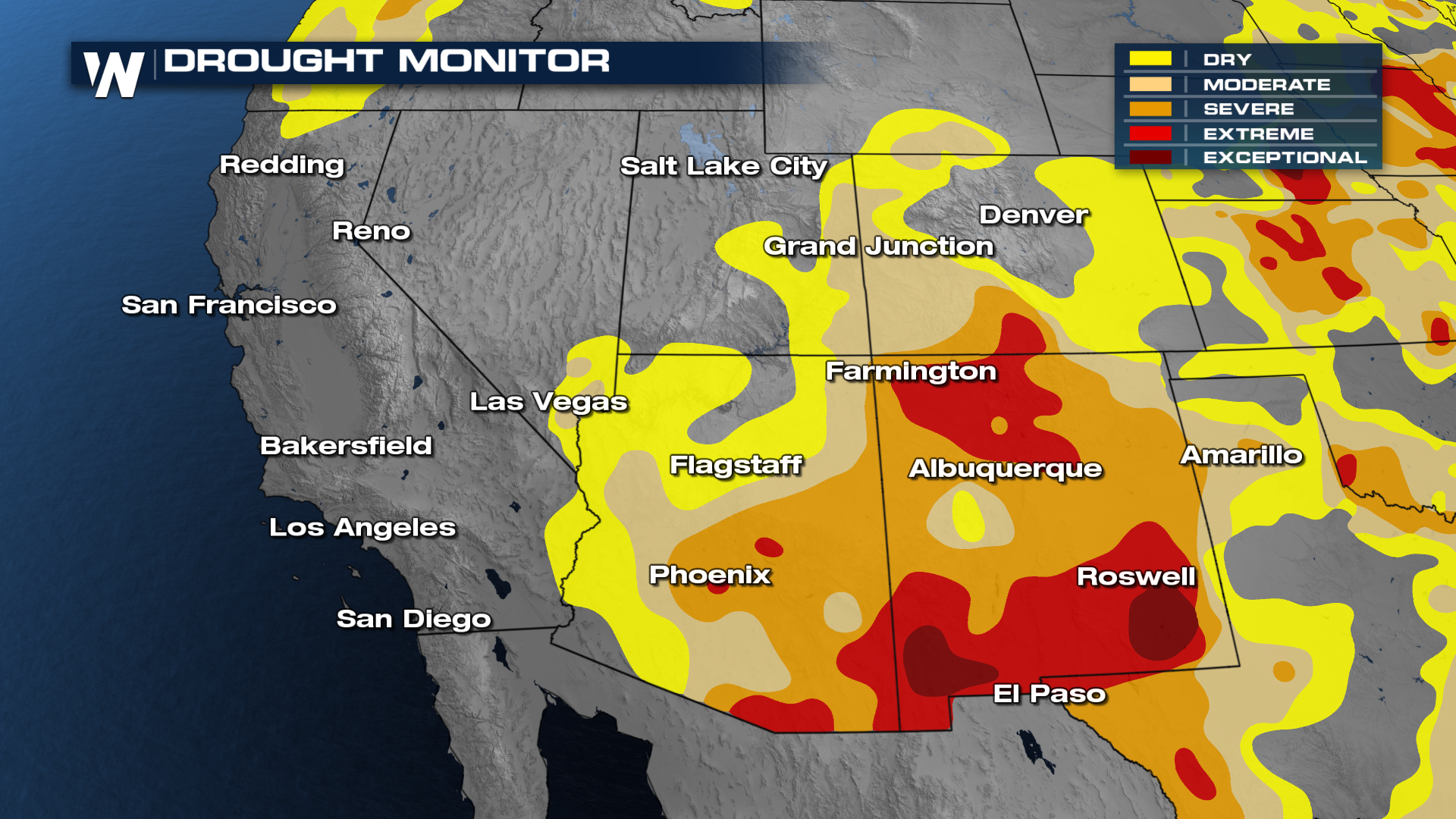
Of course snow drought isn't the only reason why the intermountain west is experiencing drought conditions. A lackluster monsoon season in New Mexico can be blamed for setting up extreme (level 4 out of 5) drought conditions from summer into early fall. In the latest Drought update, the National Integrated Drought Information System with NOAA announced that the southern 4 Corners region of Arizona and New Mexico are experiencing high levels of drought with 96.8% of New Mexico in drought conditions.
 Additionally, most of the winter storms so far in the 2023-24 water year (which runs October 1 - September 30) have benefited the Pacific Northwest, as recently as the first week of December when warmer temperatures melted snowpack and lead to rivers running high and subsequent flooding.
The other factor has been warmer than average temperatures, due in part to a strong El Nino pattern which typically results in warmer temperatures for the western states and northern Rockies. That pattern is likely to continue into the winter months. The other factor with El Nino is the likelihood of drought conditions expanding across the Southwest U.S. which could be trouble for an area that is still recovering from decades-long drought. Despite the active 2022-23 winter and meaningful moisture contributing to low reservoirs across the mountain west, "Lakes Powell and Mead continue to run very low with respect to long-term averages, given the overall dryness and warmth of the last couple of decades" according to Curtis Riganti of the National Drought Mitigation Center in Nebraska.


