New NOAA Report Looks at National Coastal Flood Vulnerability
Special Stories
20 Mar 2018 8:33 AM
From NOAA
NOAA scientists have demonstrated a new method to assess flood vulnerability in the United States on a national to regional level.
The report, spearheaded by sea level experts from NOAA’s Center for Operational Oceanographic Products and Services, looked at existing flood thresholds established by the National Weather Service and found patterns in the thresholds based upon tide range. They were then able to apply that pattern nationwide and find a statistical and consistent way to measure and monitor minor high tide flooding, as well as moderate and major flooding in locations where no threshold exists.
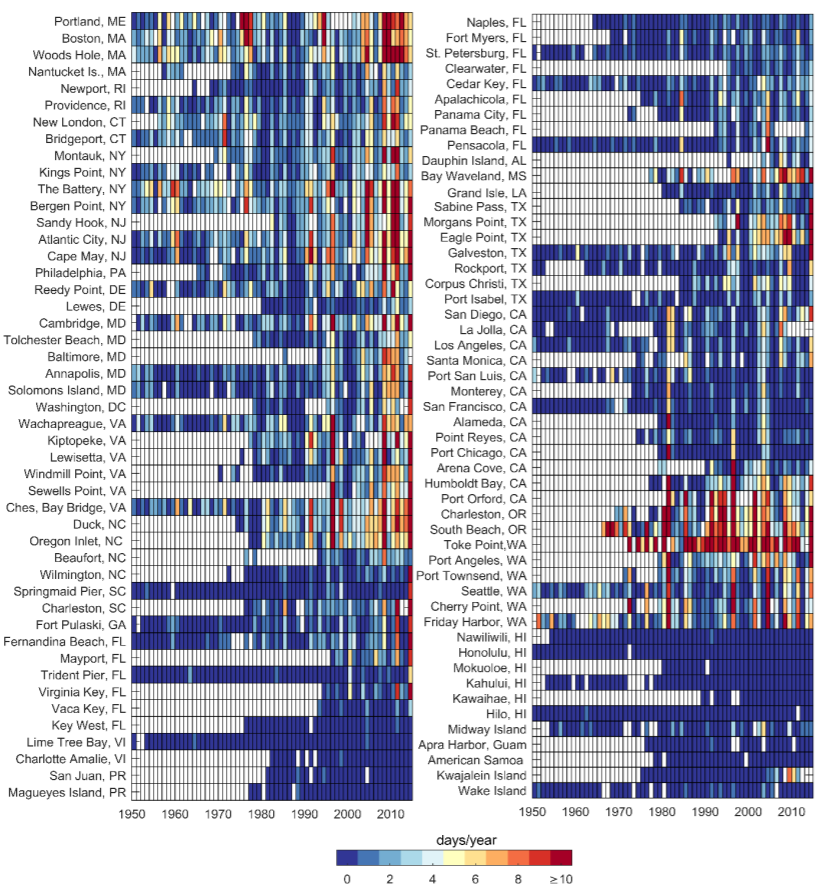 [Annual number of high tide floods (days per year) at NOAA tide gauge locations. A year is defined in
terms of a meteorological year (May–April). Note: White squares indicate no data or that hourly data was less than 80% complete within a year.]
The report finds that, on average, U.S. coastal infrastructure is vulnerable to minor, moderate, and major flooding at heights of about 1.6, 2.6, and 3.9 feet above the average daily highest tide (Mean Higher High Water). Trends in annual high tide flood frequencies are increasing or accelerating at two-thirds of the roughly 100 locations examined.
[Annual number of high tide floods (days per year) at NOAA tide gauge locations. A year is defined in
terms of a meteorological year (May–April). Note: White squares indicate no data or that hourly data was less than 80% complete within a year.]
The report finds that, on average, U.S. coastal infrastructure is vulnerable to minor, moderate, and major flooding at heights of about 1.6, 2.6, and 3.9 feet above the average daily highest tide (Mean Higher High Water). Trends in annual high tide flood frequencies are increasing or accelerating at two-thirds of the roughly 100 locations examined.
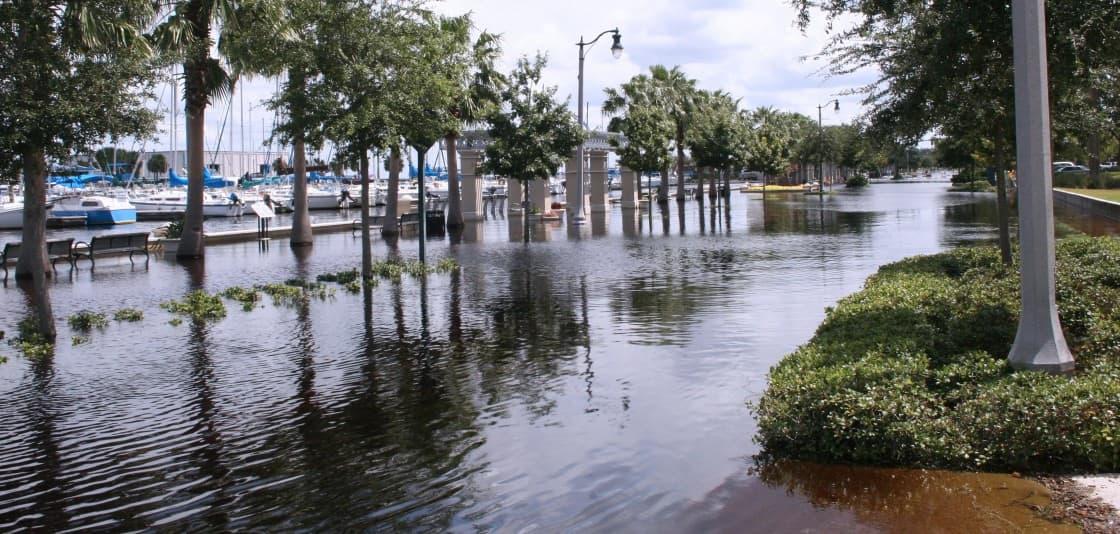
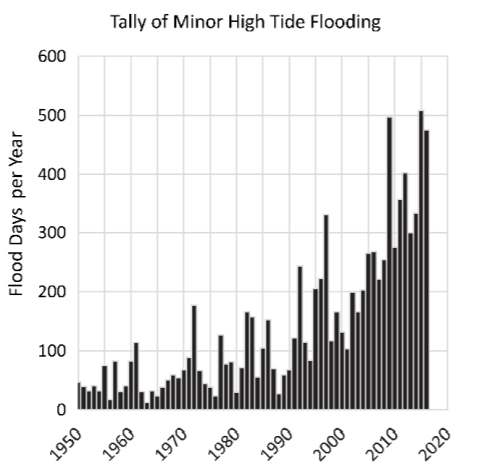 This science gives communities more information about their risk as they prepare for coastal flooding. With continued increases in regional sea level rise projected to occur, high tide flooding will become chronic in the next several decades.
Edited for WeatherNation by Meteorologist Mace Michaels
This science gives communities more information about their risk as they prepare for coastal flooding. With continued increases in regional sea level rise projected to occur, high tide flooding will become chronic in the next several decades.
Edited for WeatherNation by Meteorologist Mace Michaels
[Annual number of high tide floods (days per year) at NOAA tide gauge locations. A year is defined in
terms of a meteorological year (May–April). Note: White squares indicate no data or that hourly data was less than 80% complete within a year.]
The report finds that, on average, U.S. coastal infrastructure is vulnerable to minor, moderate, and major flooding at heights of about 1.6, 2.6, and 3.9 feet above the average daily highest tide (Mean Higher High Water). Trends in annual high tide flood frequencies are increasing or accelerating at two-thirds of the roughly 100 locations examined.
This science gives communities more information about their risk as they prepare for coastal flooding. With continued increases in regional sea level rise projected to occur, high tide flooding will become chronic in the next several decades.
Edited for WeatherNation by Meteorologist Mace MichaelsAll Weather News
More
Heavy Rain and Flood Threat Along the Southeast to Start October
The storm system that brought flooding rainfa
3 Oct 2026 1:38 PM

Tropical Update: EPAC Active; Atlantic clears September with no Hurricanes
acific BasinThe Pacific Ocean has been incred
3 Oct 2026 11:50 AM

Heavy Rain, Flood Threat, Lingers In Texas
The remnants of Hurricane Polo have been unlo
3 Oct 2026 11:45 AM

Plains & Midwest: Slow Moving Storms Increase Flood Threat
WHAT TO EXPECTTropical moisture from the remn
2 Oct 2026 1:25 AM

Another Round of Flooding Possible for the Southwest
In the last month, the southwestern states of
1 Oct 2026 1:35 AM

Nolo Moving West; Flooding Still Possible on Kauai
Hurricane Nolo spared the Hawaiian Islands fr
29 Sep 2026 1:15 AM

Powerful Nor’easter Slams East Coast over the Weekend
A Nor'easter...in September? While most peopl
28 Sep 2026 6:30 PM