Rain or Shine? Your 152nd Kentucky Derby Forecast

Heading to Churchill Downs this Weekend?
Derby Day Weather Outlook
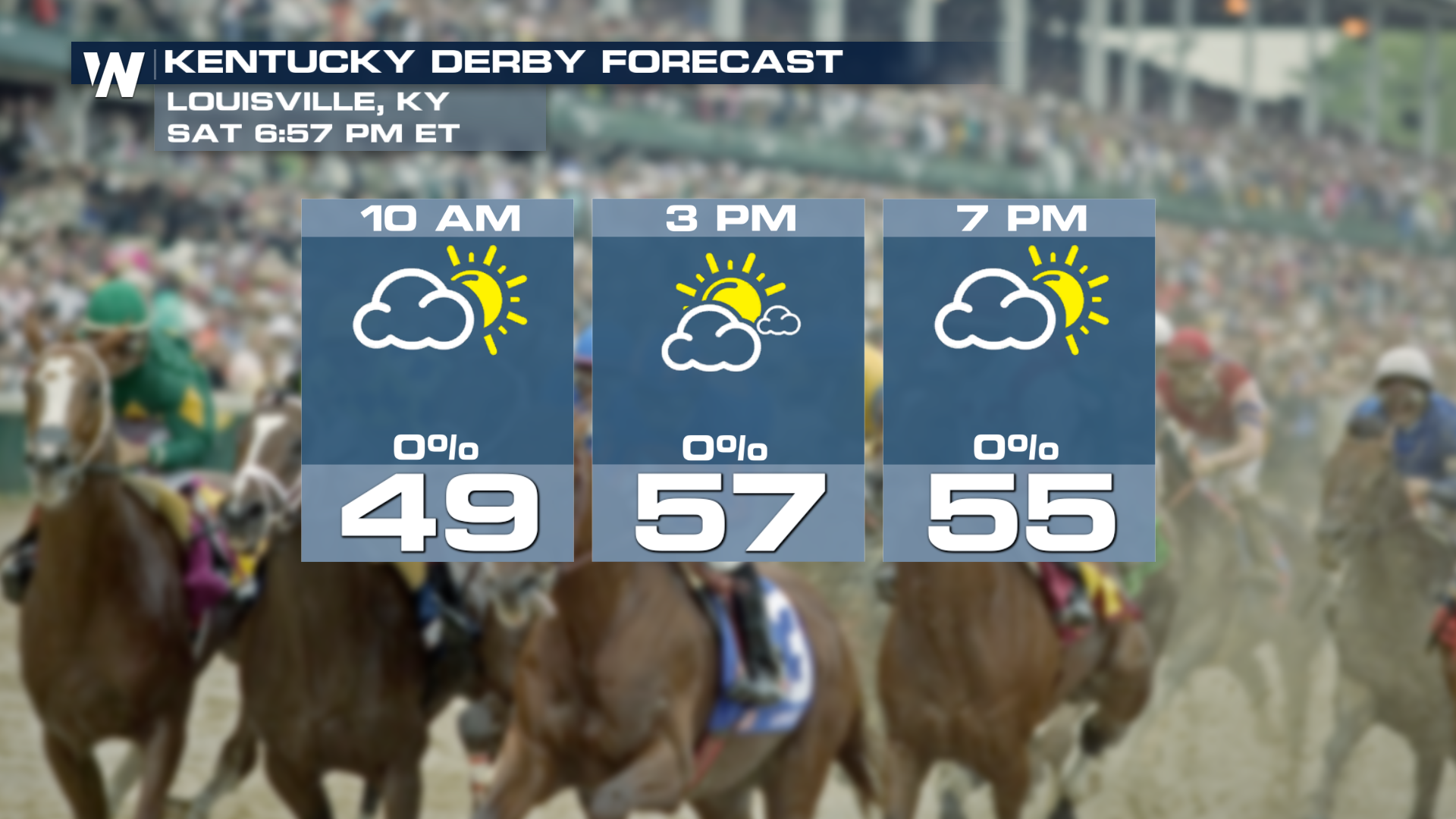
Current forecasts call for partly cloudy to partly sunny skies throughout the day on Saturday, with temperatures expected to top out in the upper 50s Fahrenheit. Morning temperatures are likely to be brisk, with overnight lows dipping to around 40°F, before gradual warming during the late morning and afternoon hours. Don't let those temperatures in the upper 50s fool you - with a north wind it should feel pretty cool for most of the day.
Perhaps most importantly, the chance of rain appears low, representing a significant improvement from earlier in the week, when unsettled weather threatened to dampen the weekend’s flagship event. While isolated sprinkles cannot be completely ruled out, the forecast is expected to be mostly dry.
Impact on Track Conditions
Earlier rainfall during the week may have some lingering effects on the Churchill Downs surface. However, with Saturday shaping up to be dry and cool, track conditions are expected to improve steadily. A dry forecast on Derby Day allows the dirt track to firm up, reducing the likelihood of the kind of muddy, sealed surface that can dramatically influence race strategy and outcomes.
For horsemen, a drying track generally leads to more predictable footing, which can be especially important in a 20‑horse field like the Kentucky Derby, where traffic, pace, and positioning are already major variables.
Impact on the Horses
From blazing sunshine to torrential rain, the conditions on Derby Day can significantly influence the race's outcome and the experience for horses, jockeys, trainers, and fans alike 🏇
🏇 Precipitation: Track conditions are the most immediate and noticeable way weather affects the Derby. Rain can quickly turn the usually fast dirt track into a sloppy or muddy surface, altering the performance of certain horses and jockeys. Some horses, known as “mudders,” thrive in wet conditions, while others struggle. For instance, in the rain-soaked 2019 Derby, the muddy track played a role in a dramatic finish that included the controversial disqualification of Maximum Security. Handicappers and bettors pay close attention to forecasts, knowing that a change in weather could shift the odds significantly.
🏇 Temperature is another critical factor. A warm & humid race day can drain a horse's stamina, especially those not acclimated to the heat and humidity. Trainers often adjust their preparation and hydration strategies depending on the expected weather. Cooler temperatures, on the other hand, may benefit certain horses with more endurance and less speed.
🏇 Wind also plays a subtle but real role in racing dynamics. A strong headwind down the backstretch can tire front-running horses earlier than expected, while a tailwind might benefit late closers. Though less obvious than mud or rain, wind direction and speed can change race strategies and even alter the pace of the race.
In a race where every fraction of a second matters, weather isn’t just a background variable—it’s a potential game-changer. Whether the sun is shining or rain is pouring, the conditions on Derby Day can leave a lasting imprint.


