Explaining Straight Line Winds
Top Stories
8 Jul 2020 7:00 PM
https://youtu.be/ey-032W0t3c
When there’s a threat for severe thunderstorms for your area, the most common danger is straight-line winds, also known as downbursts.
The process starts with air rising within the strong updraft of a storm. It then cools, condenses, and as a result tiny drops of water form.
The droplets increase in size and then combine with others, eventually becoming too heavy. Then, these droplets fall toward the surface within a pocket of cold air.
https://twitter.com/i/status/1269396901574524928
After the air hits the ground, it compresses and forces the winds to increase very quickly outward sometimes exceeding 165 miles per hour!
Damaging winds come in many different forms including small scale microbursts, broad spanning derechos, and even haboobs associated with drier thunderstorms.
https://twitter.com/i/status/1015059936554831872
Downbursts are different from winds associated with a tornado. Instead of winds flowing out of the storm, with a tornado winds flow into it. After the storm, local national weather service offices will conduct storm surveys to look for circulation to determine if it was a straight line wind event or a tornado.
https://twitter.com/i/status/996942974368935937
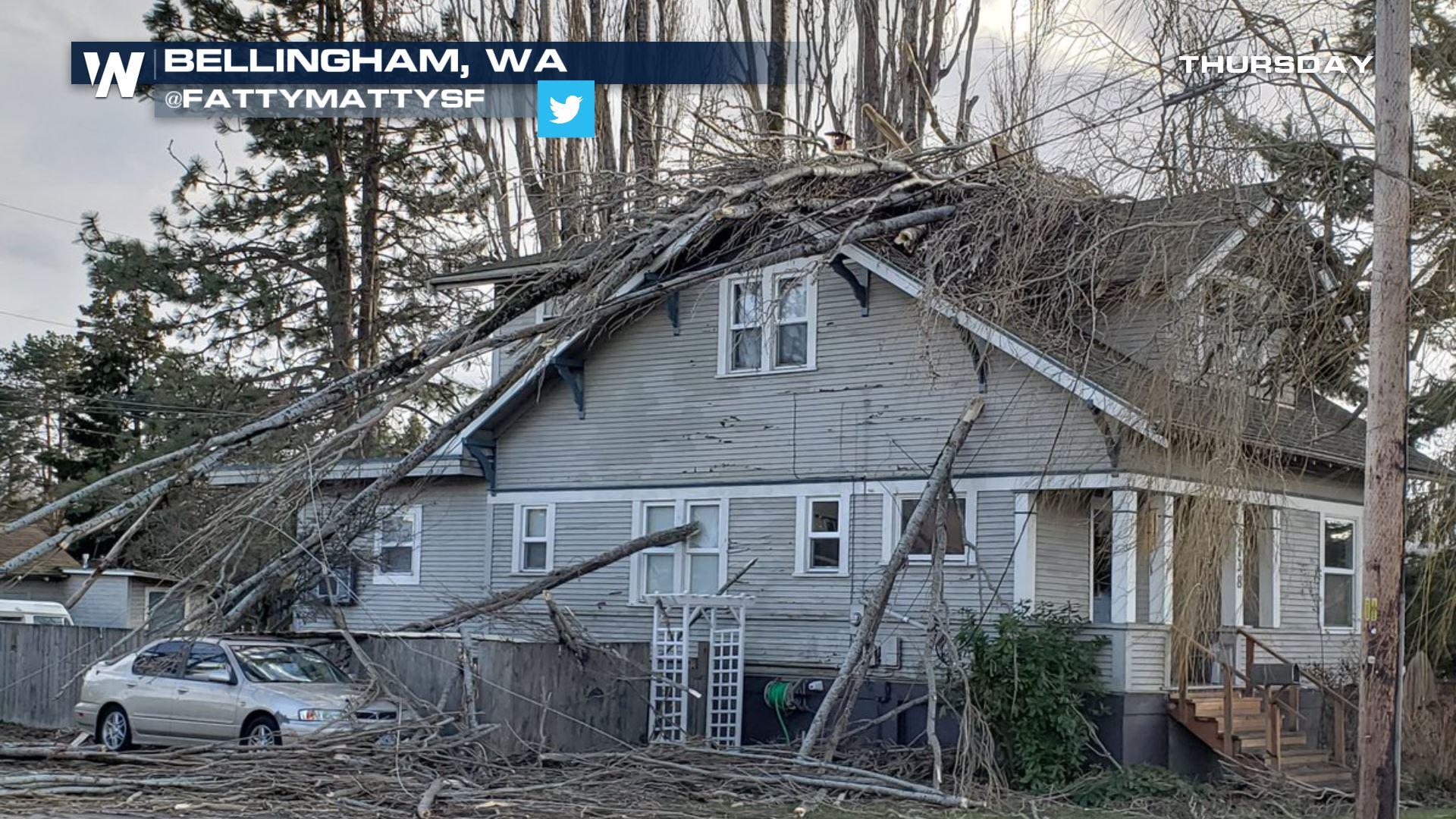
But remember – it’s not the wind itself that can be deadly, it is what is in the wind that’s dangerous. That’s why it’s always important to stay weather aware and be prepared whenever severe weather threatens your community.
https://twitter.com/i/status/1248377651879759874
All Weather News
More
Tropical Storm Vance Swirling in the Pacific, Olana Forms East of Hawaii
After becoming a hurricane Friday, Vance has
26 Oct 2026 10:15 AM

Sunny Day Flooding; King Tides Surge This Week
This week, the ocean is coming to low lying a
26 Oct 2026 10:15 AM

Mount Slushmore? Taking a look at Dakota Snow Chances
The cooler weather is finding places to go fi
26 Oct 2026 10:10 AM

Major River Flooding Causes Damage; Another Day of Storms in New Mexico
A powerful low pressure system has been movin
26 Oct 2026 1:00 AM

Warmer Than Average: Above-Normal Temperatures Across the Central U.S. This Week
WHAT TO EXPECTA ridge of high pressure linger
25 Oct 2026 10:15 AM


Several Fires Break Out in SoCal Last Week Amid Santa Ana Wind Event
Santa Ana winds helped several fires grow qui
19 Oct 2026 1:25 PM