Groundhog vs. the Temperature Record: Keeping score
Special Stories
4 Feb 2019 8:07 AM
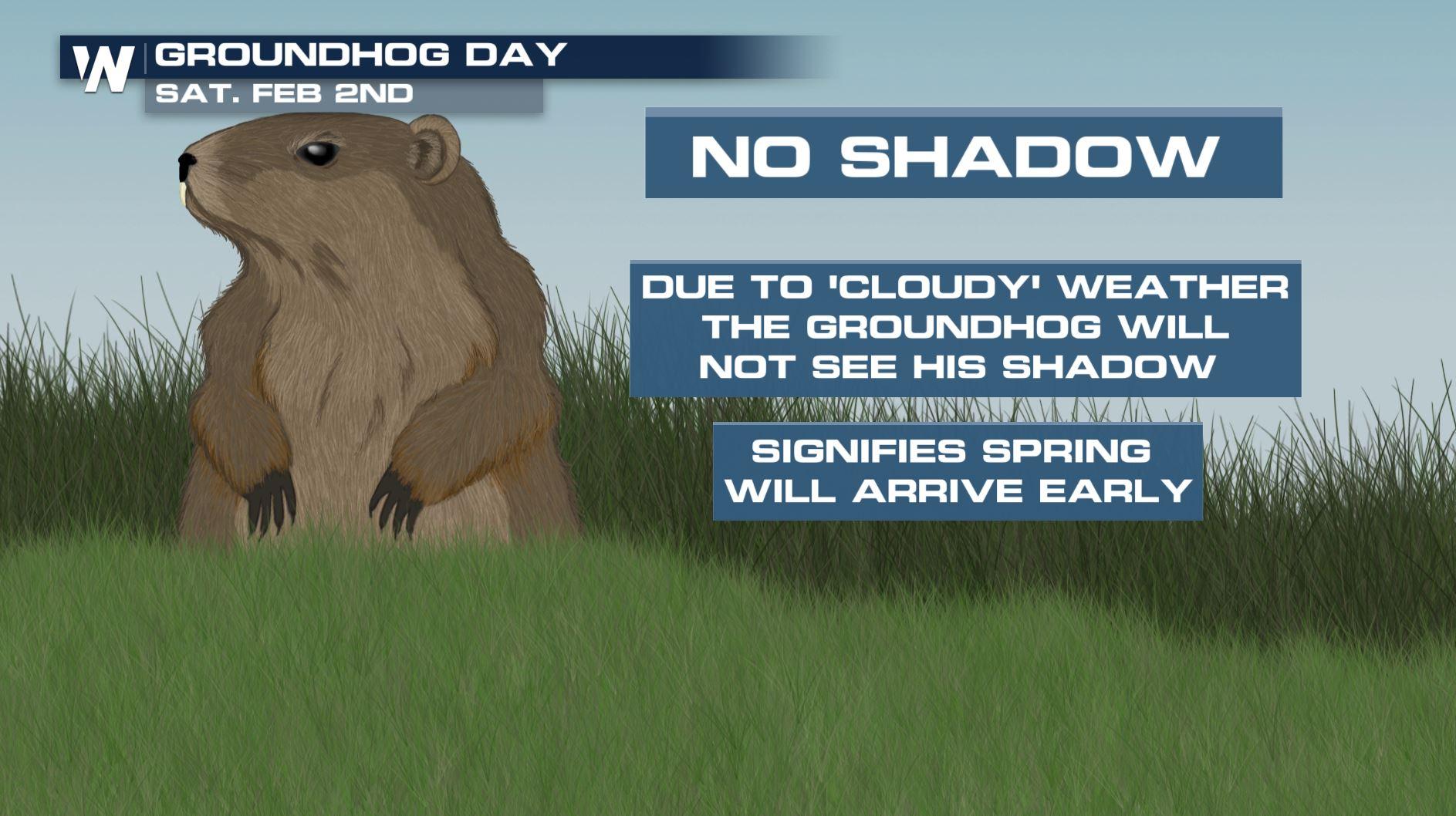
In Gobbler’s Knob, Pennsylvania, a crowd of thousands gathered at the crack of dawn Saturday morning to see the nation’s most famous groundhog, Punxsutawney Phil. Phil did not see his shadow and, as the legend has it, an early arrival of spring is in the forecast.
https://www.youtube.com/watch?v=kOQ59wcPwSc
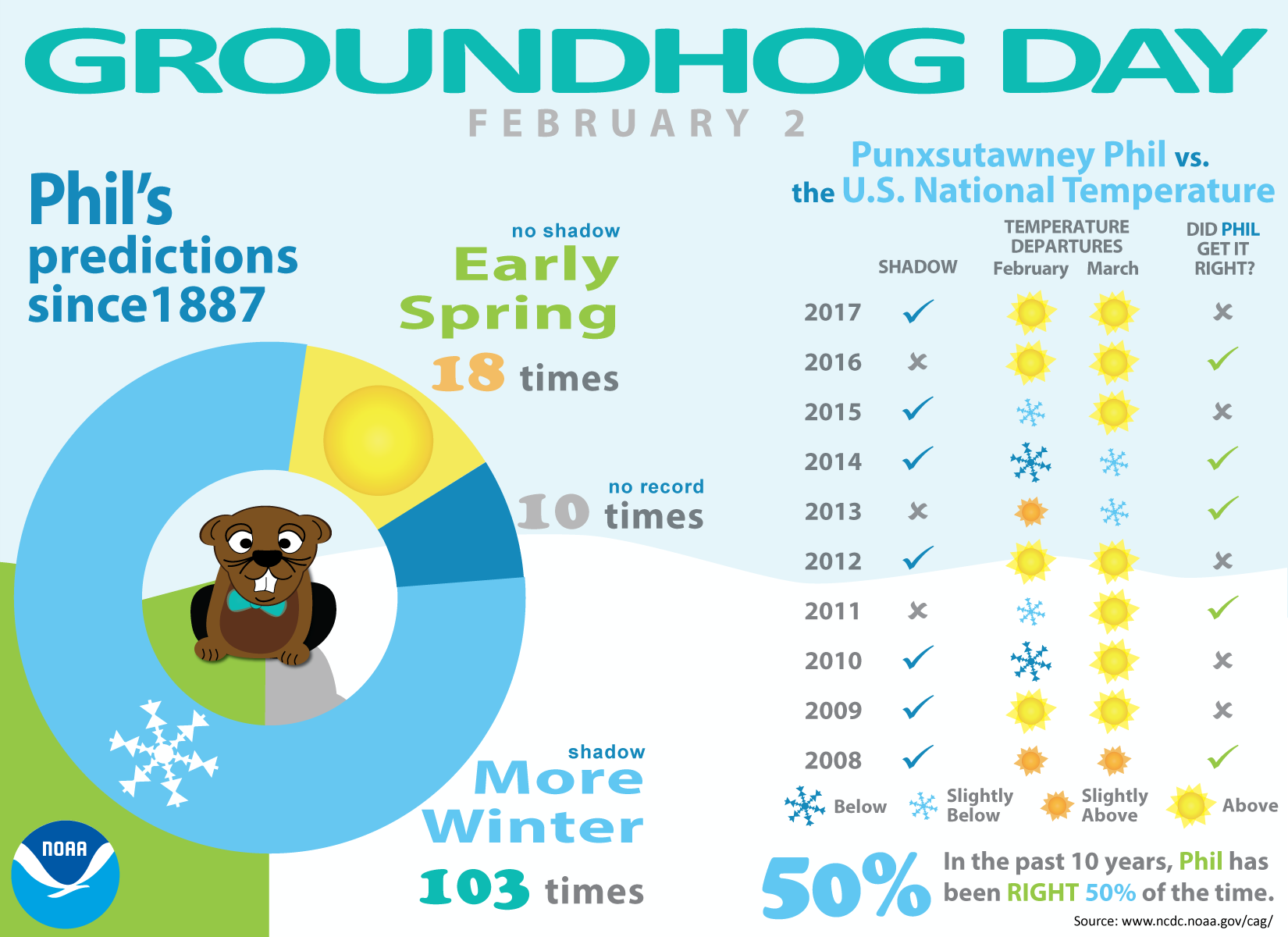
How accurate was Phil's 2018 forecast?
Phil predicted a "long winter" when he saw his shadow and predicted six more weeks of cold conditions last year. But in fact, the contiguous United States saw above-average temperatures in both February and March of last year. The average contiguous U.S. temperature during February 2018 was 35.51 degrees F, 1.69 degrees above the 20th-century average. This ranked among the warmest third of the 124-year period of record.
Much-above-average temperatures were observed across the Deep South, Midwest, and the East Coast. Eight states in the Southeast and southern New England were record warm and 15 additional states in the East had a top 10 warm February. A significant warm spell impacted the East in late February, with more than 650 all-time monthly temperature records broken or tied.
Below-average temperatures were observed in the Northwest, Northern Rockies, and Northern Plains. Montana had its sixth coldest February on record with a monthly temperature 9.7°F below average. This was the coldest February for the state since 1989.
 Source: Wikimedia
During March, the average contiguous U.S. temperature was 42.73°F, 1.23°F above the 20th century average. This ranked near the median value in the 124-year period of record.
Below-average temperatures were observed along parts of the East Coast, Northern High Plains, and West. In the East, the cooler-than-average March was preceded by a record and near-record warm February. Some locations observed March temperatures that were cooler than February, an unusual but not unprecedented occurrence.
Above-average temperatures were observed across the south-central United States, stretching from the Central Rockies through the Southwest and the Southern Plains. Above-average temperatures were also observed in parts of New England and the Upper Midwest.
Source: Wikimedia
During March, the average contiguous U.S. temperature was 42.73°F, 1.23°F above the 20th century average. This ranked near the median value in the 124-year period of record.
Below-average temperatures were observed along parts of the East Coast, Northern High Plains, and West. In the East, the cooler-than-average March was preceded by a record and near-record warm February. Some locations observed March temperatures that were cooler than February, an unusual but not unprecedented occurrence.
Above-average temperatures were observed across the south-central United States, stretching from the Central Rockies through the Southwest and the Southern Plains. Above-average temperatures were also observed in parts of New England and the Upper Midwest.
Source: Wikimedia
During March, the average contiguous U.S. temperature was 42.73°F, 1.23°F above the 20th century average. This ranked near the median value in the 124-year period of record.
Below-average temperatures were observed along parts of the East Coast, Northern High Plains, and West. In the East, the cooler-than-average March was preceded by a record and near-record warm February. Some locations observed March temperatures that were cooler than February, an unusual but not unprecedented occurrence.
Above-average temperatures were observed across the south-central United States, stretching from the Central Rockies through the Southwest and the Southern Plains. Above-average temperatures were also observed in parts of New England and the Upper Midwest.
PHIL’S FIRST FORECAST
In 1887, when he made his debut as the official groundhog forecaster for the entire country, Phil saw his shadow. His first prediction of six more weeks of winter was accurate for a few regions, but it came up short for several others.
According to the February 1887 Monthly Weather Review Form, the Northeast, Great Lakes region, and West saw temperatures well below normal. The Southeast and Gulf states saw temperatures well above normal during the month. And, according to the March 1887 Monthly Weather Review Form, the Northeast, Great Lakes region, Ohio Valley, and Southeast saw temperatures well below normal. Areas west of the Mississippi River valley saw temperatures above normal.PREDICTING THE ARRIVAL OF SPRING IS DIFFICULT
Predicting the arrival of spring for an entire country, especially one with such varied regional climates as the United States, isn’t easy! To learn more about how Punxsutawney Phil’s forecasts have compared to U.S. national temperatures since 1988, visit our Groundhog Day page. More of Phil’s past predictions are also available from the Punxsutawney Groundhog Club. For WeatherNation by Meteorologist Mace MichaelsAll Weather News
More
Flooding & Severe Storms Target the Southwest
A strong trough of low pressure is moving ons
22 Oct 2026 12:35 PM

Warmer Than Average: Above-Normal Temperatures Across the Central U.S. This Week
WHAT TO EXPECTA ridge of high pressure will b
22 Oct 2026 12:30 PM

Sub-Tropical Josephine Becomes Tenth Atlantic Named Storm
SETUPAn upper-level low broke off from the fl
22 Oct 2026 1:40 AM

Tropical Storm Vance Forms In The Pacific
Isaias ended the late-season streak of no hur
22 Oct 2026 1:20 AM

Several Fires Break Out in SoCal Last Week Amid Santa Ana Wind Event
Santa Ana winds helped several fires grow qui
19 Oct 2026 1:25 PM

Another Cold Morning Before Things Warm Back Up
Across portions of the Ohio Valley through th
19 Oct 2026 10:15 AM

Severe Risk Diminishing Saturday Morning for the Northeast
Severe Storm PotentialSevere risk is decreasi
16 Oct 2026 10:20 AM