One Year Later: Palisades and Eaton Fires

It has been one year since the Palisades and Eaton fires burned through local communities in Los Angeles County on January 7, 2025. The lasting impacts are still being felt across the region, both on the ground and in the atmosphere. The fires took 31 lives and burned down 18,000 buildings and homes.
The fires ignited during a period of extreme fire weather, fueled by prolonged drought, critically low humidity, and strong offshore winds. The Palisades fire initially started with an open flame in the Pacific Palisades neighborhood of Los Angeles. Firefighters were able to contain the flames above ground, but the fire continued to burn underground. At the time of ignition, relative humidity values dropped into the single digits, while wind gusts frequently exceeded 40 to 60 mph, creating ideal conditions for the rapid spread of the fire. The National Weather Service even issued a Particularly Dangerous Situation for these fires. These factors allowed flames to move miles in just hours, overwhelming containment efforts during the initial stages. The Palisades fire grew to 23,707 acres.
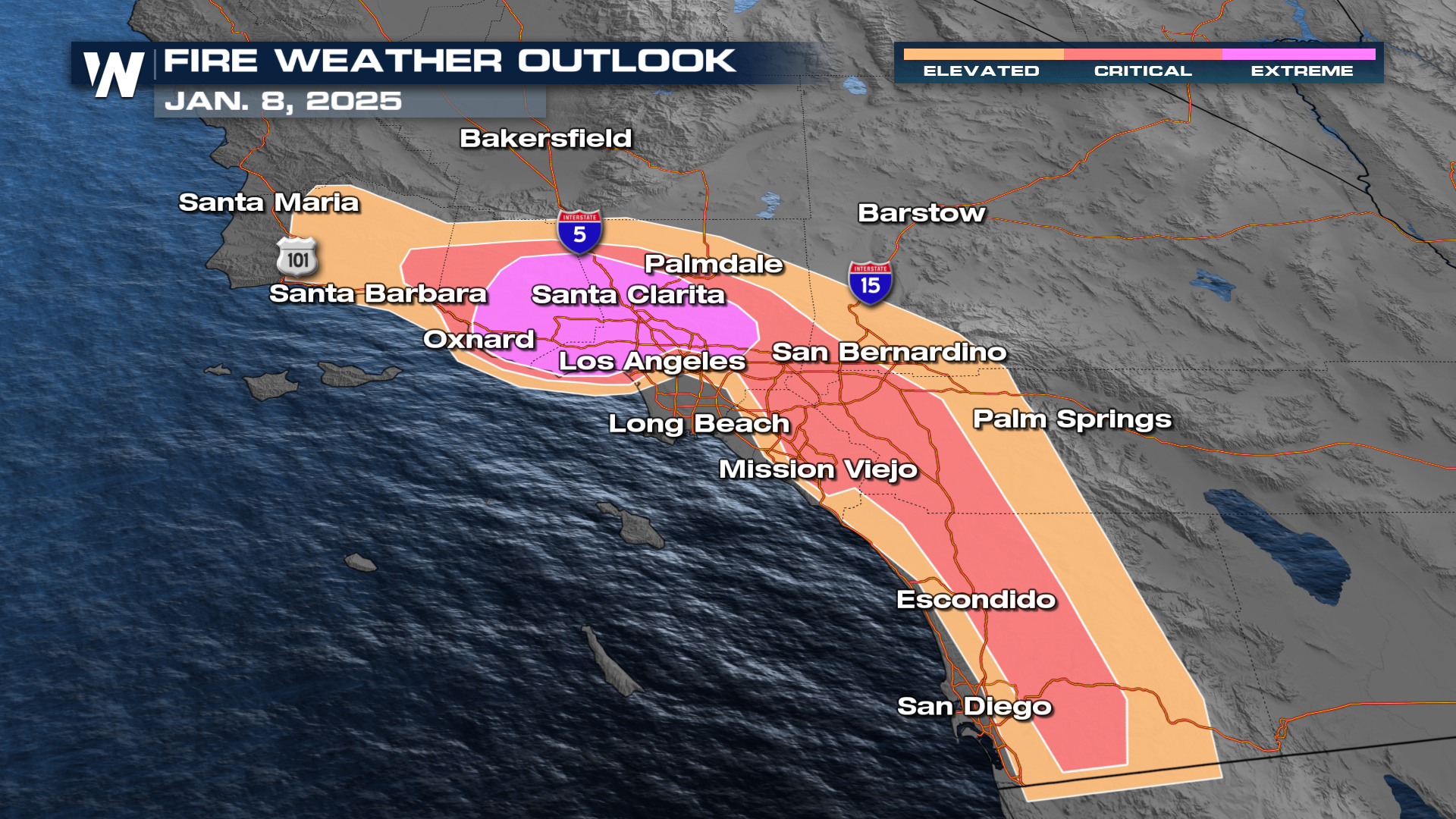 The Eaton Fire ignited in Altadena shortly after the Palisades Fire. In this fire, close to 10,000 homes were destroyed and 19 lives were lost, as the fire ravaged 14,021 acres by the time of its containment on January 31, 2024.
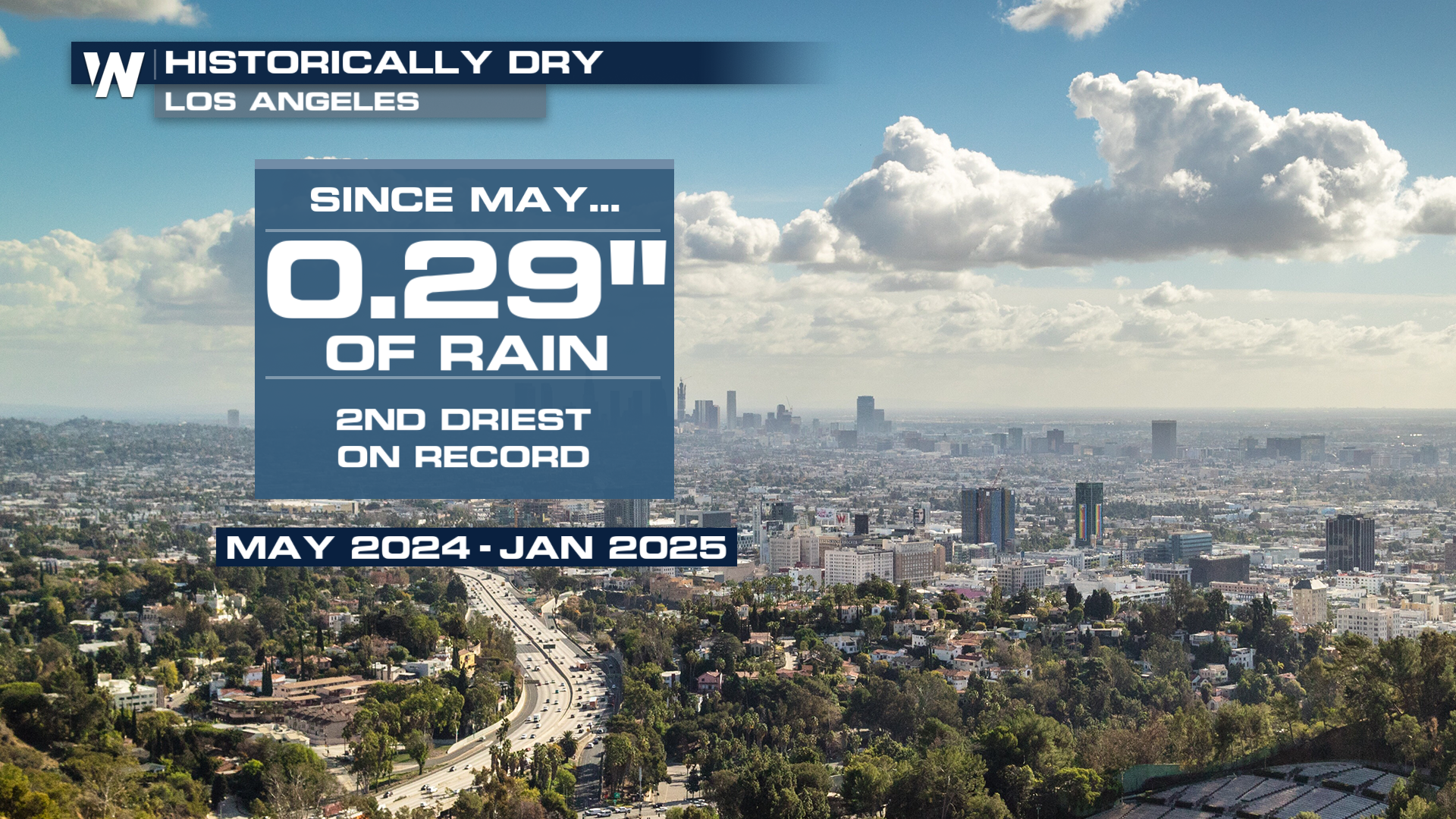
Rainfall deficits leading up to the fires played a major role in their intensity. Many areas had received less than 50 percent of their average precipitation over the previous 6 to 12 months, resulting in exceptionally dry vegetation. Live fuel moisture levels were near record lows for late season, and energy release components, an index used to measure potential fire intensity, were well above climatological averages.
Once the fires were established, towering smoke plumes injected particulates high into the atmosphere, degrading air quality across hundreds of miles and prompting repeated air quality alerts as fine particulate concentrations surged well above health-based thresholds.
In the aftermath, the weather continued to complicate recovery. The first significant rain events following the fires produced short bursts of heavy rainfall, falling on soils unable to absorb water efficiently. Rainfall rates of just a half inch per hour were enough to trigger runoff, mudslides, and debris flows within burn scars. Damaging roads and infrastructure months after the flames were extinguished. Emergency managers were forced to pivot from wildfire response to managing the floods, highlighting the compound risks associated with extreme weather.
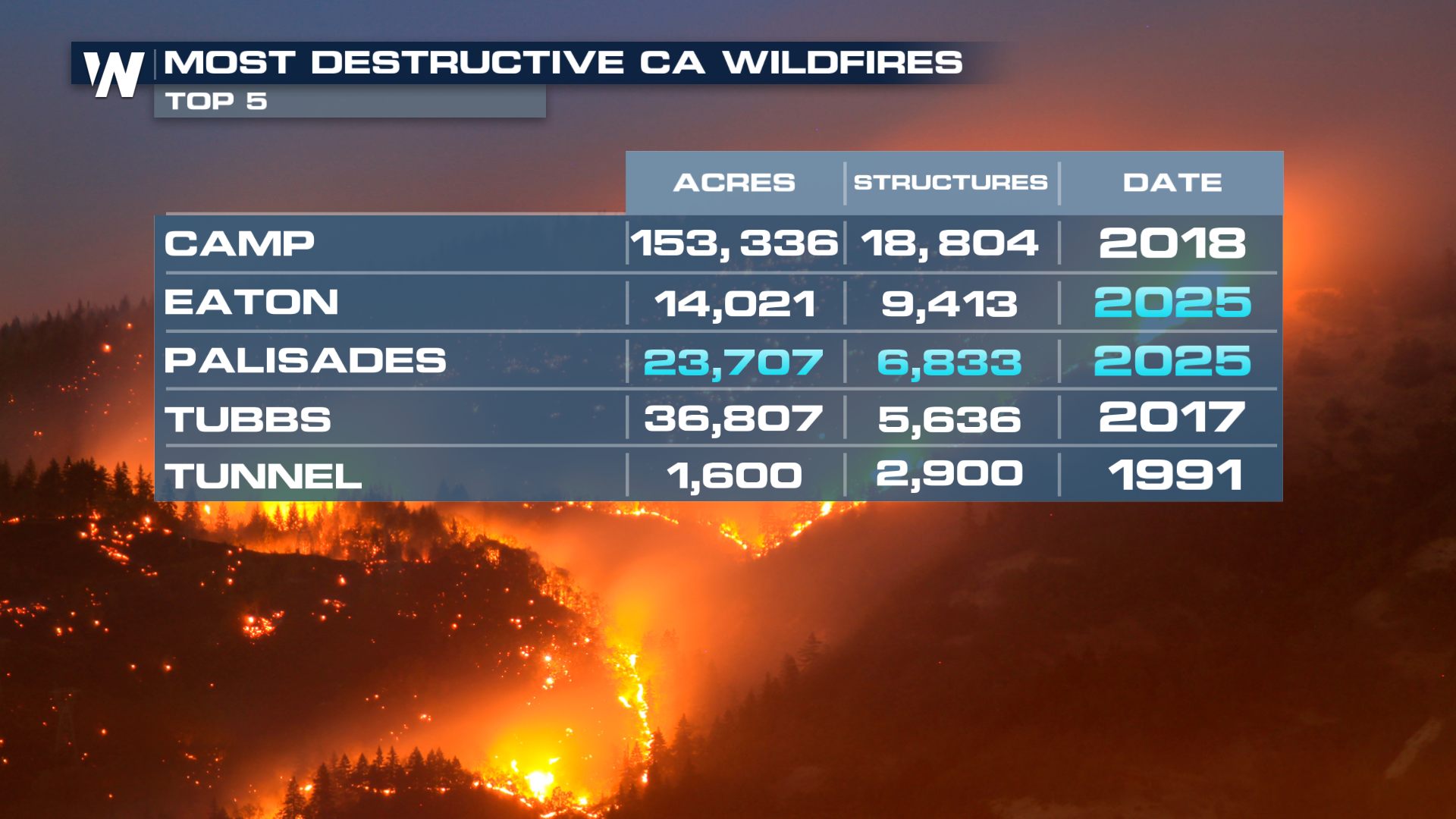 A year later, both fires are on California's most destructive fires list. Weather and climate data show early signs of ecological recovery, but also ongoing vulnerability. Native grasses and shrubs have begun to return, aided by winter rainfall. The Palisades and Eaton fires now serve as a stark example of how weather extremes, heat, wind, drought, and heavy rainfall are reshaping wildfire behavior.


