Track Santa with NORAD: 70 Years of Holiday Magic

CLICK HERE TO TRACK SANTA WITH NORAD!
The North American Aerospace Defense Command, or NORAD, monitors and defends North American airspace 24-7, 365. But on December 24th, they take on another mission… tracking Santa and his reindeer all across the globe. We spoke to Brigadier General Jason Rueschoff about NORAD's 70th year tracking Santa. He gives us details on Santa's trip around the world, and how Santa and the gang get you your presents in an efficient and timely manner. Watch along with WeatherNation as we track Santa's journey around the world on Christmas Eve!
Fun Facts About Santa's Mission:
Santa's sleigh is approximately 75 candy canes in length or 150 lollipops. The weight at takeoff is 75,000 gumdrops and Santa is estimated to be 260 pounds at takeoff - we're not sure how much he weighs by the time he lands after all those cookies! Santa's sleigh can travel faster than starlight at maximum speed and is powered by 9 reindeer!
How Did NORAD Get Their Start Tracking Santa?
For 70 years, NORAD and its predecessor, the Continental Air Defense Command (CONAD) have tracked Santa’s flight.

(Image: Colonel Harry Shoup, NORAD's First Santa Tracker September 29, 1917 - March 14, 2009)
The tradition began in 1955 after a Colorado Springs-based Sears Roebuck & Co. advertisement misprinted the telephone number for children to call Santa. Instead of reaching Santa, the phone number put kids through to the CONAD Commander-in-Chief's operations "hotline." The Director of Operations at the time, Colonel Harry Shoup, had his staff check the radar for indications of Santa making his way south from the North Pole. Children who called were given updates on his location, and a tradition was born.
In 1958, the governments of Canada and the United States created a bi-national air defense command for North America called the North American Aerospace Defense Command, also known as NORAD, which then took on the tradition of tracking Santa.
"We have the watch."
The North American Aerospace Defense Command (NORAD) is a United States and Canada bi-national organization which defends the homeland through aerospace warning, aerospace control, and maritime warning for North America. Aerospace warning includes the monitoring of man-made objects in space, and the detection, validation, and warning of attack against North America whether by aircraft, missiles, or space vehicles, through mutual support arrangements with other commands.
Aerospace control includes ensuring air sovereignty and air defense of the airspace of Canada and the United States. The renewal of the NORAD Agreement in May 2006 added a maritime warning mission, which entails a shared awareness and understanding of the activities conducted in U.S. and Canadian maritime approaches, maritime areas and internal waterways.
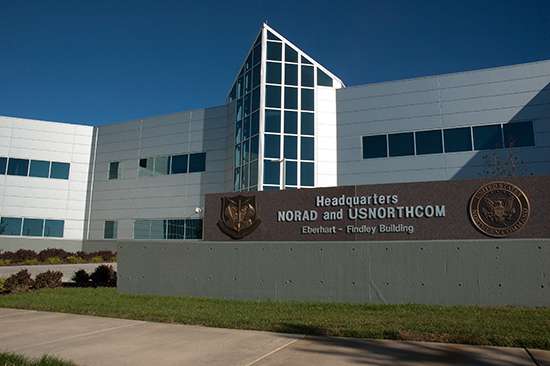
Headquartered in Colorado Springs, Colorado, NORAD's mission has evolved over the years to meet the changing threat. Through outstanding bi-national cooperation, NORAD has proven itself effective in its roles of watching, warning, and responding. The events of September 11, 2001 demonstrated NORAD's continued relevance to North American security. Today, NORAD provides civil authorities with a potent military response capability to counter domestic airspace threats should all other methods fail.
The men and women of NORAD are constantly watching the skies and waterways of the United States and Canada to keep us safe.
How NORAD tracks Santa and protect North America
Radar
It all starts with the NORAD radar system called the North Warning System. This powerful radar system has 49 installations strung across Canada's North and Alaska. NORAD makes a point of checking the radar closely for indications of Santa Claus leaving the North Pole every holiday season. The moment our radar tells us that Santa has lifted off, we begin to use the same satellites that we use in providing air warning of possible missile launches aimed at North America.
Satellites
These satellites are located in a geo-synchronous orbit (that's a cool phrase meaning that the satellite is always fixed over the same spot on the Earth) at 22,300 miles above the Earth. The satellites have infrared sensors, meaning they can see heat. When a rocket or missile is launched, a tremendous amount of heat is produced - enough for the satellites to see them. Rudolph's nose gives off an infrared signature similar to a missile launch. The satellites detect Rudolph's bright red nose with no problem.
 Jet Fighters
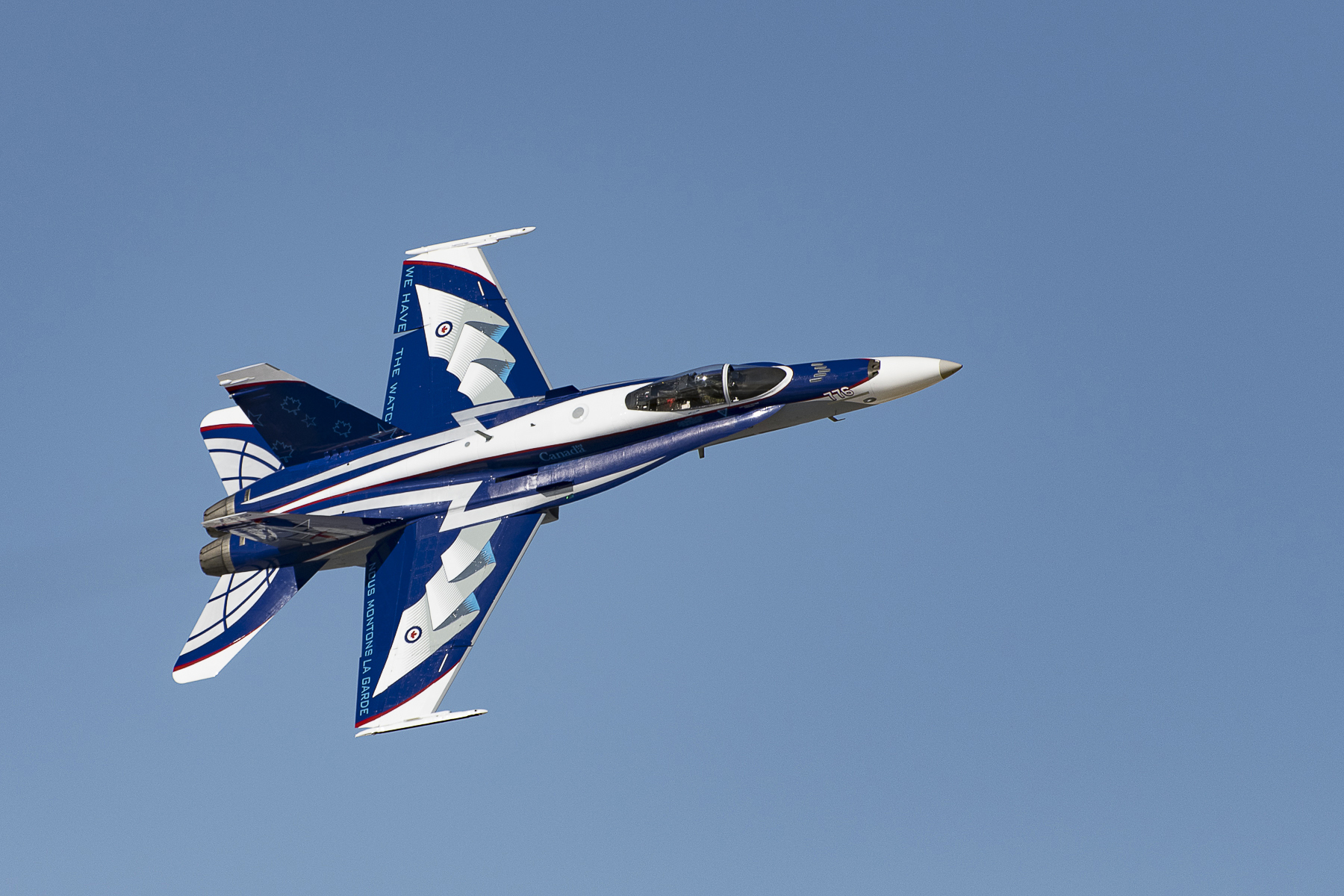
The last system we use is the NORAD jet fighter. Canadian NORAD fighter pilots, flying the CF-18, take off out of Newfoundland and welcome Santa to North America. Then at numerous locations in Canada other CF-18 fighter pilots escort Santa. While in the United States, American NORAD fighter pilots in either the F-15s, F16s or F-22s get the thrill of flying with Santa and the famous Reindeer - Dasher, Dancer, Prancer, Vixen, Comet, Cupid, Donner, Blitzen and Rudolph. Even though Santa flies faster than any jet fighter (Santa actually slows down for us to escort him), all of these systems together provide NORAD with a very good continuous picture of his whereabouts.
Do your planes ever intercept Santa?
Over the past 65 years, our fighter jets (F-16s, F-15s, F-22s, F-35s, and CF-18s) have intercepted Santa many, many times. When the jets intercept Santa, they tip their wings to say, "Hello Santa! NORAD is tracking you again this year!" Santa always waves. He loves to see the pilots!
Does NORAD have any pictures of Santa taken from your planes?
Our fighter pilots love to take photos of Santa. We also have NORAD Santa Cams in space which take video of Santa as he flies round the world. These videos appear almost every hour on December 24th at www.noradsanta.org.
Does NORAD have any statistics on Santa's sleigh?
NORAD can confirm that Santa's sleigh is a versatile, all weather, multi-purpose, vertical short-take-off and landing vehicle. It is capable of traveling vast distances without refueling and is deployed, as far as we know, only on December 24th (and sometimes briefly for a test flight about a month before Christmas).


