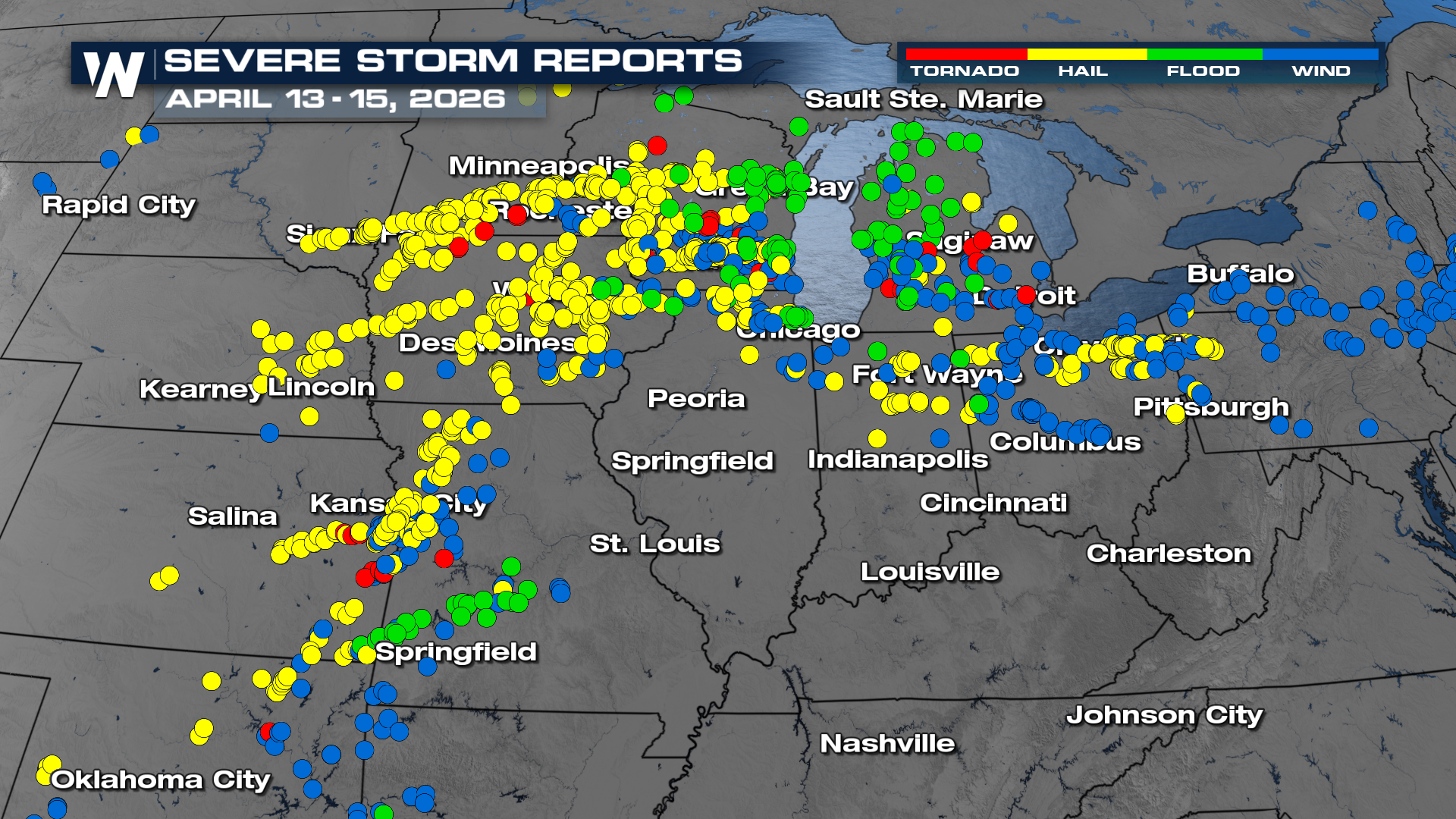
UPPER MIDWEST and GREAT LAKES - Severe thunderstorms will continue to develop across the Upper Mississippi Valley and Great Lakes region with the potential for very large hail, damaging winds, and strong tornadoes through the afternoon and into tonight.
What's causing this severe risk? In the upper levels of the atmosphere, a couple of mid-level disturbances are increasing lift and strong winds aloft. This will help storms develop and organize. At the surface, a surface low and slow-moving warm front will help to initialize and organize storms. There are also high levels of CAPE (convective available potential energy) and surface moisture from the Gulf (dewpoints in the 60s) that will help create the risk of large hail.
As storms evolve throughout the day, the discrete supercells (think more individual storms) will become more clustery and organize into lines of storms. This will switch the threat from a hail and tornado threat into a damaging wind threat with tornadoes still possible.
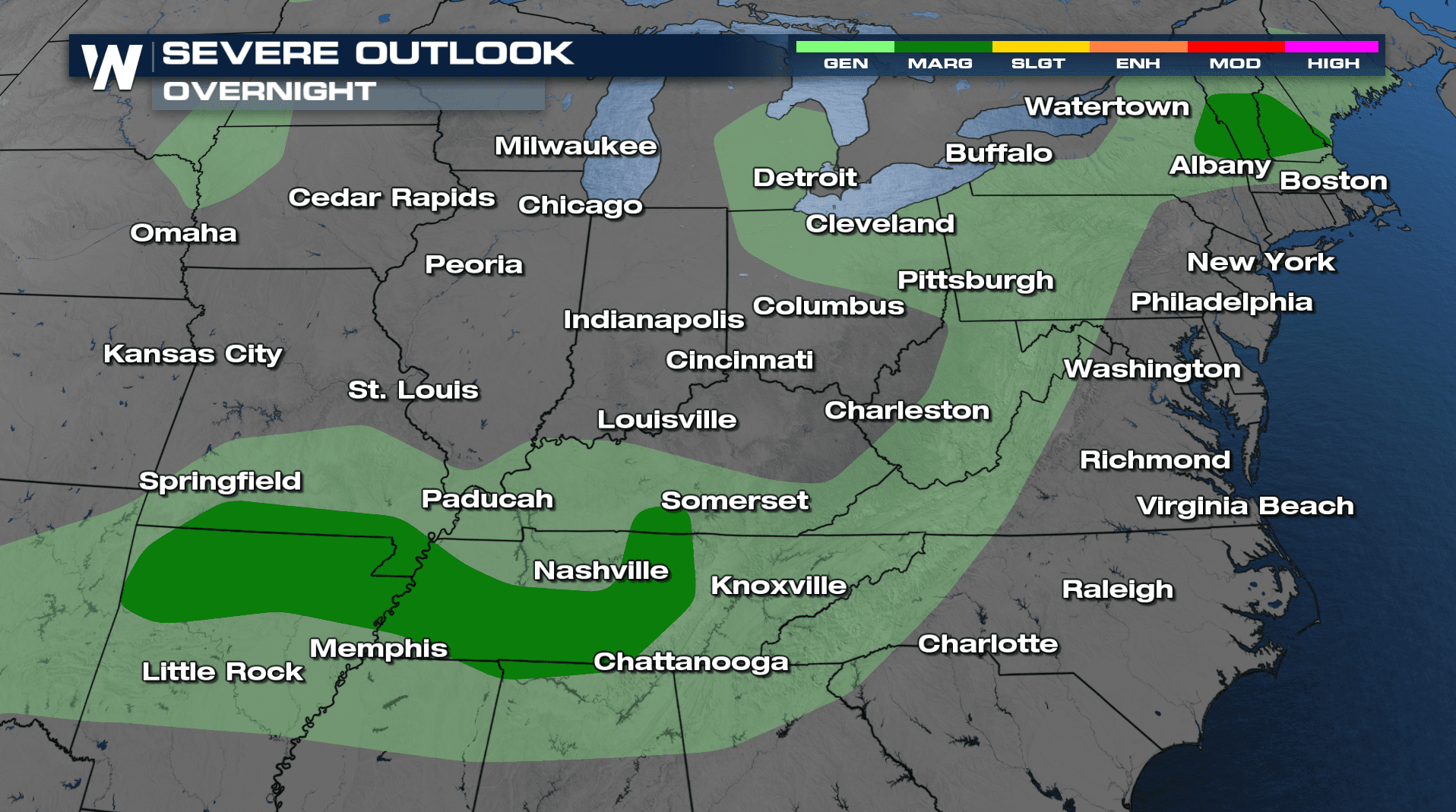
The Storm Prediction Center has issued an ENHANCED risk for severe weather. This is a level 3 out of 5 risk for severe storms.
Within this risk, there is the potential for significant severe storms. For hail, the significant threat includes hail large than 2" in diameter. For tornadoes, the significant threat includes tornadoes stronger than EF2 (111-135 mph winds).
As far as today's timing for these storms, they have already begun in some areas. Storms will continue to form along the warm front we mentioned earlier, and increase in coverage as temperatures rise throughout the day.
On Tuesday, the SPC issued another ENHANCED risk (level 3 out of 5) for severe storms in similar areas. Cities including Des Moines, IA, Chicago, IL, and Milwaukee, WI, are included in the enhanced risk. Other large cities such as Green Bay, WI, Detroit, MI, and Kansas City also all need to be on alert for Tuesday's severe risk.
Tuesday's storms are in a similar region but are technically caused by a separate mid-level disturbance. The technicalities of this don't really matter in the timing of these storms because the ingredients needed to cause storms are still there. For Tuesday's timing, new storms will develop along the warm front into the peak of afternoon heating after wrapping up some morning storms. These storms are forecast to remain discrete for the afternoon before attempting to cluster together as they move more into Michigan and eastward.
On Wednesday, after two days of warm front storms, the cold front will finally push through. This has led to a SLIGHT risk (level 2 out of 5) for severe thunderstorms that extends from Texas to Illinois.
Storms look strong along the cold front closer to the warmer air, so more of Kansas, Oklahoma, and Missouri can expect higher and stronger storm coverage in the afternoon and evening.
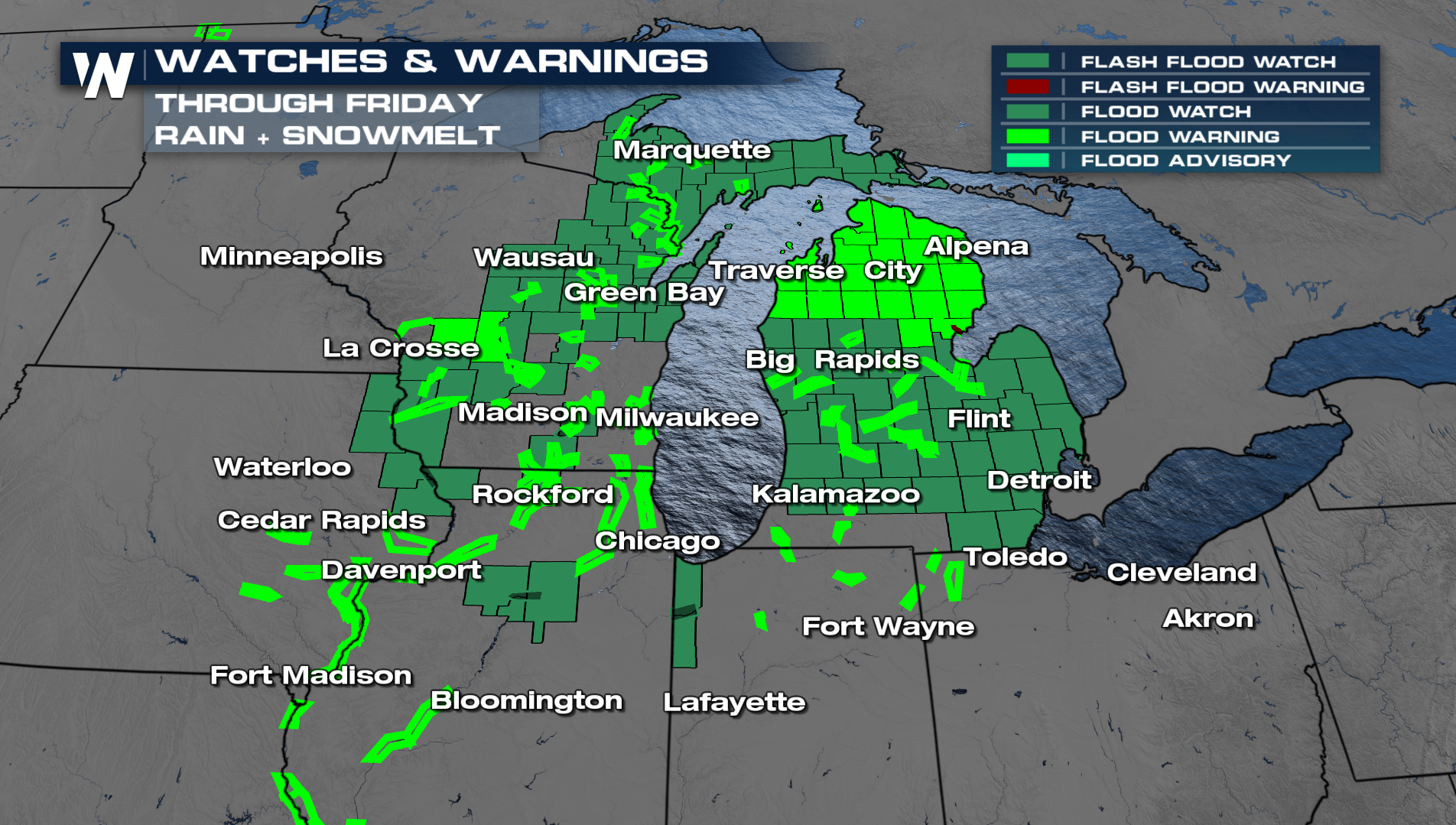
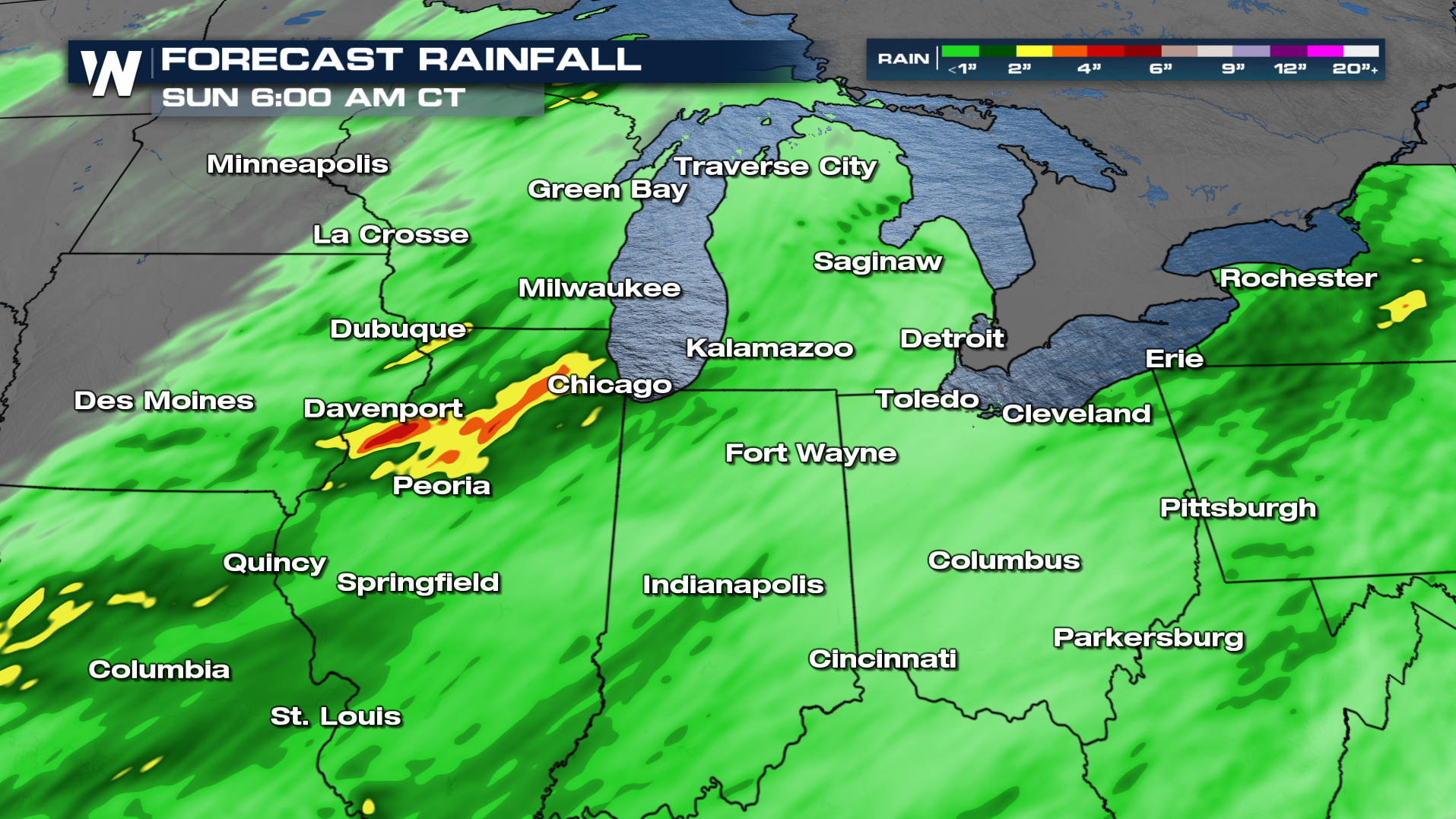
With multiple rounds of strong to severe thunderstorms in the same areas, this may lead to an isolated to scattered flooding risk across the Great Lakes region. Be prepared for flooding, especially if you still have some snow on the ground; frozen grounds can take longer to absorb flood waters compared to unfrozen grounds.