Avalanche Danger in the Backcountry

FROM NOAA
ABOVE: An avalanche occurs at an elevation of 10,500 feet at Elk Point, Utah, in the Wasatch Mountain range. (Image credit: Bruce Tremper/U.S. Forest Service Utah Avalanche Center)
NOAA and U.S. Forest Service collaborate to ensure avalanche safety up on the mountain. Ready to ski, snowboard and snowmobile?
Before heading into the backcountry, it's critical to have the latest weather and snow conditions — especially when the potential for avalanches is high. These swift-moving snow masses can quickly reach speeds up to 100 mph and, on average, cause 25-30 deaths each winter in the United States, according to the U.S. Forest Service National Avalanche Center, (NAC).offsite link
NOAA’s National Weather Service (NWS), the NACoffsite link, and the Colorado Avalanche Information Centeroffsite link are working together to get you the information you need to keep you informed to safely enjoy cold-weather recreation.
Know before you go
At the NWS, weather forecast offices that serve avalanche-prone regions nationwide, meteorologists gather detailed weather observations and produce daily forecasts which include new snow totals, snow water equivalent, probability of precipitation, wind, temperature, and sky cover. That information is compiled into Avalanche Weather Guidance, which helps avalanche forecasters, search and rescue teams, and emergency managers better understand how the weather will impact snow stability.
NWS Avalanche Weather webpages deliver easy access to current avalanche and weather information. These webpages display NWS weather alerts and forecasts relevant to avalanche interests and all Avalanche Watches and Warnings issued by the Avalanche Centers with polygons to pinpoint weather and avalanche information for a specific location.
Avalanche forecasters at the Avalanche Centers and the Colorado Avalanche Information Centeroffsite link use weather forecasts and observations combined with terrain and snowpack data to create avalanche forecasts. These forecasts provide an assessment of the avalanche danger and associated snowpack and weather conditions. If conditions warrant, forecasters will also issue Avalanche Watches and Warnings, which are distributed by NWS.
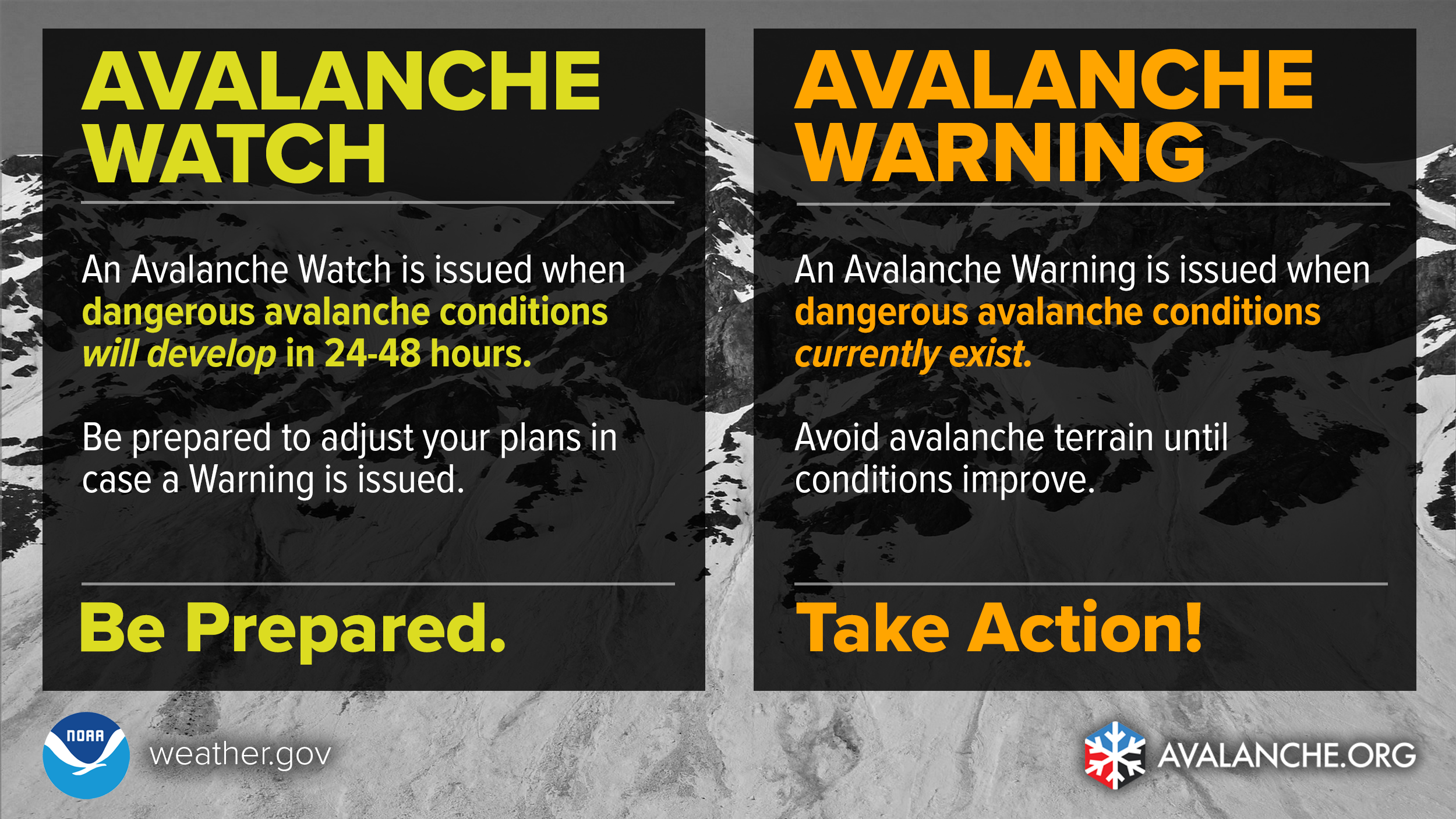 ABOVE: This graphic explains the difference between an avalanche watch and an avalanche warning. (NOAA/Avalanche.org)
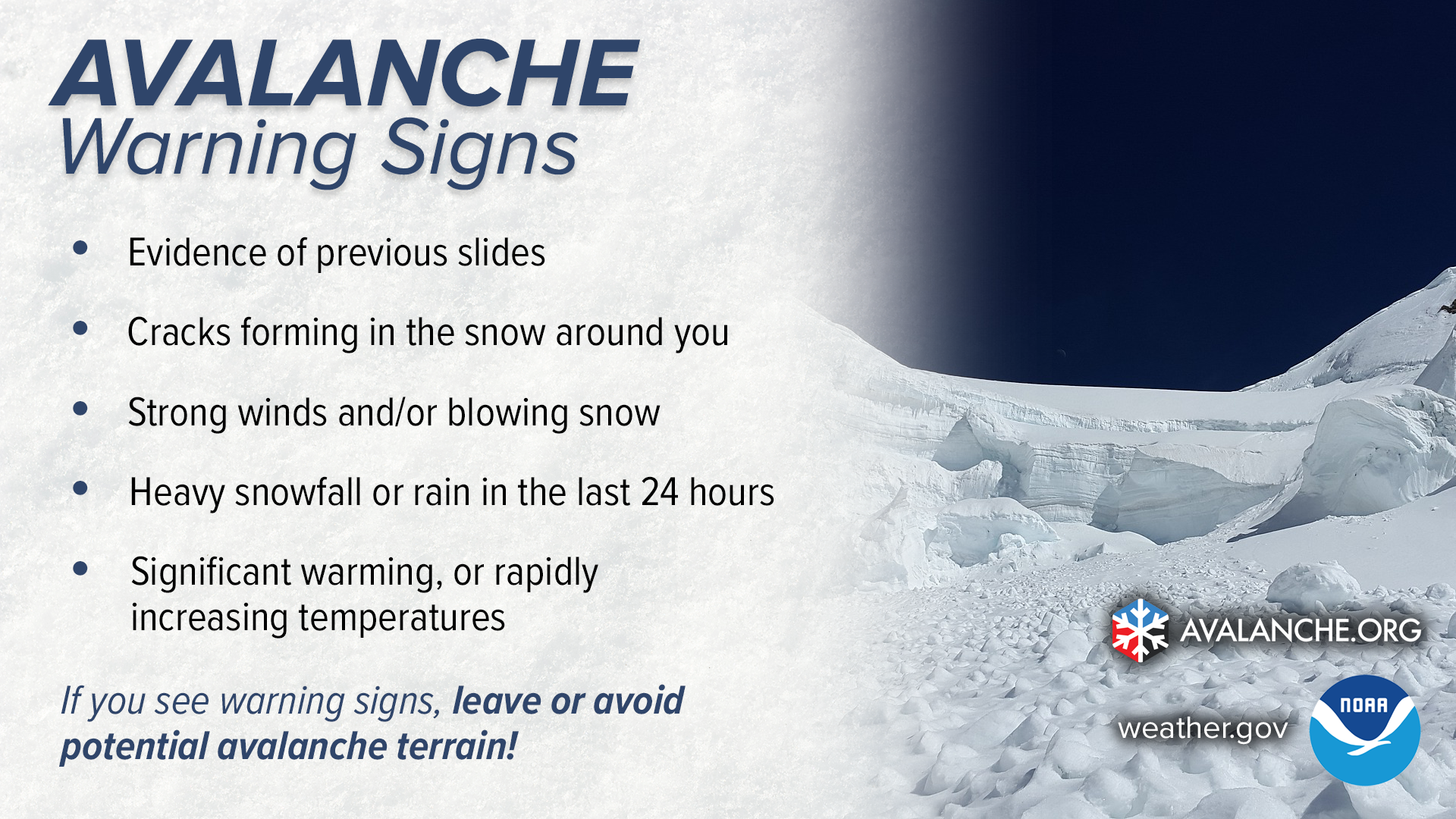
ABOVE: This graphic explains the warning signs of an avalanche. (NOAA/Avalanche.org)
What to know about backcountry snow
Arm yourself with the weather forecast and avalanche forecastoffsite link.
Get the gearoffsite link: Always carry an avalanche transceiver, probe and shovel. Know how to use them.
Outsmart the slideoffsite link: Avalanches are complex phenomena. Learning how to spot unstable terrain and slopes that are steep enough to slide can help you avoid a potential avalanche.
Team up on the terrain:offsite link Make sure you have a partner if you travel in the backcountry. A good partner can help you make decisions and is essential if things go wrong.


