Severe Weather Awareness Week 2026

WeatherNation wants to make sure you are prepared ahead of the upcoming severe weather season. We are tackling a different topic each day so you know exactly what to expect this Spring and beyond. From forecasting science to prep and safety, we've got you covered!
MONDAY- Prep & Safety
We kicked off Severe Weather Awareness Week this year, preparing you and your household from the jump. Take some of these tips and practice them, either mentally or physically, so you know how to respond when severe weather rolls in.
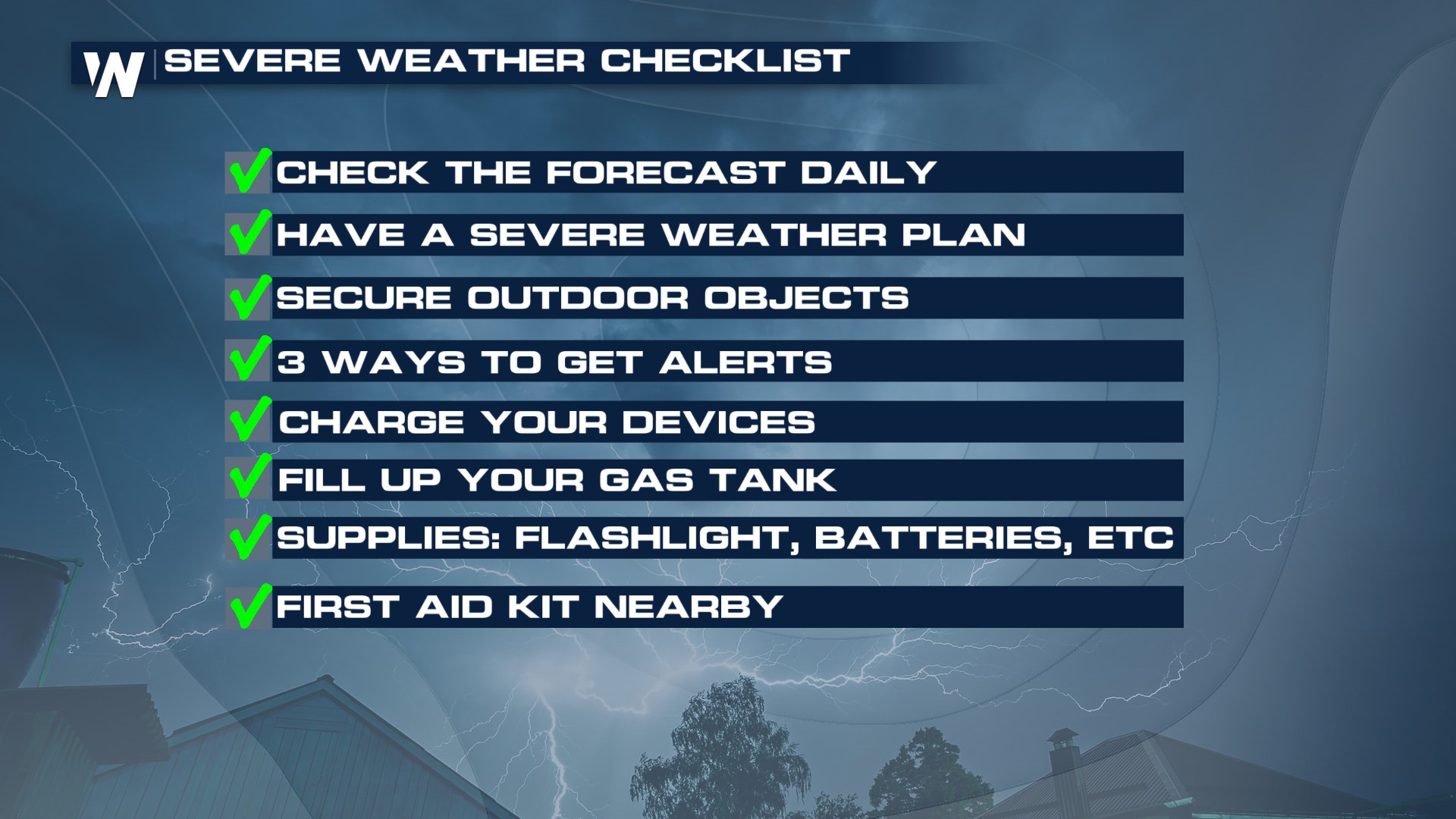 When severe weather is in the forecast, WeatherNation and NWS Meteorologists will communicate the level and proximity of the threat through watches and warnings. A WATCH is issued when conditions are favorable for severe weather development and you should have a safe place ready. A WARNING is issued when severe weather is happening or imminent. If a warning is issued, it's time to take shelter immediately!
Some people rely on outdoor warning sirens to alert them when a tornado is near, but that technology is old and it is only meant to be heard out side. Meteorologist Tracey Anthony walks us through the ways to get warnings and why it's important to have multiple.
A tornado warning can be issued with only moments to get to safety. Are you and your family prepared to take action at home? Meteorologist Brittany Lockley helps us know what to do when tornadoes threaten.
TUESDAY- Tornadoes
According to NOAA, a tornado is defined as "a violently rotating column of air extending from the base of a thunderstorm down to the ground." Tornadoes can happen any time, any day, any where. But the strength of a tornado can only be determined by the damage it leaves behind. Meteorologist Patrick Crawford takes you through how the Enhanced Fujita scale used to rate the intensity of a tornado.
Wind shear, or a change in wind speed or direction with height, is a crucial part of severe thunderstorm and tornado development. Meteorologist Adrian Hernandez explains.
WEDNESDAY- Wind & Hail
A thunderstorm must produce a tornado, wind gusts greater than 58 mph or hail an inch in diameter to be considered severe. Severe wind gusts can be strong enough to as much damage as a low level tornado. Large hail is frequently the most damaging and costliest part of a severe thunderstorm. Meteorologist Alana Cameron breaks it down the impacts of large hail by the numbers.
THURSDAY- Thunderstorms
Thunderstorms bring a multitude of threats, like lightning, wind, hail, flooding, and tornadoes. But not all thunderstorms are created equal. Meteorologist Jackie Brown outlines how differing storm intensities are communicated different ways during the storm.
FRIDAY- Forecasting
Severe weather can happen anywhere, anytime. However, it's most common in the spring and summer months. Do you know why? Meteorologist Kevin Schneider explains the factors that go into severe weather season.
SATURDAY- Flooding
Flooding is not part of what makes a thunderstorm considered severe, but it is still one of the deadliest parts of a thunderstorm. With several different ways water can rise quickly, it's important to know your risk. Areal flooding can happen slower, over time. While flash flooding can surround your car in an instant. Curious about different types of flooding? Meteorologist Kevin Schneider covers the basics so you can stay safe.
BONUS- WeatherNation Takes YOU to the 2026 National Storm Chaser Summit!
The 2026 National Storm Chaser Summit near Denver was where the brightest minds in storm chasing and meteorology came together to advance the science, education, and early warning ability ahead of severe weather. WeatherNation was there to take you into the action!
Ever wanted to try your hand at storm chasing? Well, now you can learn and train from the comfort and safety of your own home. Meteorologist Dave Holder spoke with the creators of 'OUTBRK', the storm chasing game.


